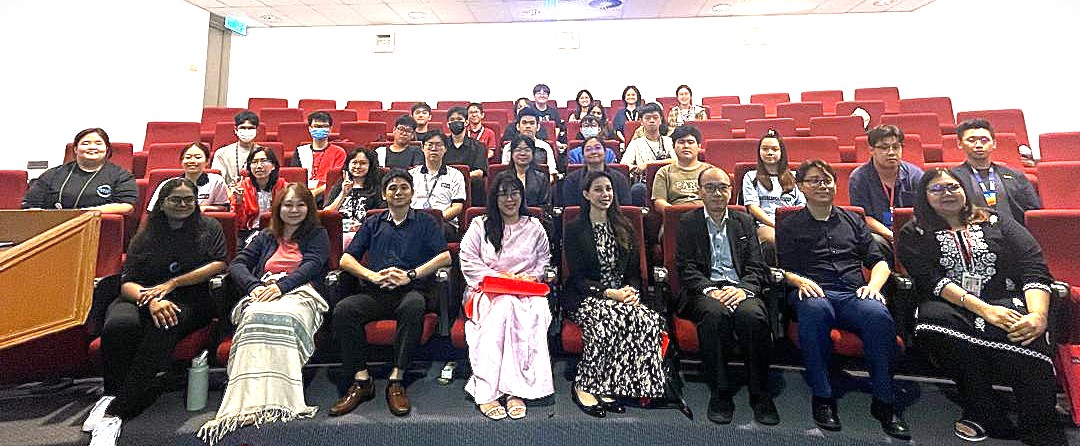
Front row: Dr Choy (third from right) and Ms Madiha (fifth from left) with participants
A mental health forum titled, Empowering Your Mental Wellness with PlusVibes, was held at UTAR Kampar Campus on 22 November 2024. The event featured two distinguished panellists, who delivered insightful talks and participated in a panel discussion on mental health topics.
The first panellist was CEO & Founder of PlusVibes Group Ms Madiha Fuad, a renowned entrepreneur and international speaker. With expertise in human resources, mental health, corporate culture, and women’s empowerment, she has developed a mental health tech platform that serves over 50,000 members and has facilitated 19,000 therapy sessions. The second panellist was Dr Choy Seng Kit, a general psychiatrist at UTAR Hospital with over eight years of experience in treating mental health conditions, such as schizophrenia, depression, bipolar disorder, and anxiety. In addition to clinical work, Dr Choy is actively involved in teaching, research, and running mental health awareness programmes.
Organised by Centre for Healthy Minds and Wellbeing, Department of Student Affairs, Kampar Campus, the forum aimed to explore the innovative features of the PlusVibes app, which was designed to enhance emotional well-being, support stress management, foster resilience, as well as discover valuable knowledge on integrating digital tools into an individual’s wellness routine and gain actionable insights for improving mental wellness.
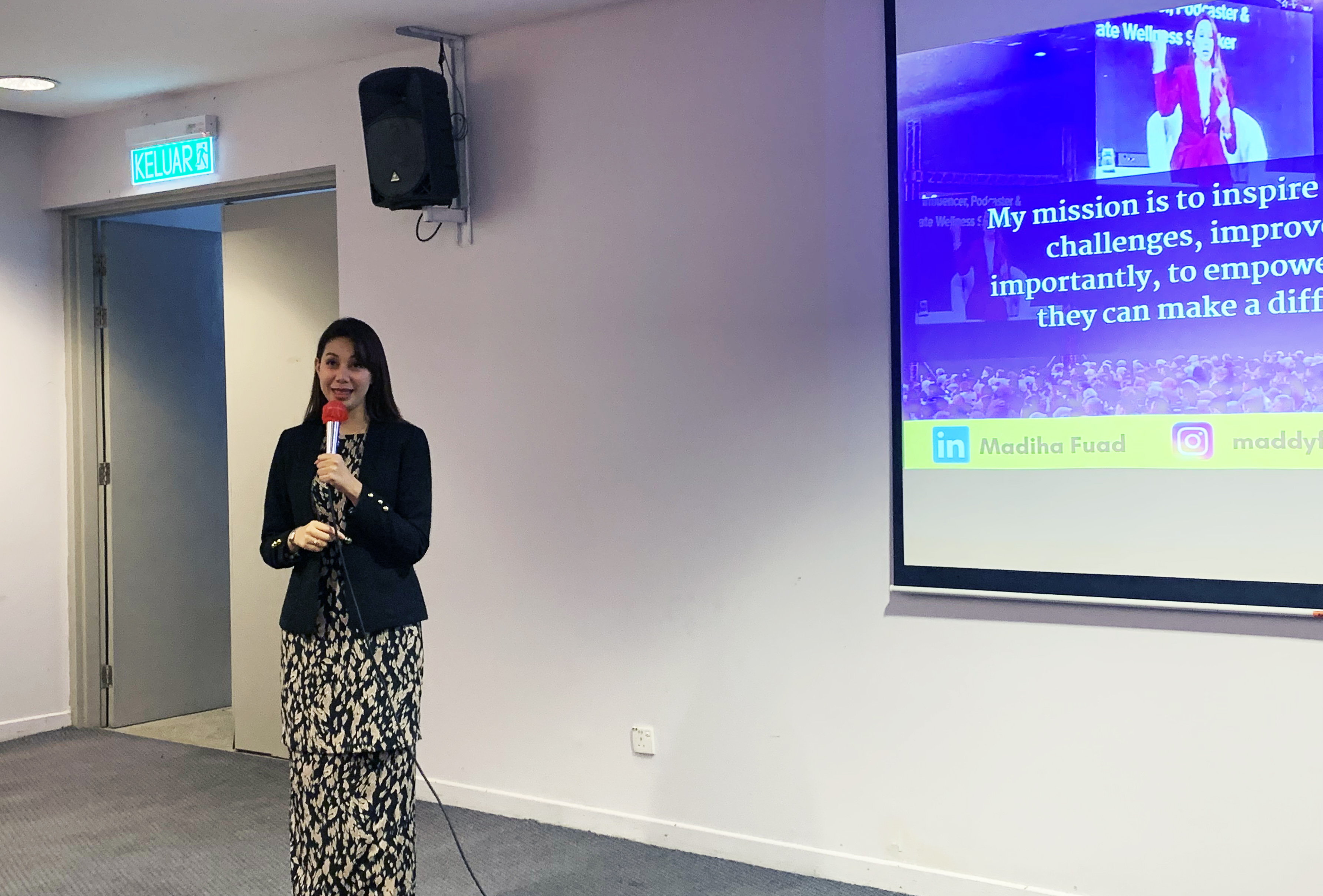
Ms Madiha introducing herself
Ms Madiha began her talk by emphasising the importance of mental health. She stated, “Mental health is just like physical health—it is an essential aspect of overall well-being. It affects your thoughts, emotions, relationships, and your ability to handle different situations. My mission today is to inspire people to overcome life’s challenges, improve systems, and most importantly, empower individuals to believe they can make a difference in the world.”
She elaborated on cognitive behavioural therapy, which addresses the interplay of three factors, namely thoughts (what we tell ourselves in a given moment), feelings (how those thoughts make us feel emotionally) and behaviours (actions we take based on our feelings). Ms Madiha also shared a video illustrating the “stress bucket” model, which visualises the accumulation of trauma, worry, stress, distress, and anxiety. To manage stress, she recommended coping strategies like spending time with friends, exercising, resting, listening to music, engaging in hobbies, meditating, and maintaining a healthy diet.
Next, Ms Madiha introduced the “4 A’s” of stress management that people can use when they encounter stress. (1) Avoid negative environment and stressful situations; (2) Alter— change your work schedules, delegate your tasks accordingly and find alternative perspectives; (3) Adapt by practising gratitude, building resilience, and cultivating mindfulness. (4) Accept— focus on self-care, practise forgiveness, let go of perfectionism and acknowledge your limitations.
She also highlighted the “PlusVibes” app, available on the Play Store and App Store, as a resource for those seeking someone to talk to. The app provides free, 24/7 on-demand support, personalised coaching, and fully confidential sessions. “Therapy sessions remain anonymous and are deleted upon completion,” she explained.
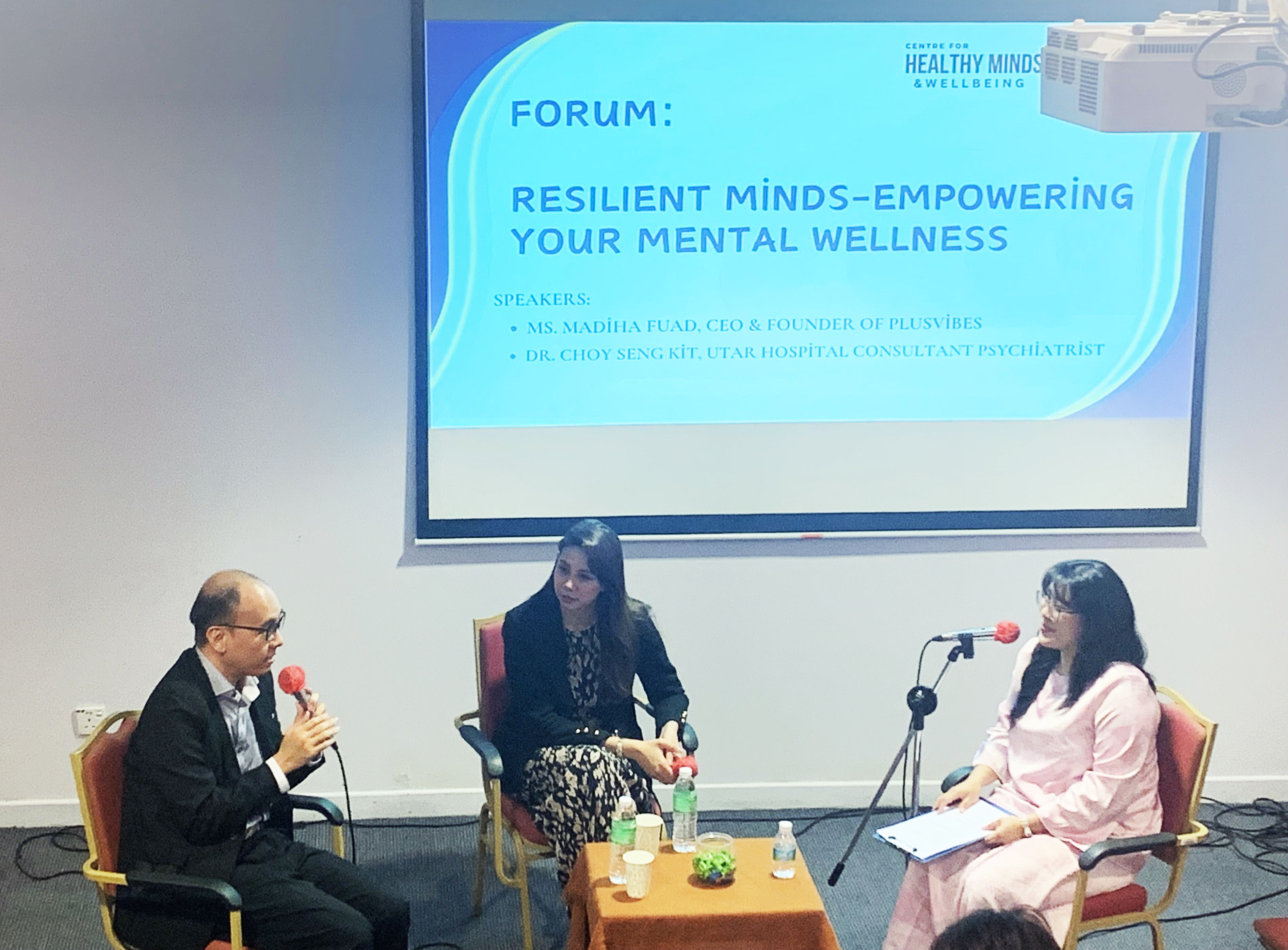
From left: Dr Choy, Ms Madiha and Ms Celeste Tan Kir Nie during the panel discussion
The second panellist, Dr Choy, spoke about mental resilience and practical ways to maintain mental health and well-being. He remarked, “Mental resilience is the ability to overcome challenges and navigate ups and downs. It’s essential to identify the support systems you need to handle difficult situations. Facing challenges alone or bottling up your emotions can lead to unwanted stress, anxiety, or even depression. Remember, seeking help is not a weakness but a step toward learning how to handle life’s challenges, one chapter at a time.”
Dr Choy also discussed how social media can contribute to mental health issues, particularly FOMO (Fear of Missing Out). He explained, “The younger generation often struggles with FOMO, which can cause stress and lead to depression. It isolates individuals as they focus on their phones and social media, disrupting sleep patterns and mental health. To build resilience, you need to face challenges head-on and avoid giving up when things get tough. Negative thoughts, the first stage of depression, can impact self-esteem. While not all problems can be solved, seeking help can offer new perspectives and solutions.”
The insightful forum concluded with a Q&A session and a group photo. The participants left with valuable knowledge and strategies to empower their mental health and embrace wellness in their daily lives.
© 2024 UNIVERSITI TUNKU ABDUL RAHMAN DU012(A).
Wholly owned by UTAR Education Foundation (200201010564(578227-M)) LEGAL STATEMENT TERM OF USAGE PRIVACY NOTICE