
The Magallanes World Study Tour (MWST) 3.0 commenced
at its first station at Hiroshima University (HU) on 5 November 2024, via
Zoom.
It was a virtual study tour organised by the UTAR
Office of International Affairs in collaboration with seven universities,
namely Beijing Jiaotong University, FH Münster University of Applied
Sciences, Hiroshima University, Manchester Metropolitan University,
Universiti Malaysia Sarawak, University of Ottawa and University of Taipei.
These universities hosted a total of eight stations from 5 November 2024 to
4 December 2024, at no cost.
This year’s theme, Discover Urban Nature: Step into a
Sustainable Future, addressed the importance of green and sustainable
cities in reducing environmental impact and improving quality of life.
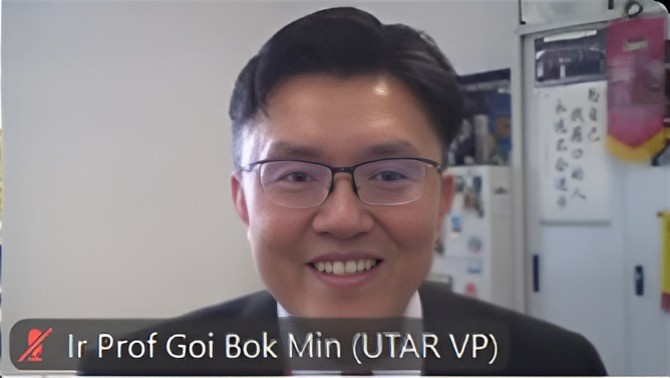
Prof Goi during his speech
Officiating the launch of
MWST 3.0, UTAR Vice President for Internationalisation and Academic
Development Ir Prof Dr Goi Bok Min said, “This year’s tour is about more
than visiting these places virtually; it’s about learning from global ideas
that address some of the biggest challenges of our time. Today’s world faces
pressing issues such as climate change, rapid urbanisation and resource
scarcity, making sustainable urban development essential not only for the
environment but for the quality of life and well-being of communities. Each
stop on this tour brings fresh insights into building resilient, vibrant
cities that harmonise with nature.”
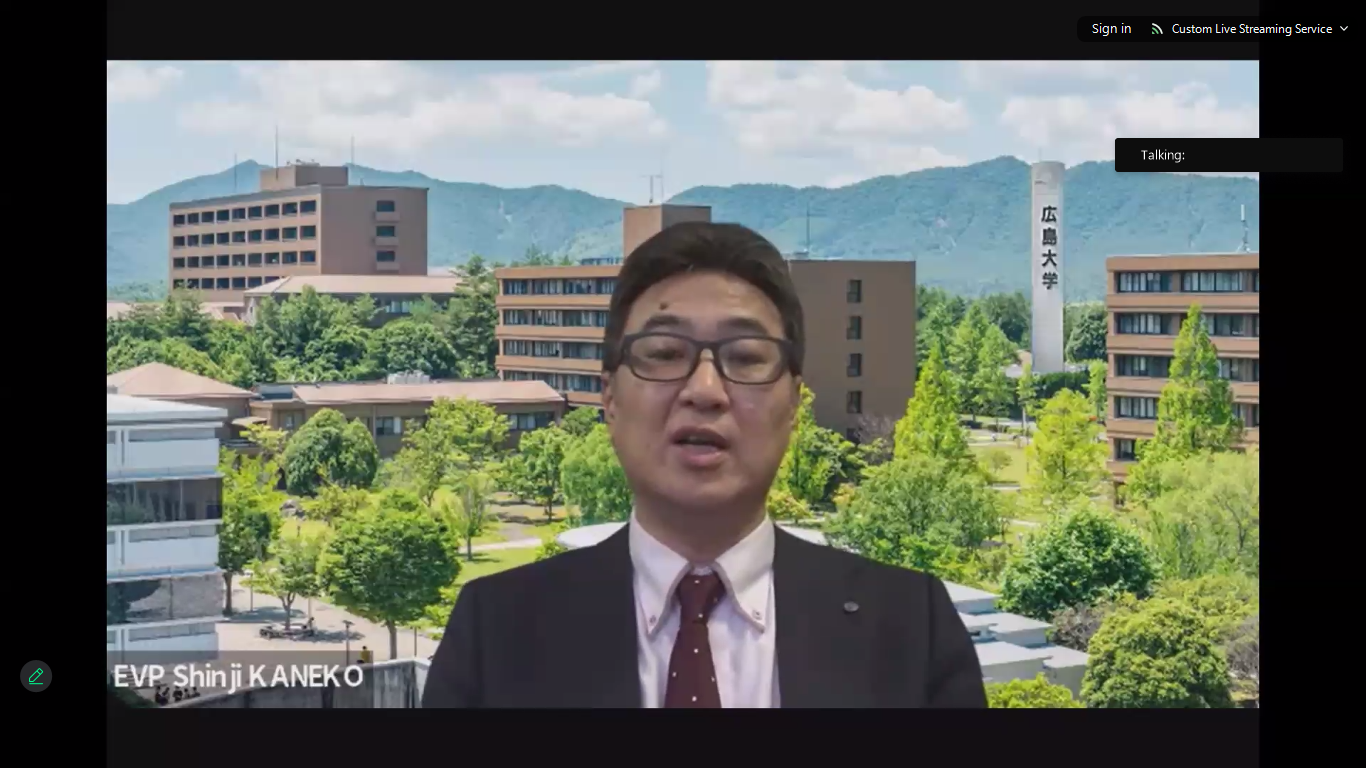
Prof Kaneko conveying his greetings
through a recorded video
HU Executive Vice President Prof Shinji Kaneko,
conveyed his greetings via a recorded video message, highlighting HU’s high
ranking in the Times Higher Education SDG rankings and reaffirming the
university’s commitment to these goals. He said, “I encourage all students
to embrace this programme with curiosity and enthusiasm. By participating,
you are taking a step toward becoming global leaders, prepared to contribute
to making our world better. The knowledge and friendships you built here
will be invaluable as you pursue future challenges and opportunities.”
HU Town & Gown Office Senior Researcher Mr Masamichi
Takase and School of Integrated Arts and Sciences Dean Prof Toshihiro Yamada
were the invited speakers for the first station. They presented their topic
titled Toward a New Japanese Life
Style with Nature: The Case of Hiroshima University. It was moderated by
HU master’s student Mr Hitoshi Aoyagi.
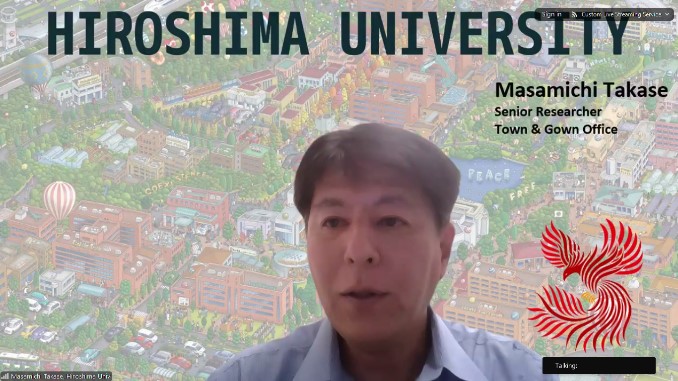
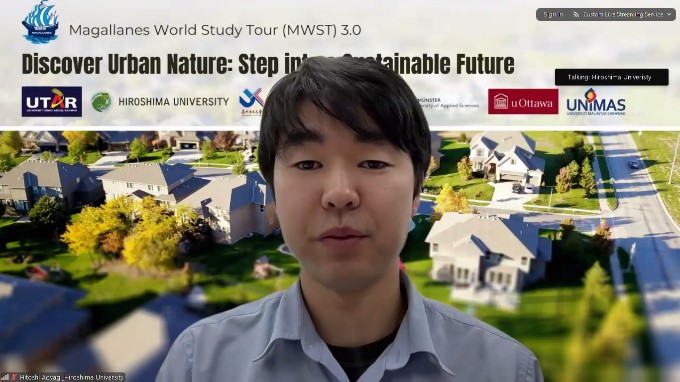
Mr Takase (left) and Mr Aoyagi
Mr Takase, in his presentation, talked about the Town & Gown initiative and how universities, local municipalities and private companies share the region’s vision and work together for town development. He also highlighted efforts within this initiative aimed at achieving carbon neutrality.
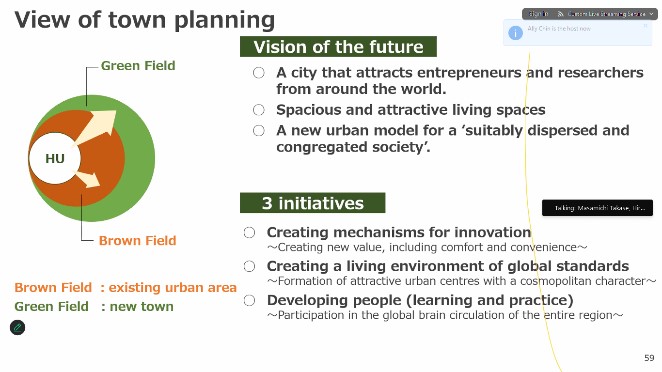
Mr Takase explaining the view of town planning
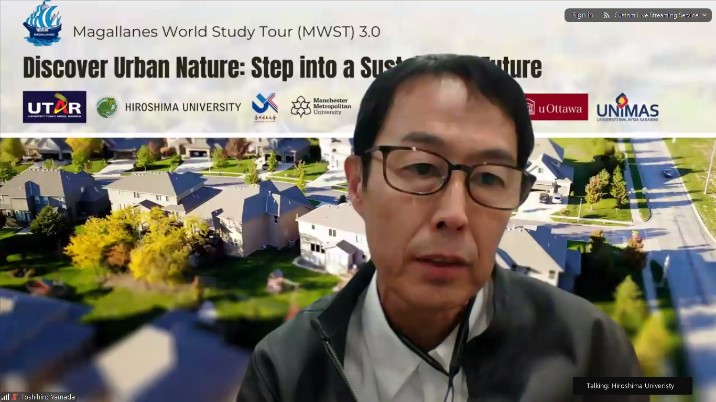
Prof Yamada
Prof Yamada, on the other hand, spoke about the charm and beauty of the
historic city of Hiroshima, highlighting its rich culture and significance.
He warmly invited participants to visit Hiroshima someday to experience its
unique attractions and vibrant heritage first-hand. Meanwhile, he also
shared an overview of Miyajima’s evergreen broadleaf forests, the wild
animals found on Miyajima island, and the vital role these forests play in
mitigating global warming.
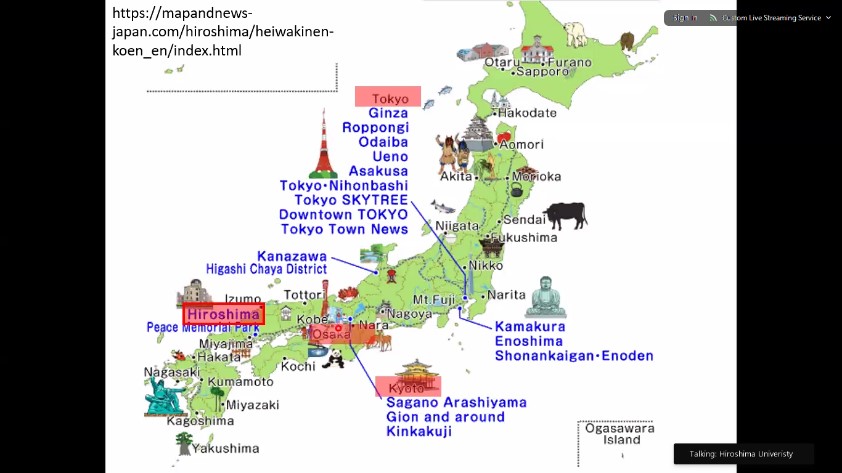
Prof Yamada explaining the map of Japan
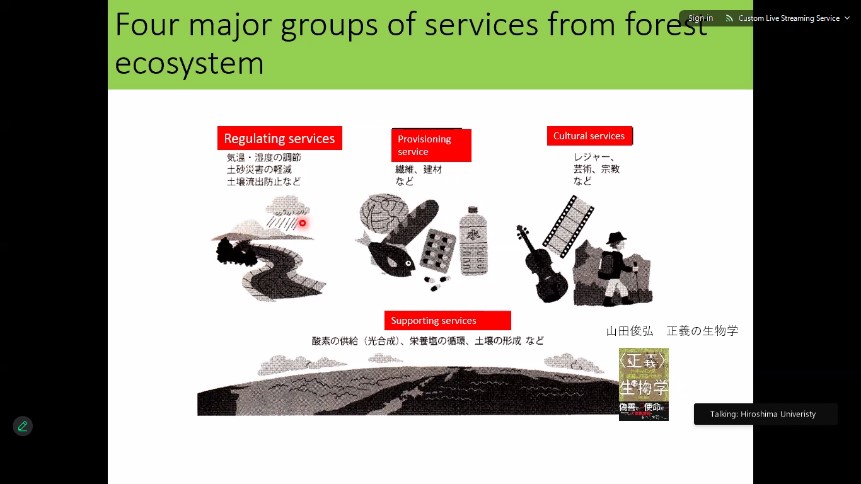
The four major groups of services
The MWST 3.0 reached its second station at the
University of Taipei on 12 November 2024. The session featured Prof Sun
Lih-Chyun from the University of Taipei Department of Urban Industrial
Management and Marketing.
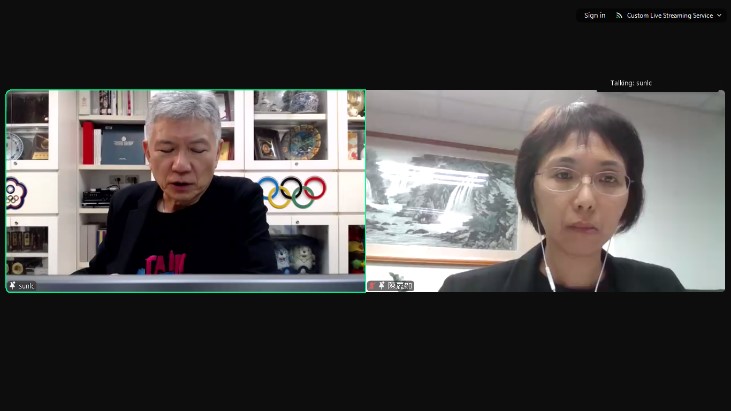
Prof Sun (left) and Prof Chen
Prof Sun delivered an inspiring talk titled Smart Taipei for Liveability and
Sustainability, highlighting the vision of building a Centre of Hope.
The session was moderated by College of City Management Dean Prof Chen
Li-Ju.
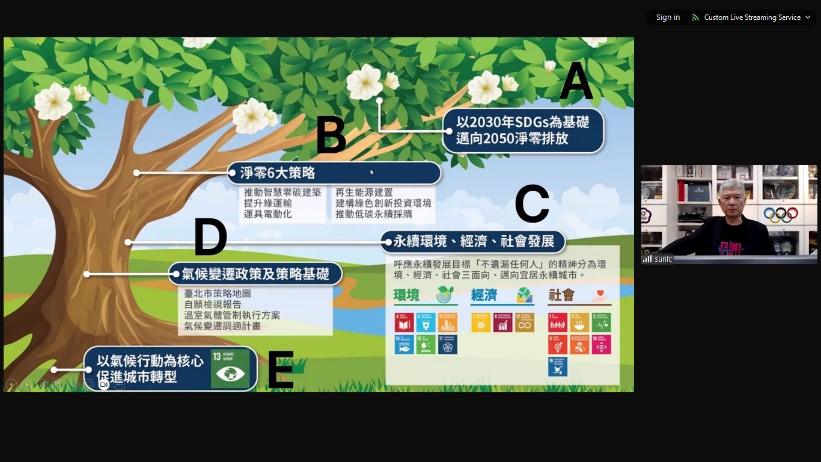
Prof Sun explaining the five steps
towards achieving the vision of sustainable development of Liveable and
Sustainable Taipei City
In his presentation, he talked about the history of
Taipei City, its natural environment, people, competitiveness, and recent
major economic developments, including the 4+1 industry park. He also
introduced the University of Taipei to the attendees and highlighted the
city’s liveability and sustainability efforts, focusing on the Voluntary
Local Review and the SDGs. He mentioned that by 2030, Taipei City aims to
reduce carbon emissions by 40 per cent and achieve net-zero emissions by
2050, striving for a liveable, sustainable city with environmental, economic
and social harmony.
Station 3:
Manchester Metropolitan University
Manchester Metropolitan University (MMU) showcased
its efforts to redefine urban sustainability at the third stop of MWST 3.0,
which took place on 15 November 2024. The focus was on All Saints Park, a
revitalised green space at the heart of the university. Once an ordinary
urban area, the park was transformed into a vibrant and biodiverse
environment that enhanced ecological health, promoted human well-being and
strengthened community connections.
Dr Paul Micklethwaite, Reader in Design Innovation
and Research Lead at MMU’s School of Art, delivered an engaging presentation
highlighting the strategies employed in this transformation. His talk
explored how sustainable design principles are applied to create a
"more-than-human" urban environment—one that considers the needs of both
people and nature. Dr Rachelle Viader Knowles, Head of International for the
Faculty of Arts and Humanities at MMU, joined the session and contributed
valuable insights into the university’s broader international collaborations
and its vision for integrating sustainability into education and research.
Moderated by MMU’s academic team, the session sparked
lively discussions on how these innovative approaches could inspire urban
renewal projects globally. The visit also showcased MMU’s broader commitment
to sustainability, with its ambitious goal of achieving carbon neutrality by
2038. Participants learned about the university’s leadership in embedding
sustainable practices into its curriculum and research initiatives,
reflecting its standing as one of the UK’s top institutions for
environmental innovation.
By providing a case study in practical, scalable
solutions for urban challenges, this station underscored MMU’s dedication to
fostering sustainability in education and global collaboration.
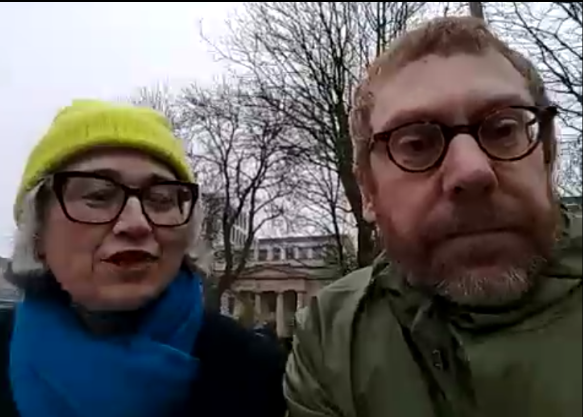
Dr Knowles (left) and Dr
Micklethwaite (right)
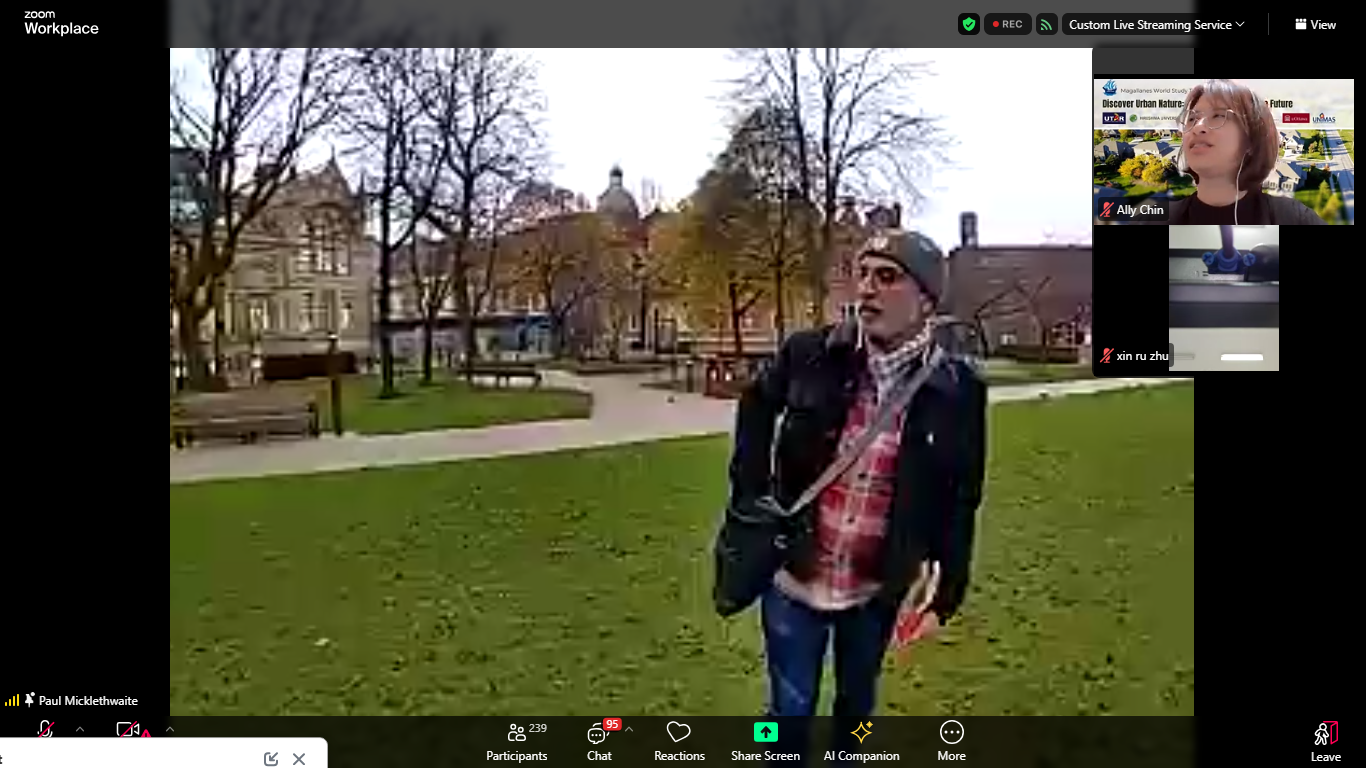
A frequent feeder of the squirrels in
All Saints Park
Station 4:
Beijing Jiaotong University
On 20 November 2024, MWST 3.0 presented Beijing
Jiaotong University (BJTU). The
virtual event featured distinguished speakers, Prof Zhang Chun and Dr Xie
Shuyi, both from BJTU’s Department of Urban and Rural Planning, who shared
their expertise on the intersection of heritage conservation and urban
modernisation at the session titled The Sustainable Development of Urban Heritage and Modern Transportation
in China.
The session explored the challenges facing urban
heritage in China, stemming from rapid economic growth over the past four
decades. Prof Zhang and Dr Xie offered valuable insights into balancing the
demands of heritage preservation with modernisation, drawing comparisons
between Chinese and Western approaches. They also highlighted Beijing’s
sustainable development efforts as a model for fostering global
understanding and collaboration in urban planning.
The session brought together academics, students, and
urban planning professionals, serving as a platform for meaningful knowledge
exchange. Discussions centred on innovative strategies to preserve urban
heritage amidst the pressures of redevelopment, showcasing BJTU’s commitment
to advancing sustainable urban growth and cultural conservation.
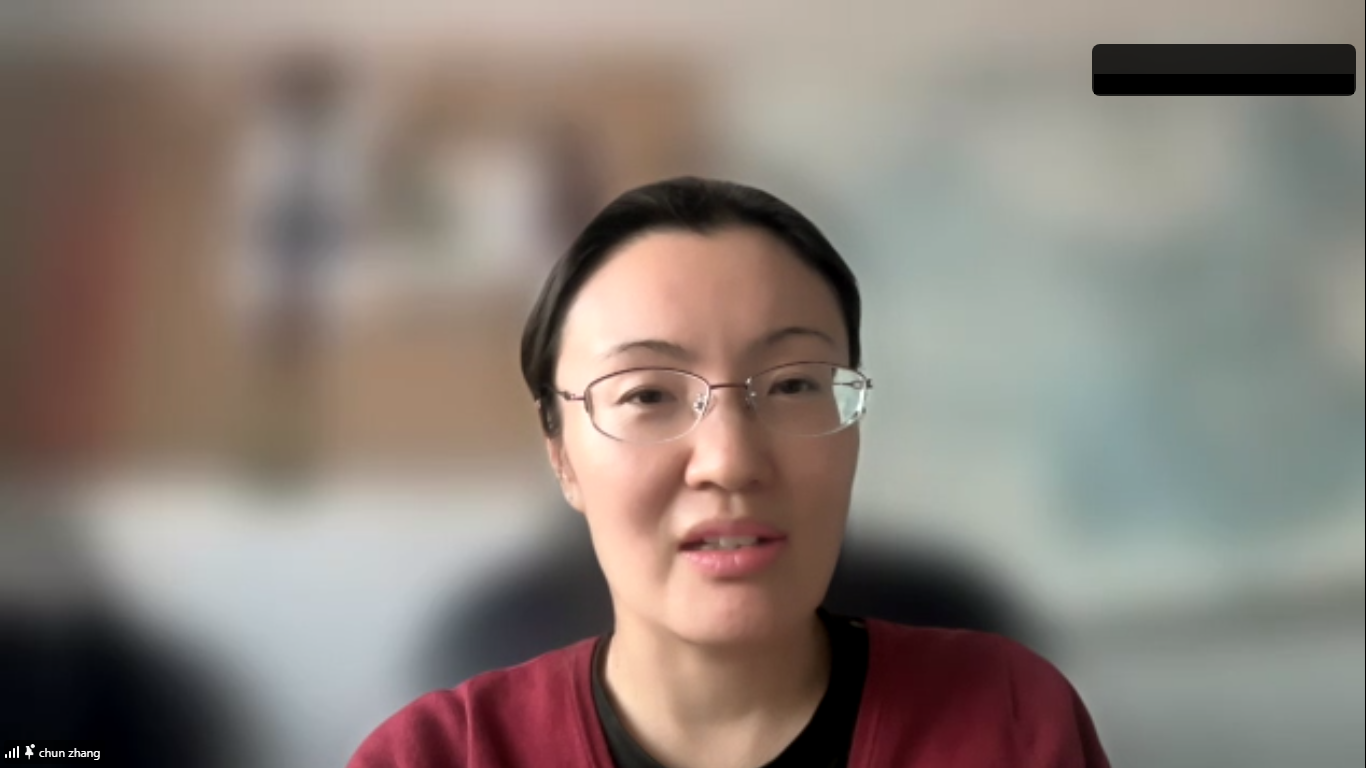
Dr Zhang
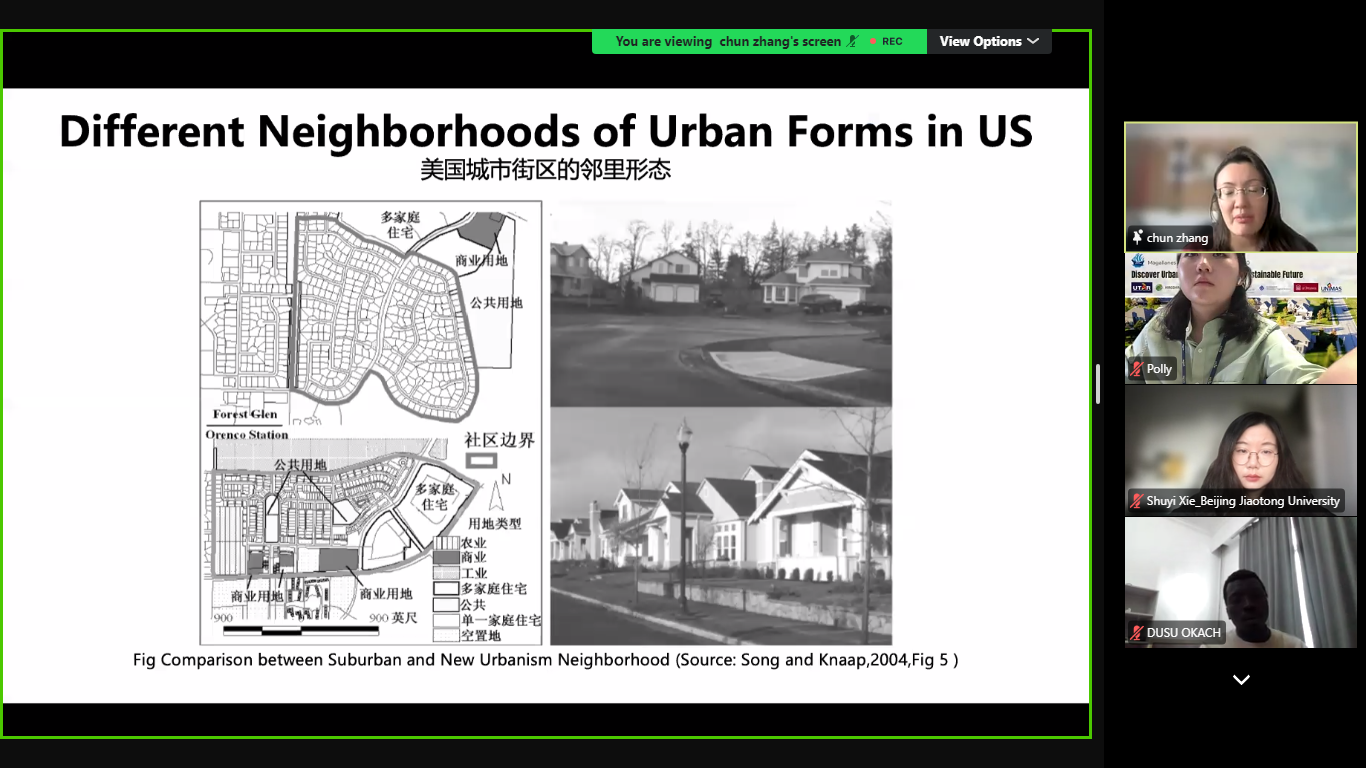
Dr Zhang explaining the different
neighbourhoods of urban forms in US
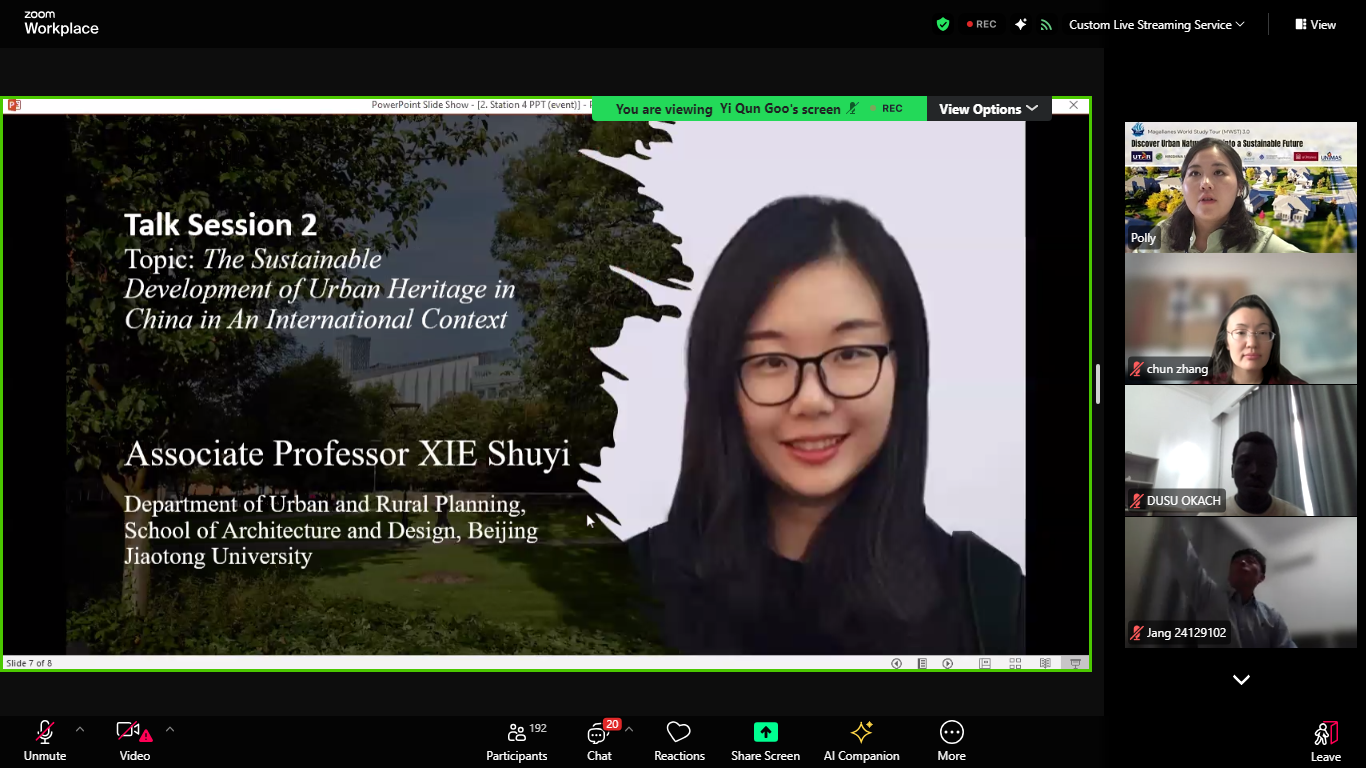
Dr Xie
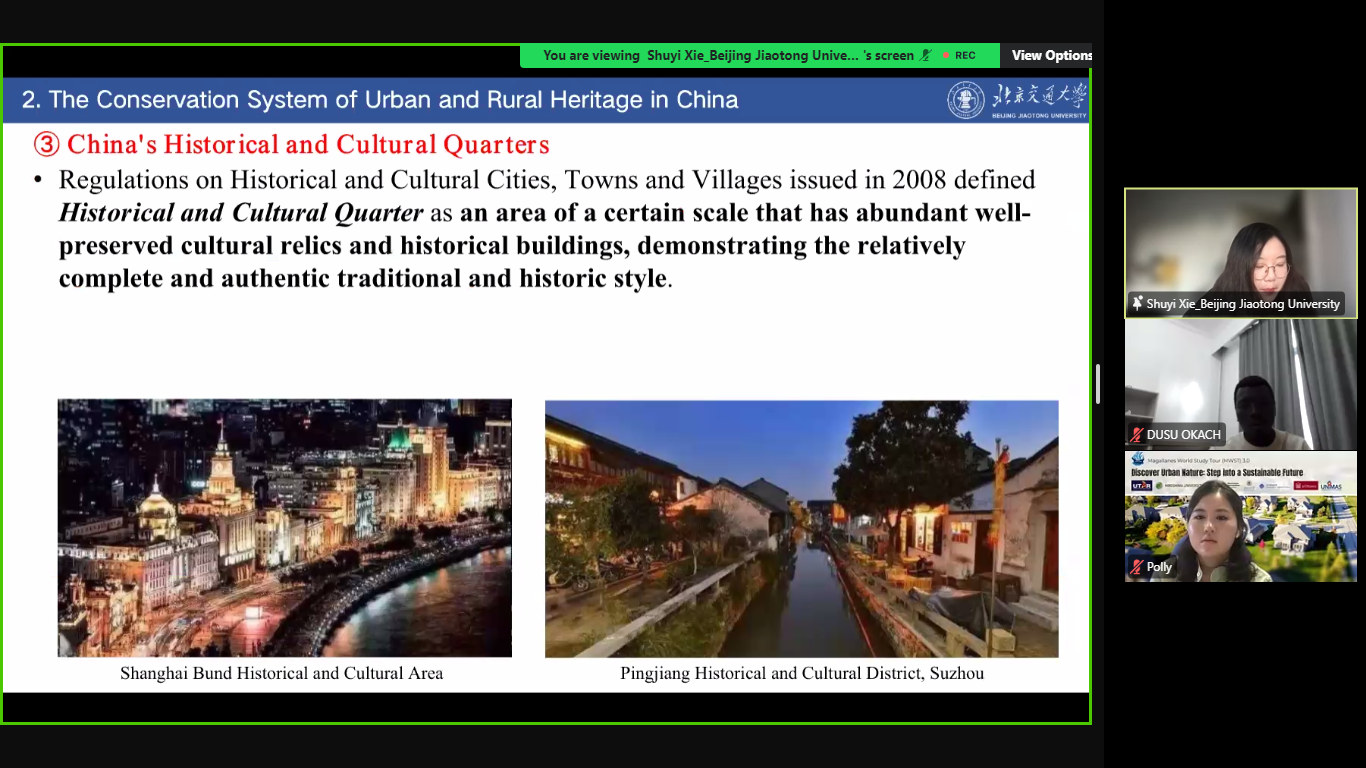
Dr Xie elucidating the conservation
system of urban and rural heritage in China
Station 5: FH
Münster University of Applied Sciences
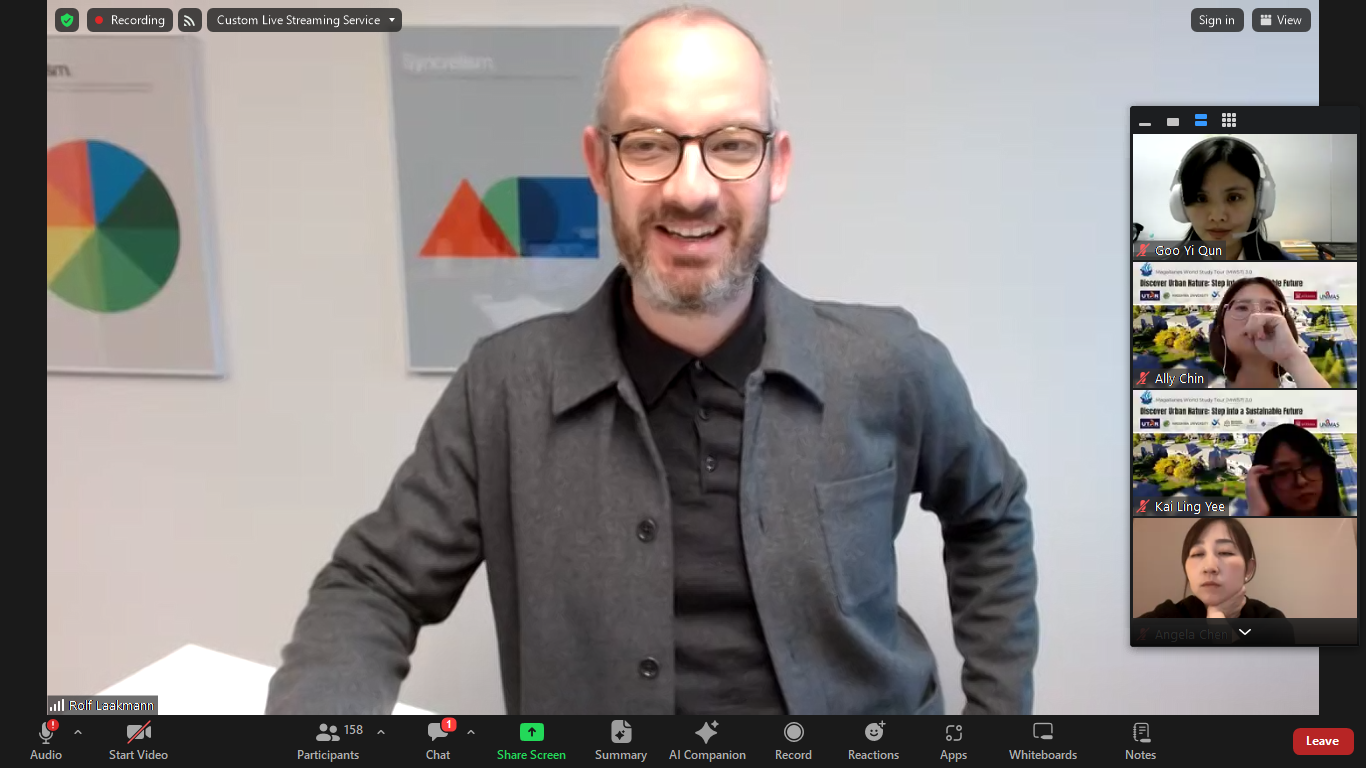

Mr Laakmann (left) and Prof
Franzen-Reuter
On 26 November 2024, the fifth station featured a
session titled, Third Mission of
Universities, co-organised by FH Münster University of Applied Sciences.
The session highlighted how academic institutions can drive meaningful
societal change.
The session featured insightful presentations from Mr
Rolf Laakmann, Board Member of TAFH Münster GmbH, who introduced FH
Münster’s innovative projects, and Prof Dr Isabelle Franzen-Reuter,
Vice-President for Teaching, Sustainability, and University Planning. Prof
Franzen-Reuter shared strategies for universities to integrate
sustainability into their broader missions beyond traditional academia. The
engaging session showcased FH Münster’s leadership in fostering impactful
connections between education, research and community sustainability.
Station 6:
University of Ottawa
The MWST 3.0 continued its journey with station 6 on 28 November 2024, co-hosted by the University of Ottawa. The session, titled Cities of Tomorrow: How Climate Change Awareness Shapes Urban Sustainability, explored the critical intersection of climate action and urban development.
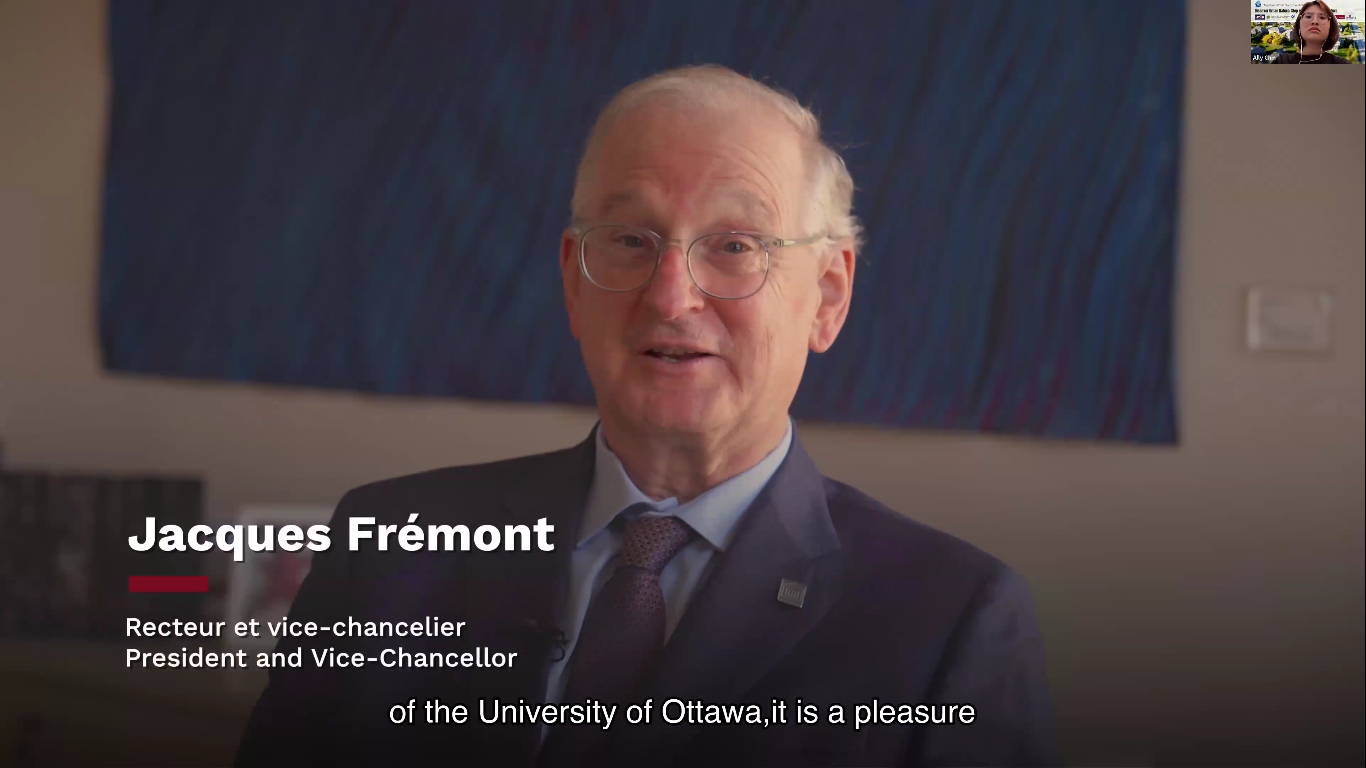
Prof Frémont delivering his message
The session began with a land acknowledgement and an
introduction by moderator Ms Jinny Wu, Manager of International Partnerships
Development. Next, Prof Jacques Frémont, President and Vice-Chancellor of
the University of Ottawa, delivered a heartfelt greetings message,
emphasising the importance of global collaboration in sustainability.
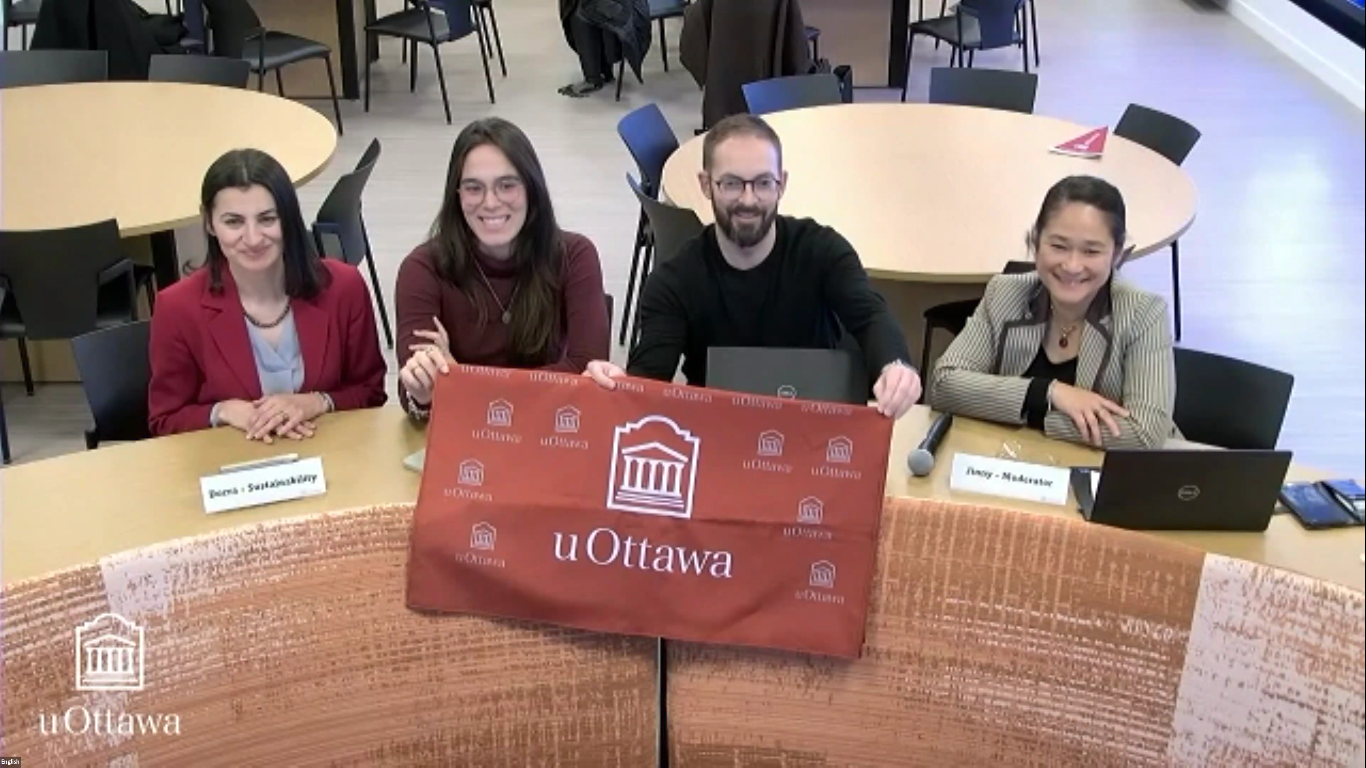
From left: Prof Jlouli, Ms Veiga, Mr
Gougeon and Ms Jinny Wu
The highlight of the event was a thought-provoking
talk by Prof Dr Dorra Jlouli, an expert in sustainability and innovation
from the Telfer School of Management. Prof Jlouli delved into how climate
change awareness is driving transformative strategies in urban planning,
fostering resilience, and ensuring long-term sustainability in cities
worldwide. The session also
featured enriching insights from Ms Yasmin Adania Veiga, a 4th-year Bachelor
of Social Science student, who introduced participants to Canada’s vibrant
culture, sports, and gastronomy. Concluding the event, Mr Marc-André
Gougeon, Manager of International Market Development, provided an overview
of the University of Ottawa’s programmes and global engagement initiatives.
As part of its series, Stations 7 and 8 highlighted
innovative efforts in Malaysia to advance low-carbon and sustainable urban
futures.
Station 7:
Universiti Malaysia Sarawak
Co-organised with Universiti Malaysia Sarawak
(UNIMAS), Station 7 centred on
Sarawak’s Low Carbon Future: Initiatives and Pathways Forward. Held on 2
December 2024, the virtual event explored Sarawak’s journey toward
sustainable development through insightful discussions led by experts.
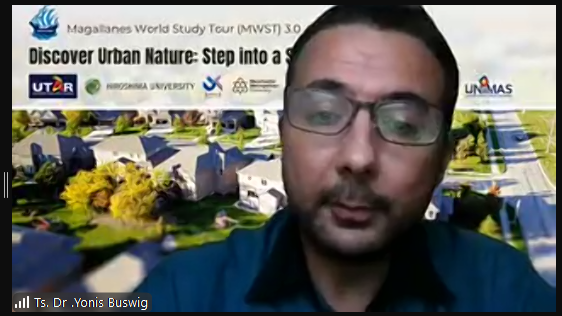
Dr Yonis Buswig moderating the Q&A
session
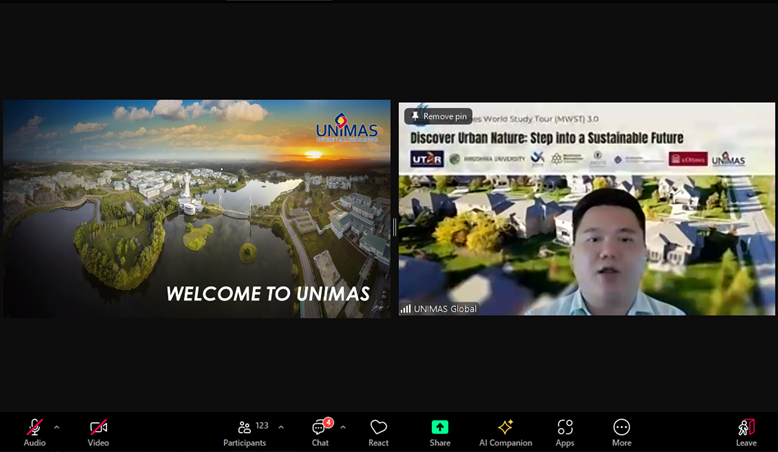
Mr Thian introducing UNIMAS to the
participants
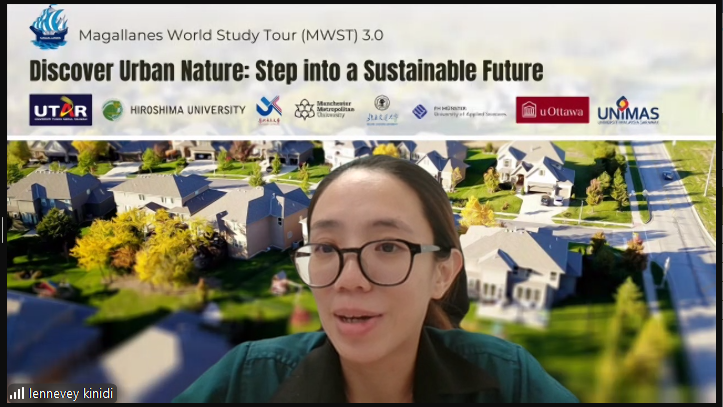
Dr Lennevey emphasising the
importance of low-carbon future
The session started with an introduction to UNIMAS by
UNIMAS Global Director Mr Thian Foong Fatt, followed by a presentation by Dr
Lennevey Kinidi, a lecturer and research fellow at the Institute of
Sustainable and Renewable Energy. She shed light on Sarawak’s low-carbon
strategies. The event concluded with a lively Q&A session, moderated by
UNIMAS Ts Dr Yonis Buswig.
Station 8:
UTAR
The last station, which was held on 4 December 2024,
was hosted by UTAR as the participants delved into
Towards Sustainable Urban Futures:
Transformative Approaches in Malaysia. The session featured a line-up of
speakers addressing key aspects of urban sustainability.
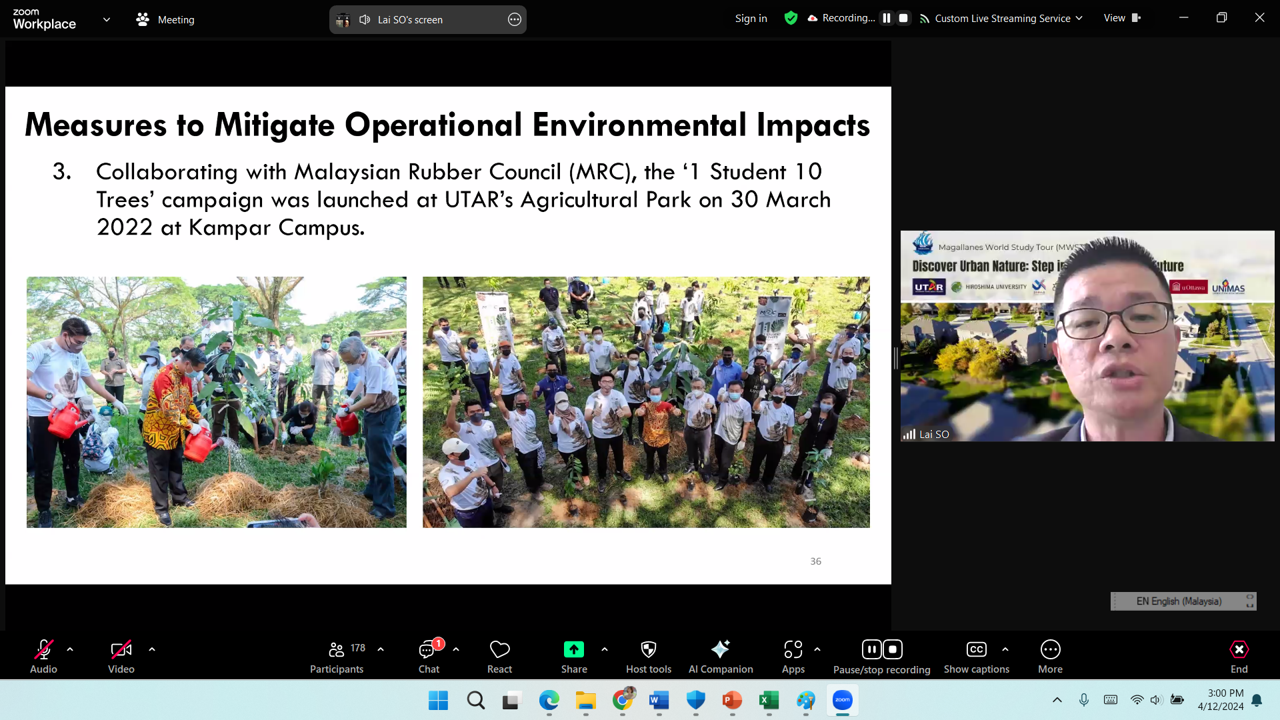
Dr Lai sharing the strategic plan of
UTAR Green Campus Committee
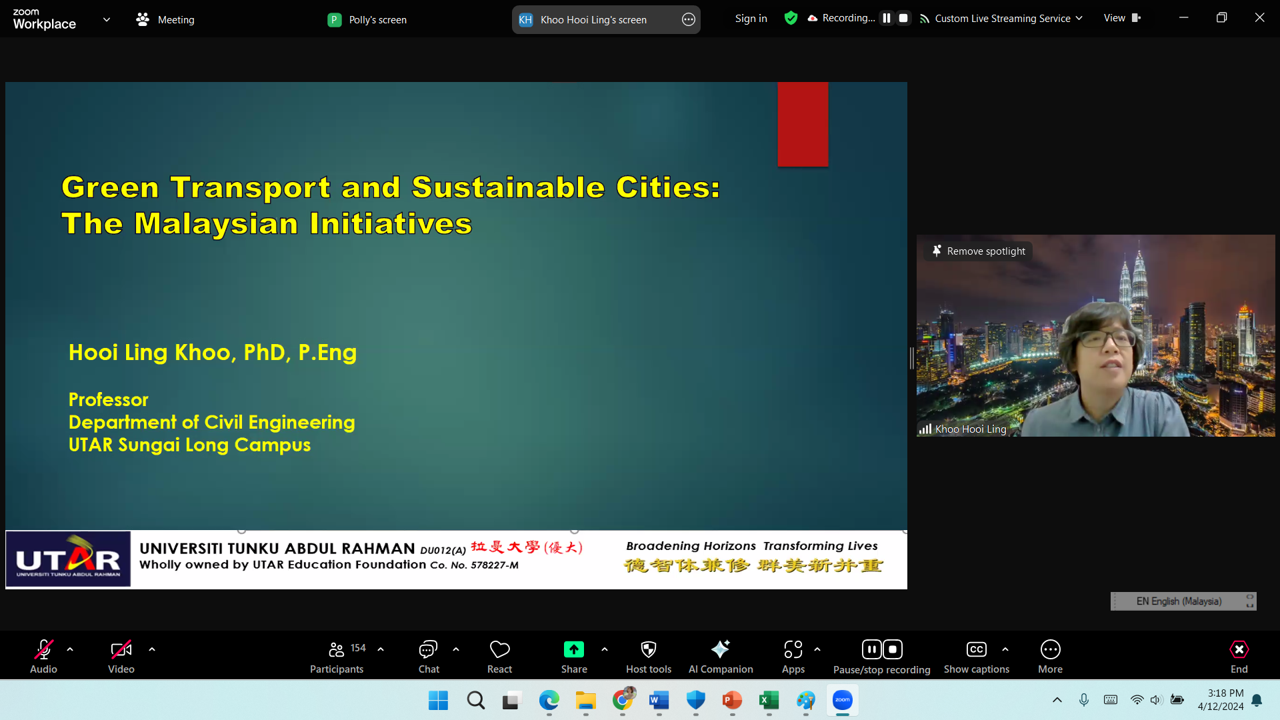
Prof Khoo highlighting the need for
sustainable transportation system
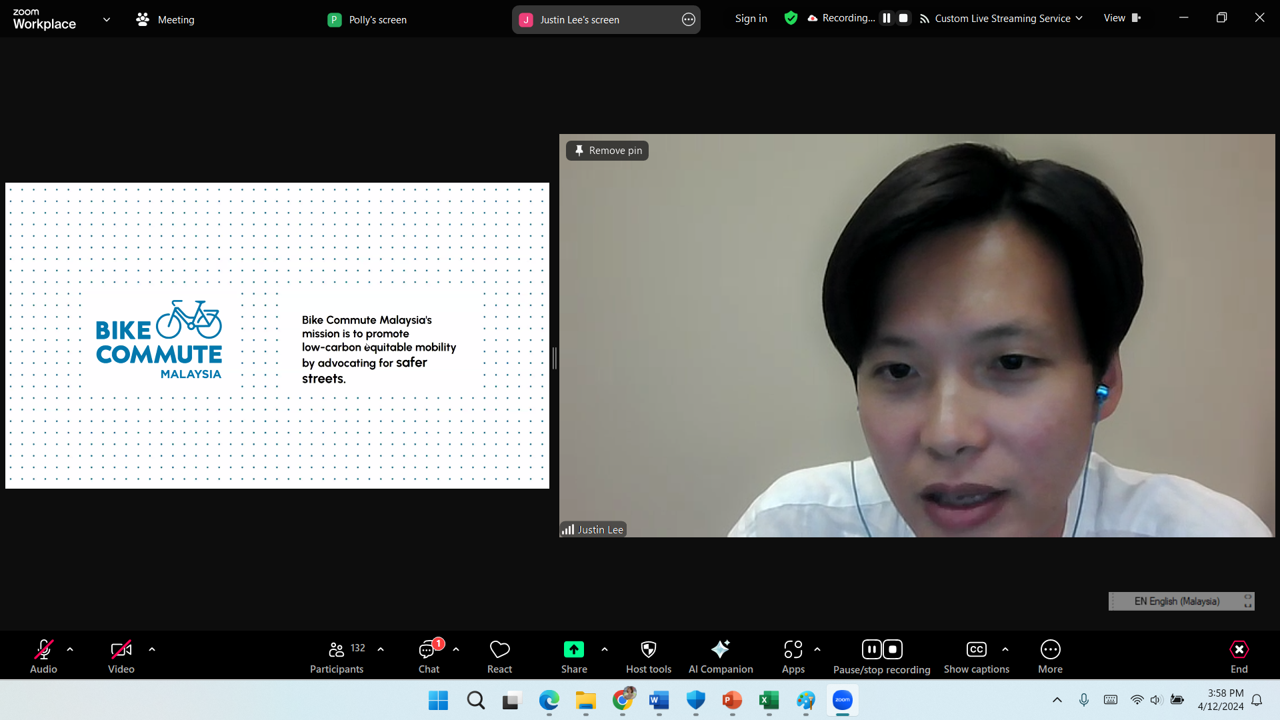
Justin Lee sharing his vision on
people-friendly streets
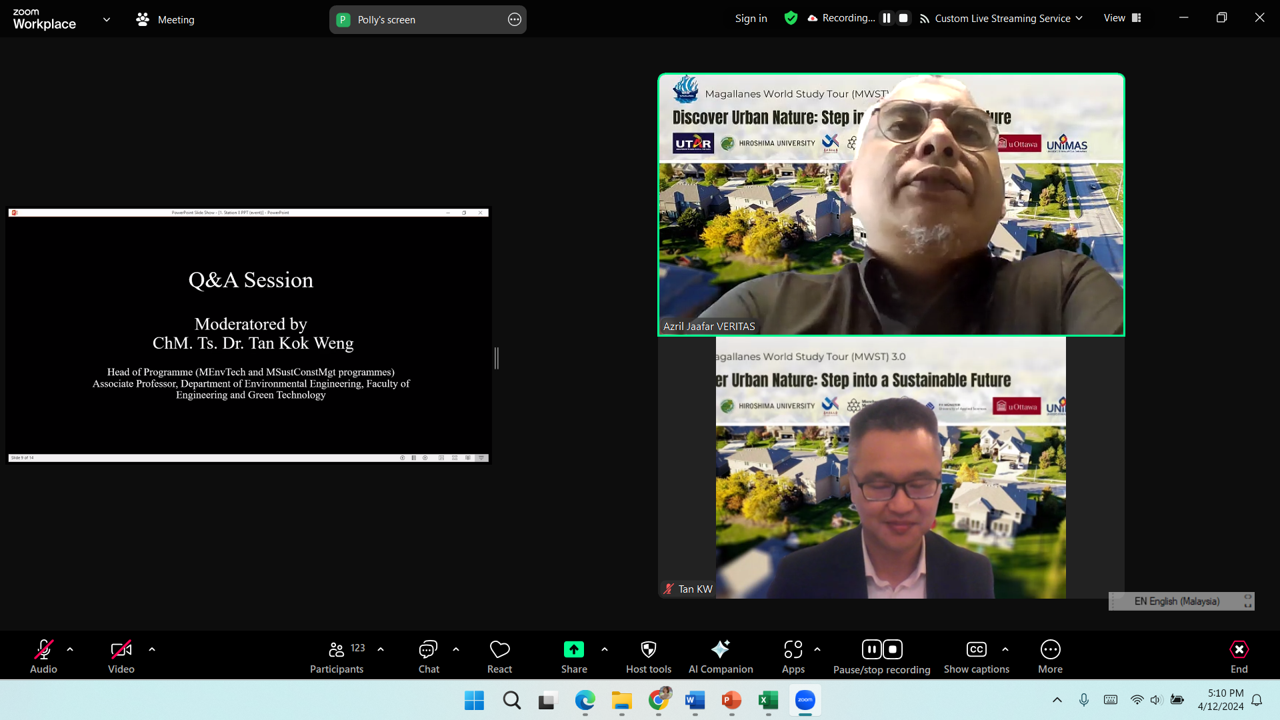
Ar Azril (top) sharing his thoughts
on design strategies
The event was moderated by UTAR Faculty of
Engineering and Green Technology MEnvTech and MSustConstMgt Programmes Head
Assoc Prof ChM Ts Dr Tan Kok Weng. At the session, Office of International
Affairs Director Assoc Prof Dr Lai Soon Onn presented on
UTAR Green Initiatives Towards A
Sustainable Campus while Ir Prof Dr Khoo Hooi Ling delivered a
presentation titled Green Transport
and Sustainable Cities: The Malaysian Initiatives. At the same time,
Founder of Bike Commute Malaysia Mr Justin Lee shared his vision for
people-friendly streets in Malaysia and VERITAS Design Group Principal and
Director Ar Azril Amir Jaafar shared insights on transformative urban
design.
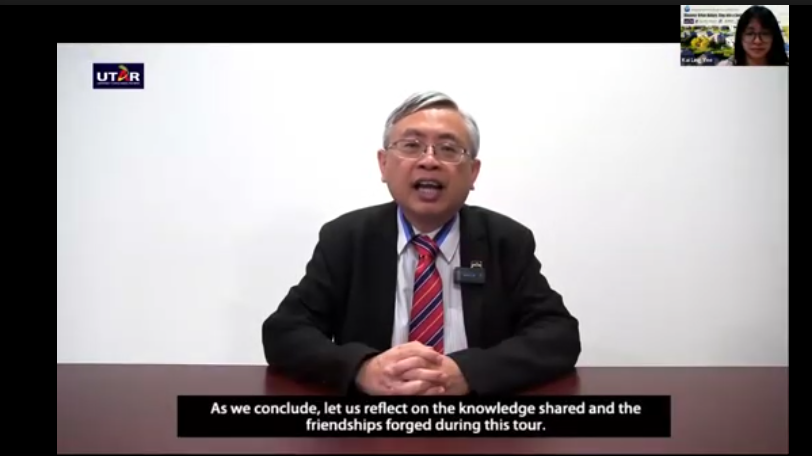
Prof Dato’ Ewe delivering his speech
The session culminated in a closing speech by UTAR
President Ir Prof Dato’ Dr Ewe Hong Tat as he said, “This virtual study tour
has been a celebration of connection, connecting across borders,
disciplines, and cultures. It is my hope that the insights and relationships
you have gained from this event will inspire you to lead sustainable
transformations in your own communities. Remember, change begins with a
vision and a commitment, and each of you holds the power to create lasting
impact.”
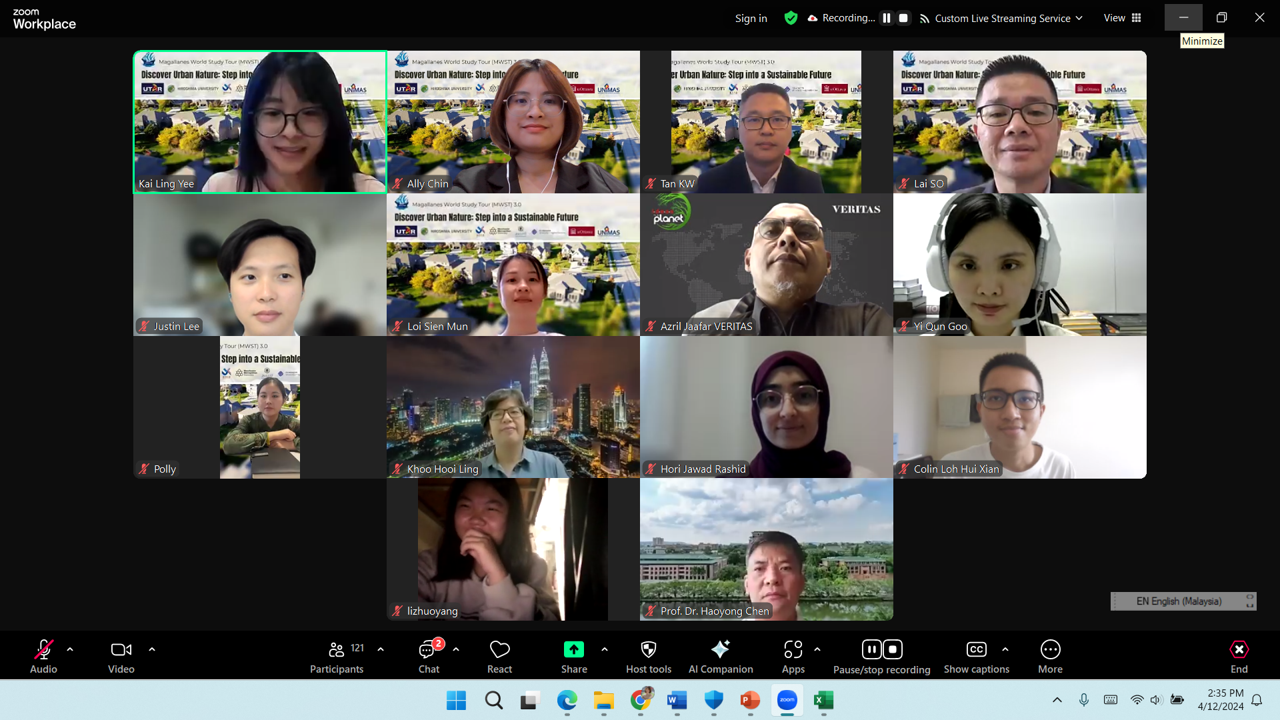
Group photo of participants and
speakers at Station 8
Click the links below for the full video:
Station 1:
Hiroshima University/span>
Station 2:
University of Taipei
Station 3:
Manchester Metropolitan University
Station 4:
Beijing Jiaotong University
Station 5:
FH Münster University of Applied Sciences
Station 6:
University of Ottawa
Station 7:
Universiti Malaysia Sarawak
Station 8:
Universiti Tunku Abdul Rahman
© 2023 UNIVERSITI TUNKU ABDUL RAHMAN DU012(A).
Wholly owned by UTAR Education Foundation (200201010564(578227-M)) LEGAL
STATEMENT TERM
OF USAGE PRIVACY
NOTICE