The Centre for Accounting, Banking and Finance (CABF), under the Teh Hong Piow Faculty of Business and Finance (THP FBF), organised a talk titled Editor’s Insights: Navigating the Path to High-Impact Publication on 24 July 2025 via Microsoft Teams. The session successfully attracted 334 participants.
The talk featured Assoc Prof Dr Tang Chor Foon from the Centre for Policy Research (CPR), Universiti Sains Malaysia (USM). Dr Tang, an accomplished researcher and one of the world’s top 2% scientists in economics and business (as recognised by Stanford University since 2020), shared practical strategies to improve the chances of publication in high-impact journals. With extensive editorial experience in reputable publishers such as Emerald, SAGE, and Inderscience, Dr Tang offered valuable insights into what journal editors look for in a quality submission.
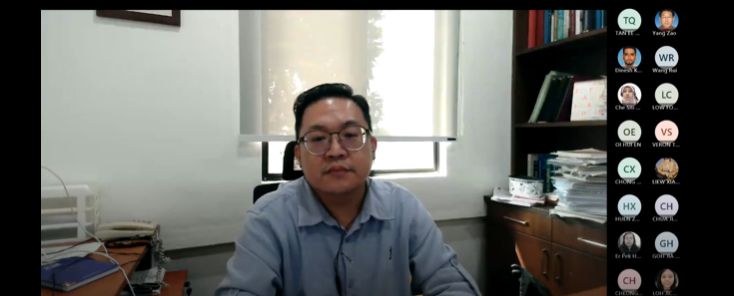
Dr Tang presenting his insights about research and publication
The session aimed to provide participants with an insider’s perspective on the publication process, highlighting the critical qualities that define a publishable manuscript. Key topics included the importance of aligning manuscripts with a journal’s scope, strengthening novelty and managerial contribution, ensuring methodological rigour, and maintaining clarity and coherence in writing. Dr Tang also discussed strategies to avoid desk rejection, ways to interpret reviewer feedback constructively, and best practices for navigating the revise-and-resubmit process.
Dr Tang began by emphasising the significance of research and publication in both academia and industry. He explained that high-impact publications not only expand the frontiers of knowledge but also contribute to personal academic growth, institutional reputation, and societal advancement. In a nutshell, successful publications enhance knowledge sharing, visibility, and access to funding and consultancy opportunities.
“Research and publication are often misunderstood as the same, but in reality, they complement each other and do not operate in isolation,” Dr Tang explained. He further added, “Research refers to the act of inquiry and discovery, while publication is the means through which those findings are shared with the wider community.” Participants were also guided on how to identify suitable journals for submission using various journal selection tools. Dr Tang stressed the importance of aligning research with a journal’s scope, target audience, indexing status, and acceptance criteria, while tailoring manuscripts accordingly.
The talk also stressed the need to develop long-term research competencies, a significant portion of the session. Dr Tang highlighted originality as a key factor in publication success, noting that journals prioritise submissions that offer fresh insights, theoretical contributions, or innovative approaches. To cultivate novelty, he encouraged interdisciplinary collaboration, consistent output, and active engagement in academic networks.
He also reminded participants that acknowledging rejection is part of the publication journey. Common reasons for desk rejection included poor alignment with journal scope, lack of novelty, methodological weaknesses, irrelevance to practice, and weak writing quality. One of the highlights of the session was Dr Tang’s practical advice on interpreting reviewers’ comments and revising manuscripts constructively.
Dr Tang concluded by reiterating the key aspects journal editors look for in a submission. He advised participants to pay close attention to journal guidelines, present their work in a clear and organised manner, and ensure their research offers strong theoretical and empirical contributions. “It is important to tailor a manuscript to the selected journal and to structure it carefully to improve the chances of acceptance,” he remarked.
The talk provided a comprehensive and practical framework for researchers aspiring to publish in high-impact journals. Attendees gained valuable strategies for selecting suitable journals, building sustainable research habits, and navigating the review and revision process effectively. Dr Tang ended by reminding participants, “Research should be viewed as an ongoing journey requiring dedication, curiosity, and resilience.” The session concluded with a Q&A segment.
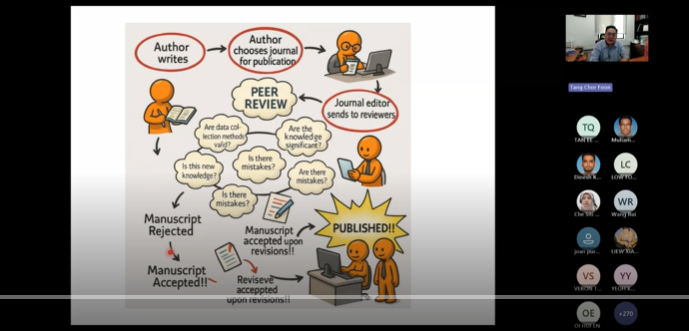
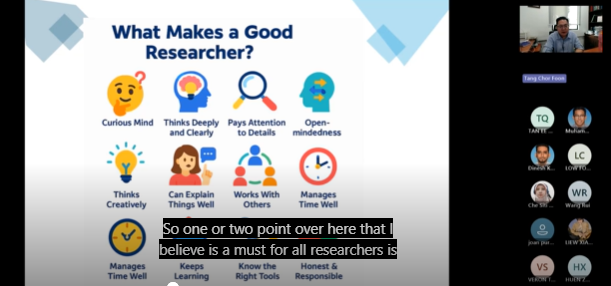
Some of Dr Tang’s presentation slides
© 2025 UNIVERSITI TUNKU ABDUL RAHMAN DU012(A).
Wholly owned by UTAR Education Foundation (200201010564(578227-M)) LEGAL STATEMENT TERM OF USAGE PRIVACY NOTICE