Capturing the latest news and compelling stories, and presenting them with a gripping headline under tight deadlines is a common perception of the news industry. That’s the tip of the iceberg in the world of journalism. Beyond headlines and deadlines also lie the relentless chase for accuracy and the unspoken responsibility of shaping public understanding.
In this modern era of AI in which misinformation can be easily spread across platforms, the responsibility to uphold this bedrock belief becomes ever more critical. At UTAR, journalism education is all about nurturing modern storytellers with vigilance towards truth, sensibility, critical thinking, and ethics to navigate an information landscape that is evolving rapidly.
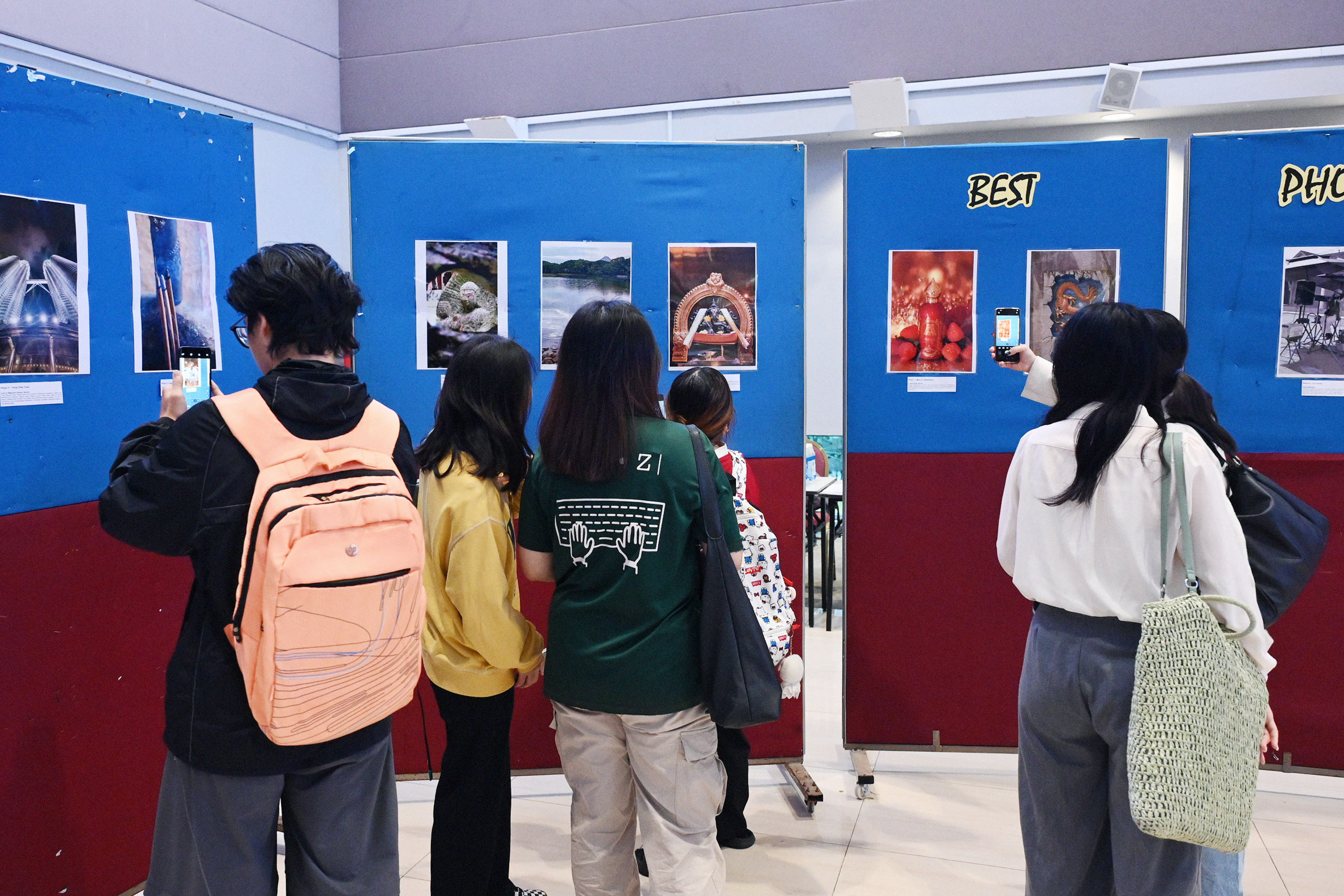
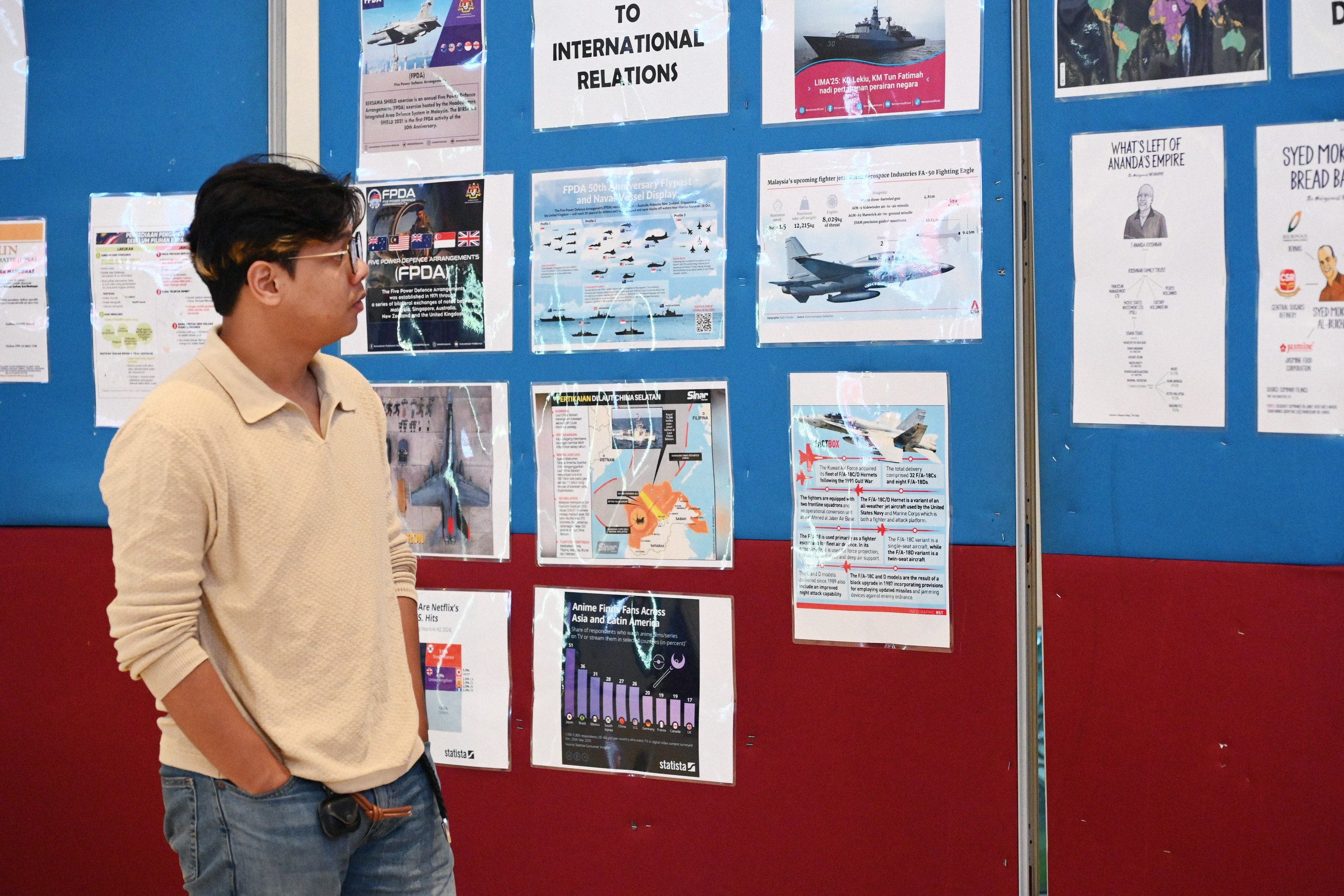
Participants viewing the photo entries and news articles prepared by journalism students before the programme’s inauguration
The Journalism Week 2025 organised by UTAR Faculty of Arts and Social Science (FAS) at the Kampar Campus from 2 to 5 December 2025 captured this essence by exploring deeper storytelling. It not only aimed to provide a platform for academic engagement, industry exposure, and creative exploration, but also to foster a deeper understanding of the crucial role journalism plays in society today.
The four-day programme, themed Beyond the Headlines, delved into the perspectives of media professionals regarding the impact of AI’s emergence in their fields of expertise.
A notable takeaway from the keynote speaker En Mohd Hisham Saleh’s session was his passion and journey in producing independent films through AI technology. As a passionate scriptwriter and filmmaker, he enlightened participants on the latest trends in the film industry, highlighting his innovative use of AI technology to produce films, such as one of his award-winning short films, JIWA KORUP. He shared the techniques and methods used in producing such film. Besides that, En Mohd Hisham also emphasised AI-related ethical issues in the industry, including copyright infringement and false information.
“It could be hard to obtain funds for your passion such as filmmaking. If you cannot achieve it through traditional means, AI is a way to achieve your dream. It’s the future—don’t see it as a threat, but as a challenge,” remarked the seasoned scriptwriter and filmmaker with over 21 years of experience.
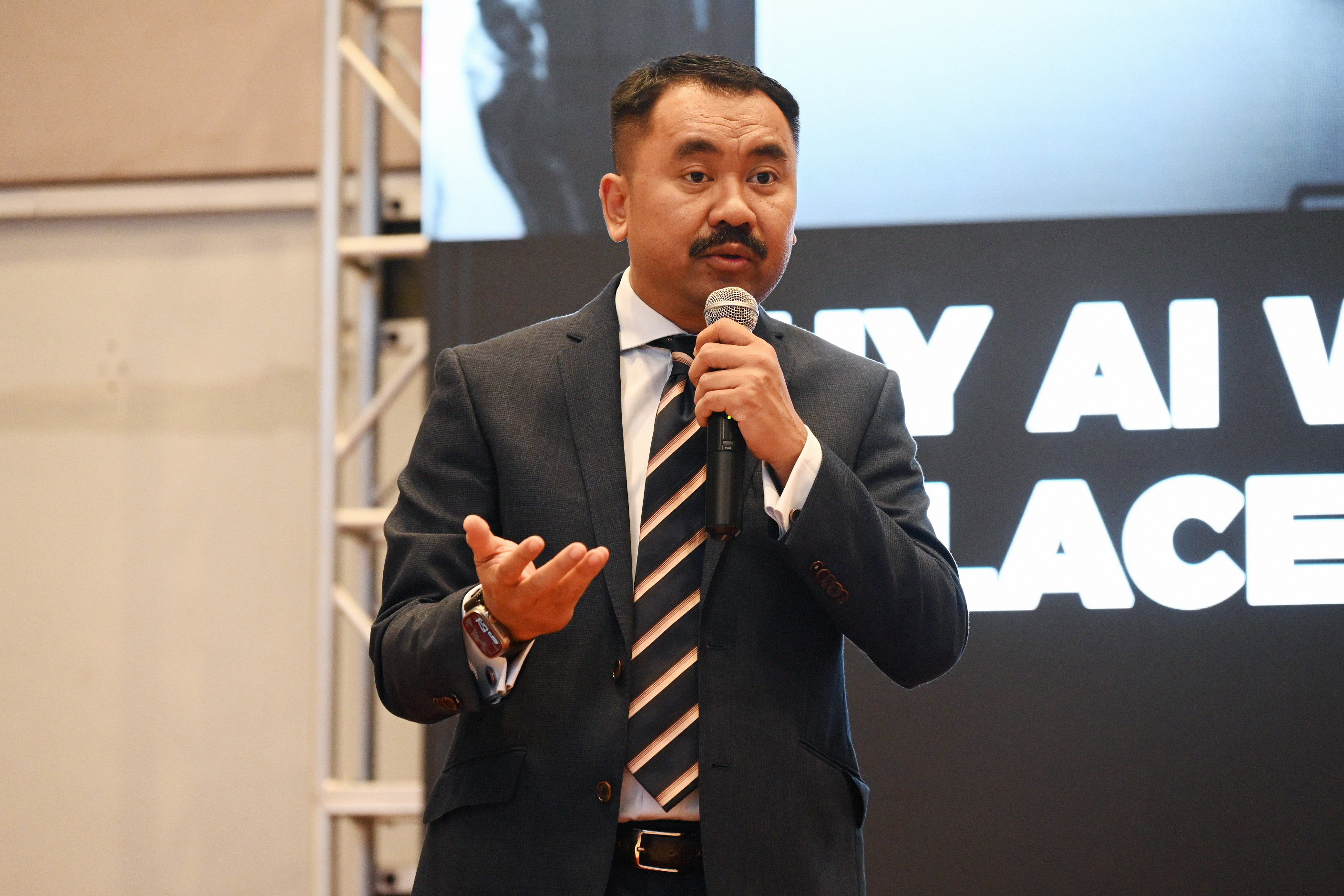
En Mohd Hisham shedding light on his creative journey, from traditional to AI-assisted filmmaking
With the emergence of AI, creative industries such as news, media, and events are undoubtedly affected. Yet, is it considered a threat or innovation in these fields? In the forum titled The Emergence of AI in Creative Industries: Innovation or Threat, various experts went into detail about this very topic by sharing their respective experiences and views.
Moderated by FAS academic Ms Yvonne Hoh Jgin Jit, the forum’s panel comprised En Mohd Hisham Saleh, Malaysian Communications and Multimedia Commission (MCMC) Perak Deputy Director Ts Faizul Azlee Mahat, Sinar Daily Assistant News Editor Mr Ashwin Kumar, and professional multilingual event emcee and virtual host En Mohd Faeiz Zerr.
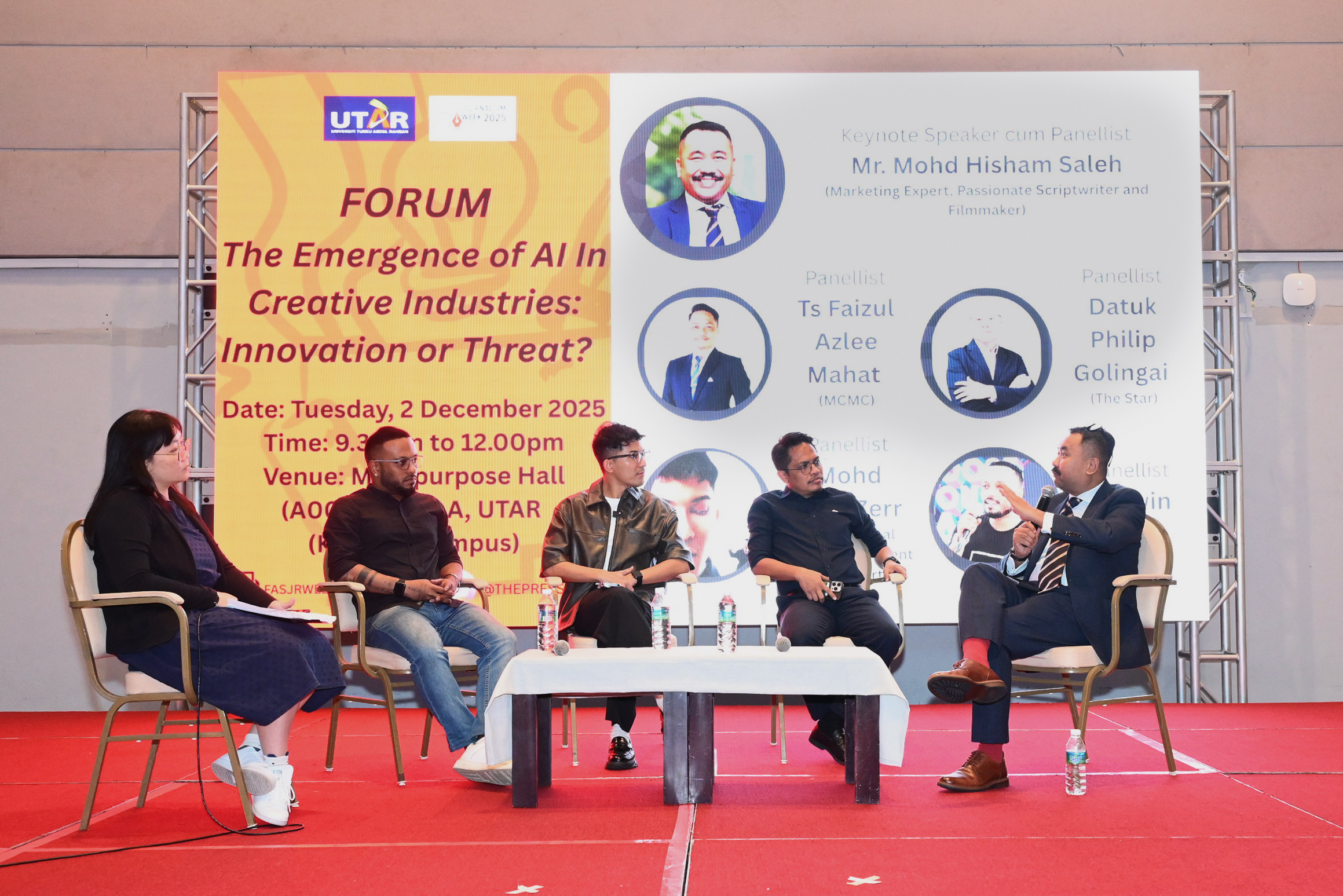
An insightful discussion between media professionals highlighted the inevitable changes in creative industries
Adding to his keynote speech, En Mohd Hisham clarified that AI should be a tool to ease creativity, but not replace it. When asked whether professions such as illustrators and graphic designers would be phased out by cutting-edge technology, he stated that the human touch remains essential in the creative industry, but the process of their work needs to be altered to adapt to the landscape, thus achieving greater productivity.
He shared his view on the possibility of AI becoming a threat, saying, “Most of the AI applications that we use are generative AI and it has not reached the level of control AI. When AI starts implementing and asserting control over orders and protocols, that’s when it becomes a threat.”
Sharing a similar sentiment, Ts Faizul elucidated that AI is a tool that helps humanity, especially in work productivity and fast-paced decision-making. In this regard, he highlighted MCMC’s efforts in guiding the public towards AI literacy. He said, “MCMC is not only about establishing rules and policies, but we are also guiding the people towards advocacy. Currently, we are running new campaigns to guide the public on safe AI usage and its risks, starting from as early as Standard One students.”
Revolving around the topic of AI-driven fake news, Ts Faizul remarked on the double-edged potential of AI. He said, “Fake news has always been a threat to media. AI can be used in both good or bad ways, including creating fake news. Besides, traditional cases like scams and phone calls are still prevalent, yet the techniques are now further enhanced with modern technologies. That’s why MCMC’s advocacy projects try to guide people on how to properly use AI, instead of omitting it.”
For Mr Ashwin, AI technology is an invaluable opportunity to further bolster the news industry. He enlightened the participants on how AI has raised the work productivity of both journalists and editors, especially in translation, transcription, and editing. He shared, “As a media professional, you would know that transcription can be an arduous task, especially for lengthy events. However, with AI, tasks like transcription and translation can now be done almost instantly. Still, always do your own research when writing a story. AI may appear unbiased, but it can still generate false information.”
On the other hand, he explained the reluctance of adapting AI in the news industry in the earlier phase. He said, “Many media platforms were reluctant to use AI in the beginning, but it saves a lot of time, especially for general work. Now, we require a smaller workforce to do the general work. You can see this trend in some of the major news platforms in Malaysia.”
“AI exposes the workforce. It pushes people to upskill themselves. Don’t just stay in one place. Instead, innovate and push yourself,” Mr Ashwin advised the future generation to remain proactive in this rapidly evolving era.
The event industry faces a similar dilemma when it comes to AI. While En Mohd Faeiz concurred with the benefits that AI provides, it also brings complications to the emcee scene. He shared, “I use ChatGPT to help with urgent needs too. However, I use it as a guideline rather than a solution. Having a live host is interactive, compared to having AI generate content for you. In the end, it’s still all about interaction in this industry. Yet, we cannot deny that AI is the future.”
Echoing the others’ sentiments, En Mohd Faeiz explained that AI is a tool and humans are the main controllers who choose how it will guide the future. In this regard, he shared the complications faced in today’s emcee scene. “Nowadays, many emcees also rely on AI. That scares me, because some of them start preparing for their gigs in the last minute using AI. This causes their content to be generic and to lack the human touch,” he remarked on the increasing overreliance on AI among emcees.
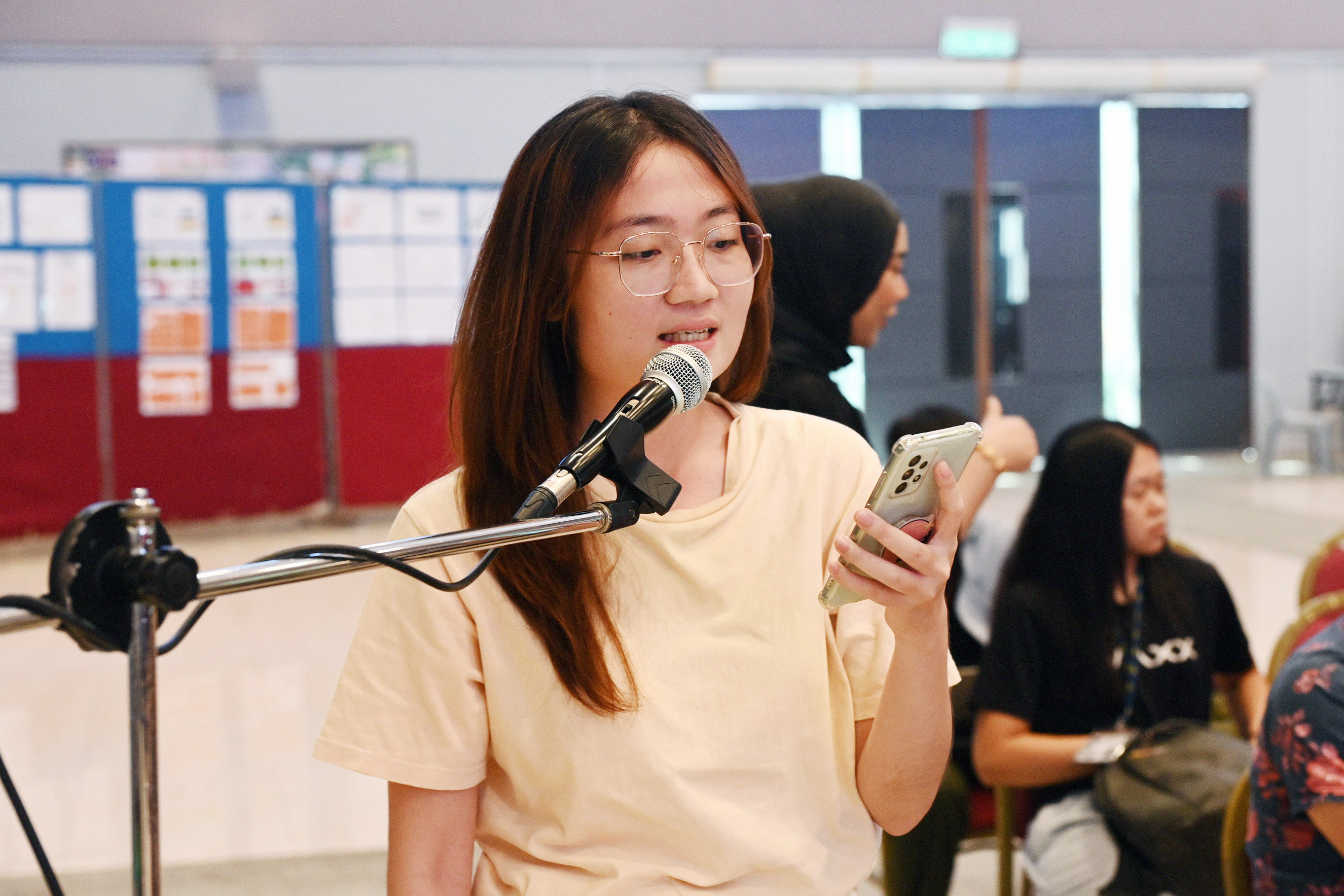
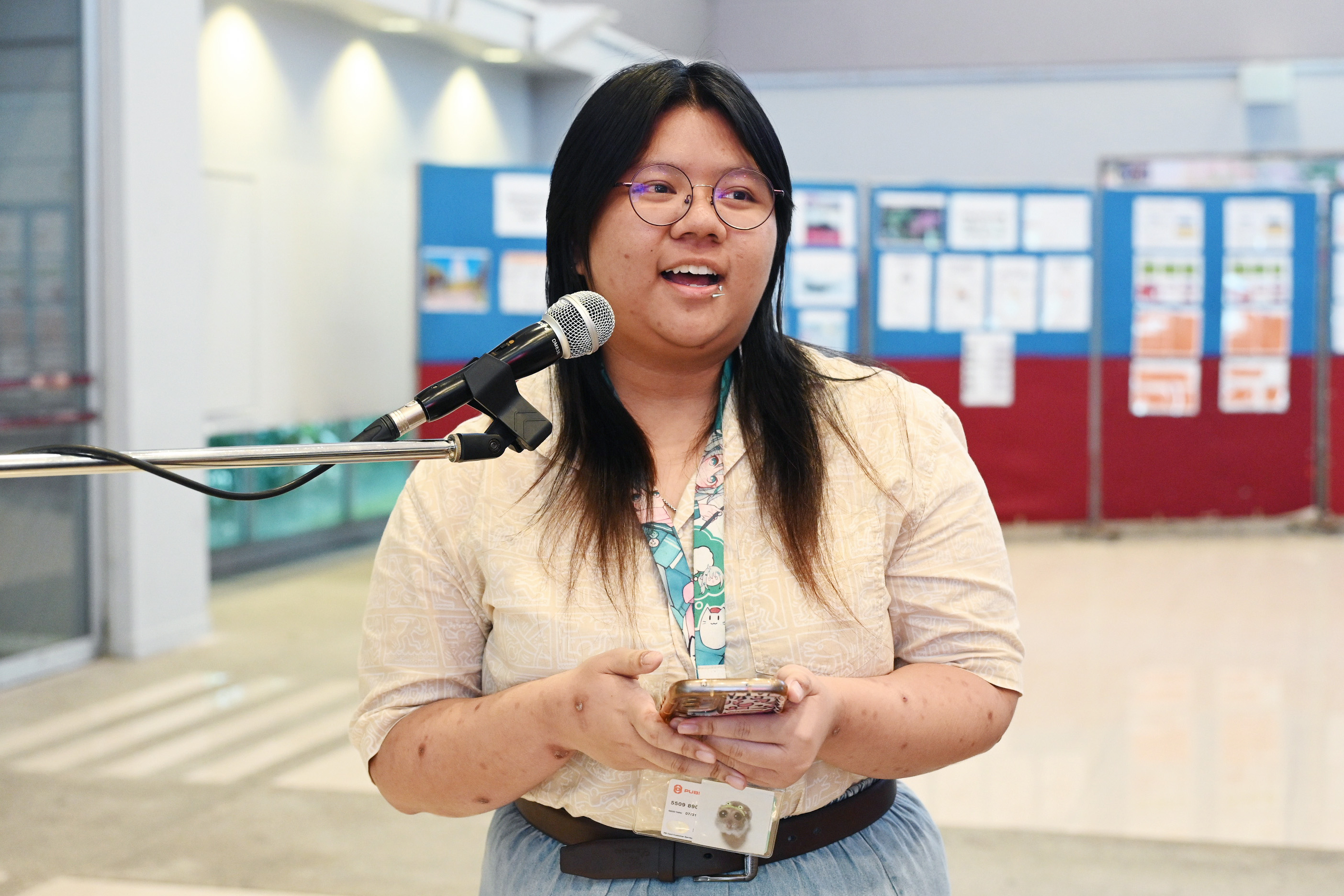
An insightful forum is never without inquisitive voices
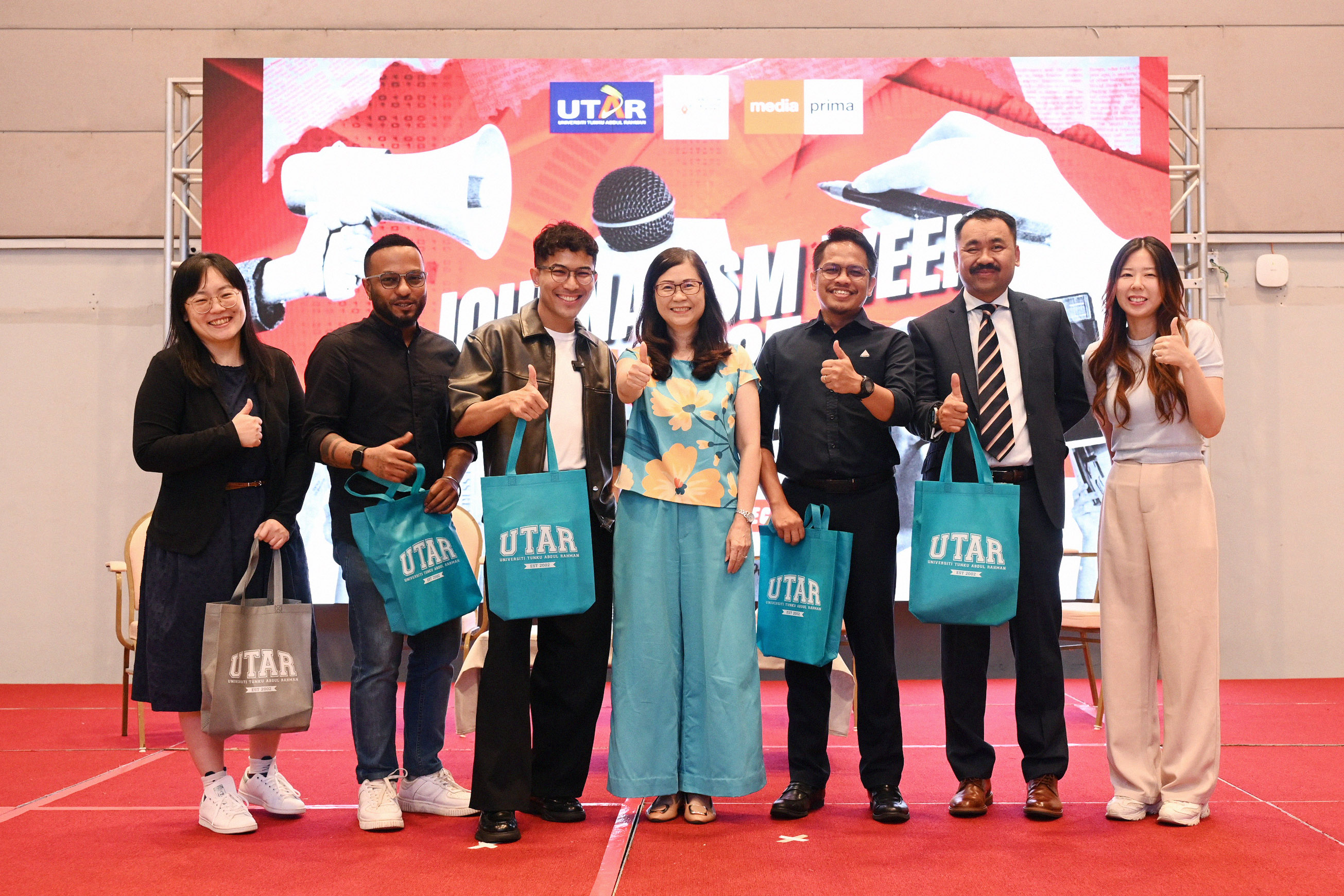
Life finds a way, like how creative industries find ways to elevate with AI (from left) Ms Yvonne Hoh, Mr Ashwin, En Mohd Faeiz, FAS Dean Dr Lee Lai Meng,
Ts Faizul, En Mohd Hisham, and Ms Michelle Wong
It’s journalism week—it was only natural to delve deeper into the professionalism of a journalist in the face of the AI age. In this regard, Mr Ashwin’s workshop titled Journalism in the AI Age: Mastering Prompts and Verifying Fake News provided insightful perspectives into his evolving journalist journey with cutting-edge technology.
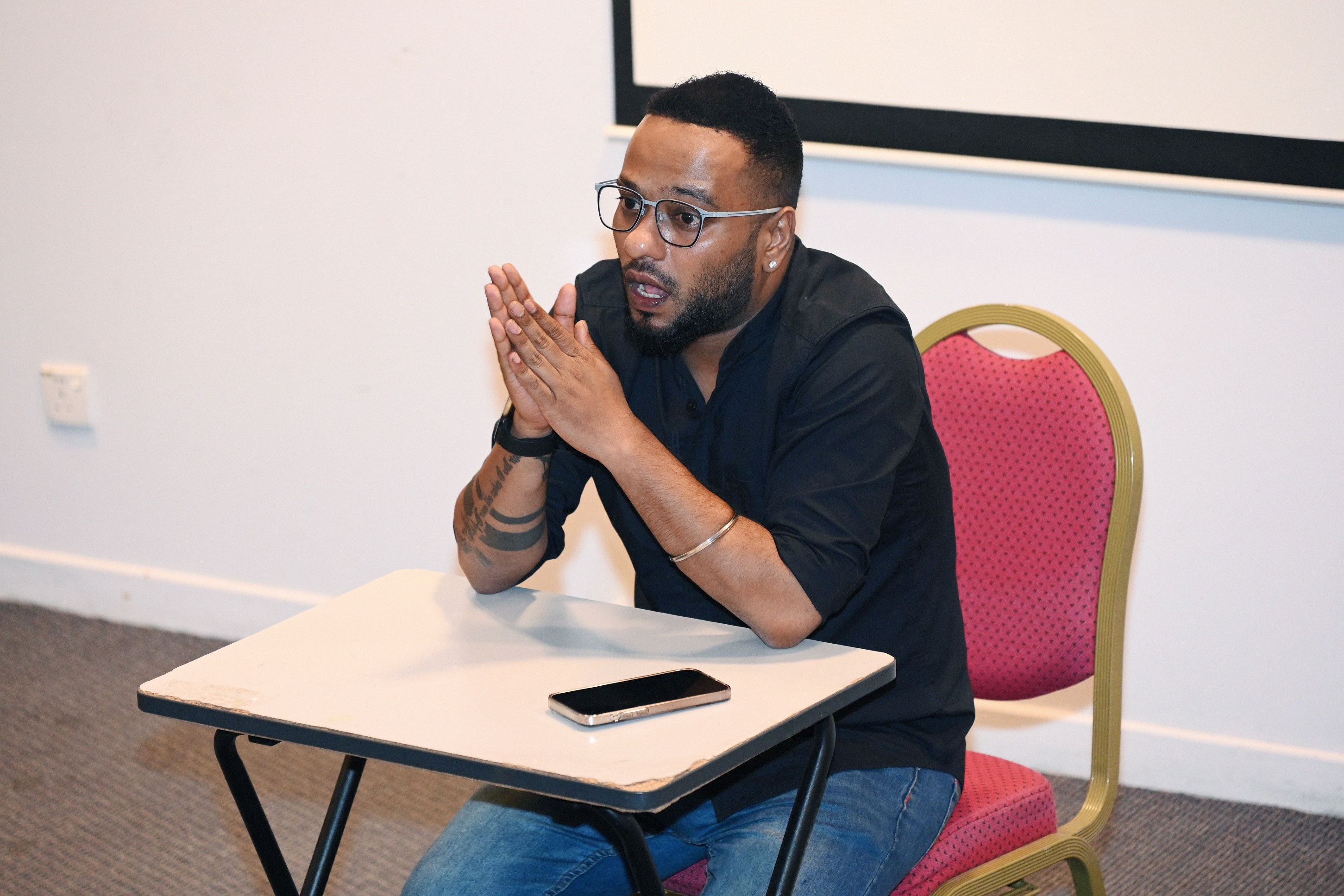
Mr Ashwin sharing his media experience in tackling fake news and adapting to AI
Modern journalism is a jack of all trades in media sharing, demanding savviness not only in writing news articles and feature stories, but also in capturing timely photos and creating videos that convey multifaceted truths. An assortment of winning entries by students was announced and showcased during the closing ceremony, reflecting their creativity, technical competence, and storytelling prowess.
The award winners are as follows:
BEST NEWS ARTICLE
BEST FEATURE STORY
BEST PHOTOJOURNALISM
BEST SHORT VIDEO
BEST MULTIMEDIA STORY
BEST JOURNALISM STUDENT
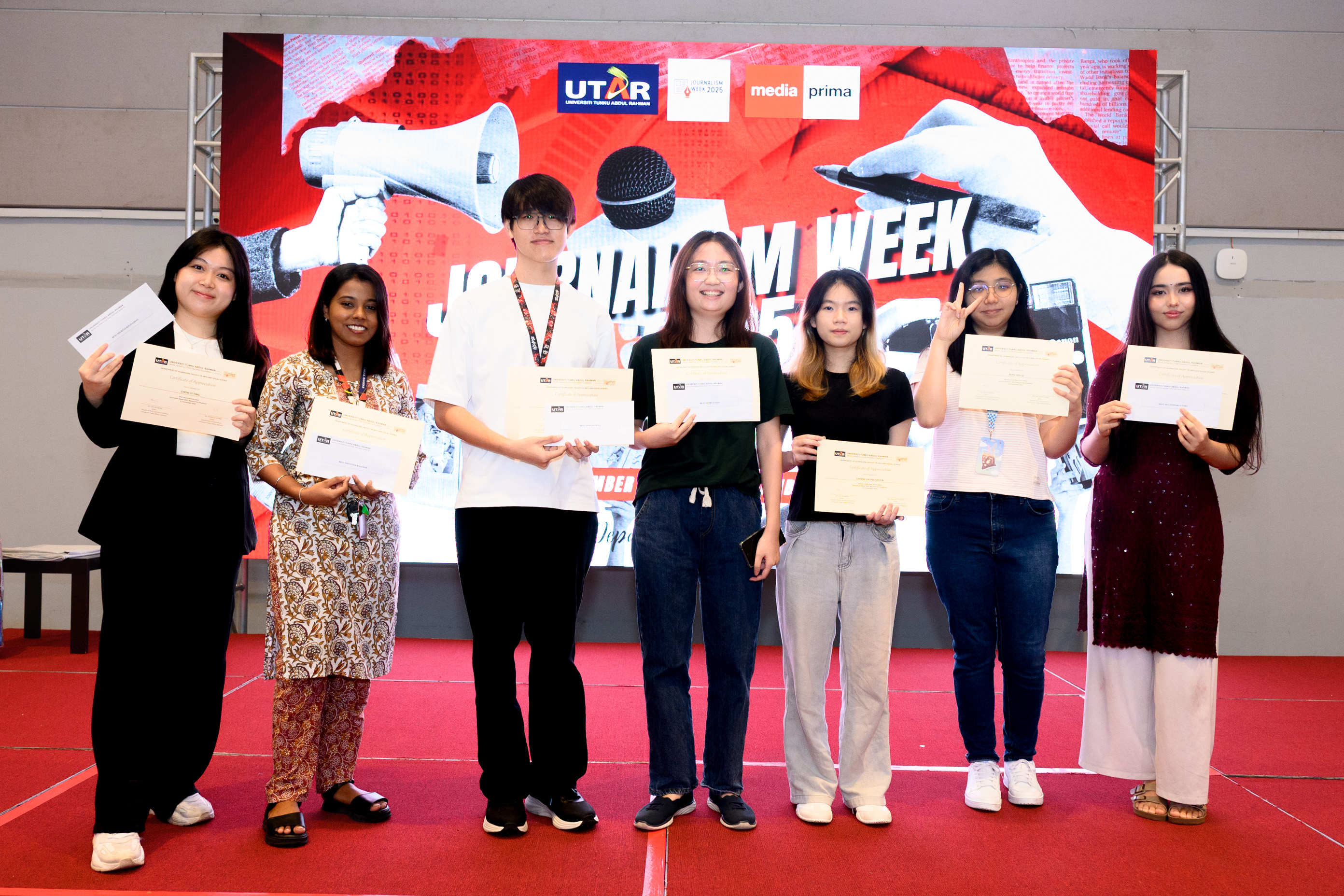
Huzzah to the creativity of the award recipients! (From left) Chow Yi Ting, Yudhanee S.Parameswaran, Ngie Ka Ting, Chan Jing Yi,
Cheaw Chung Shuen, Mah Yan Qi, and Madina Teshabayeva
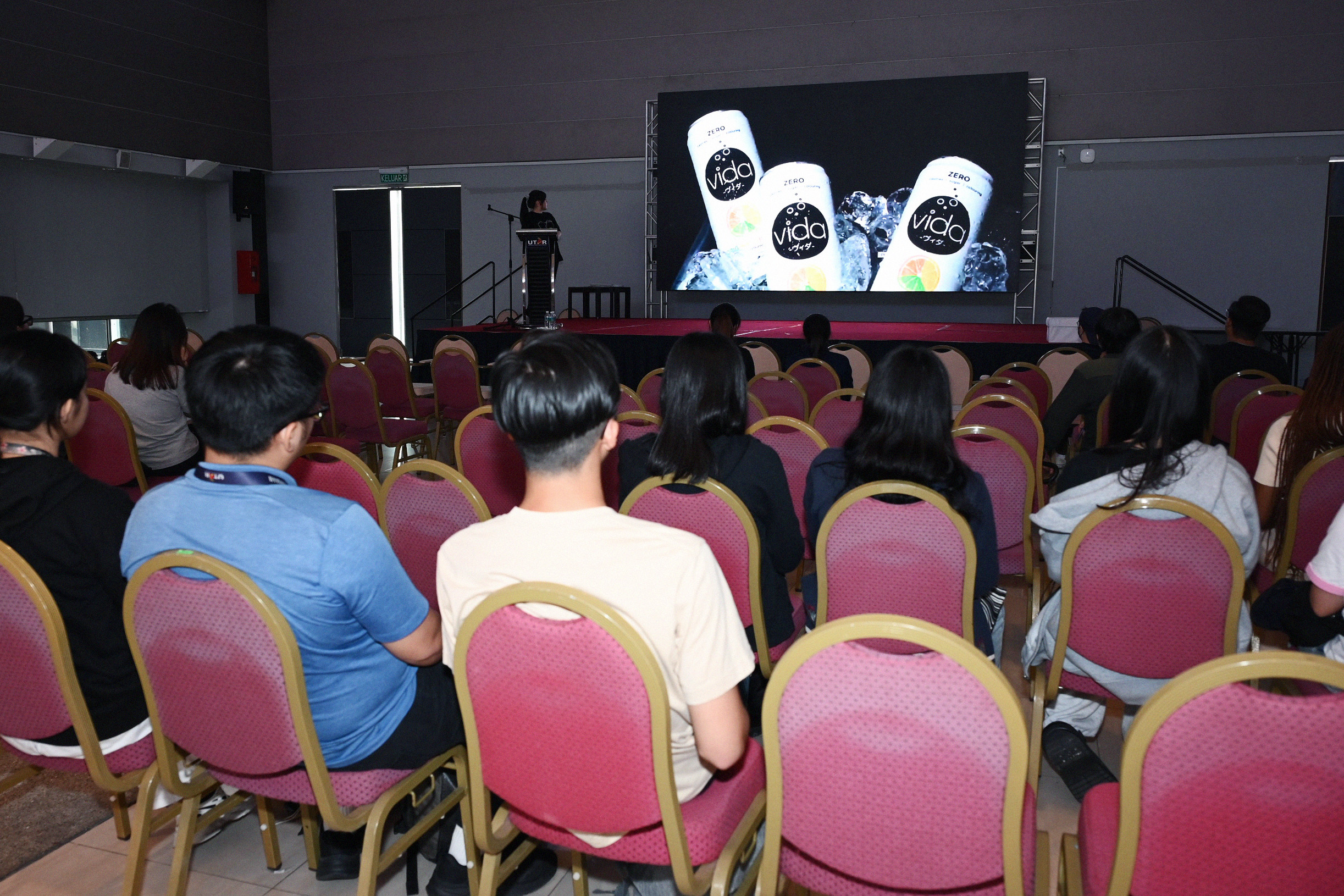
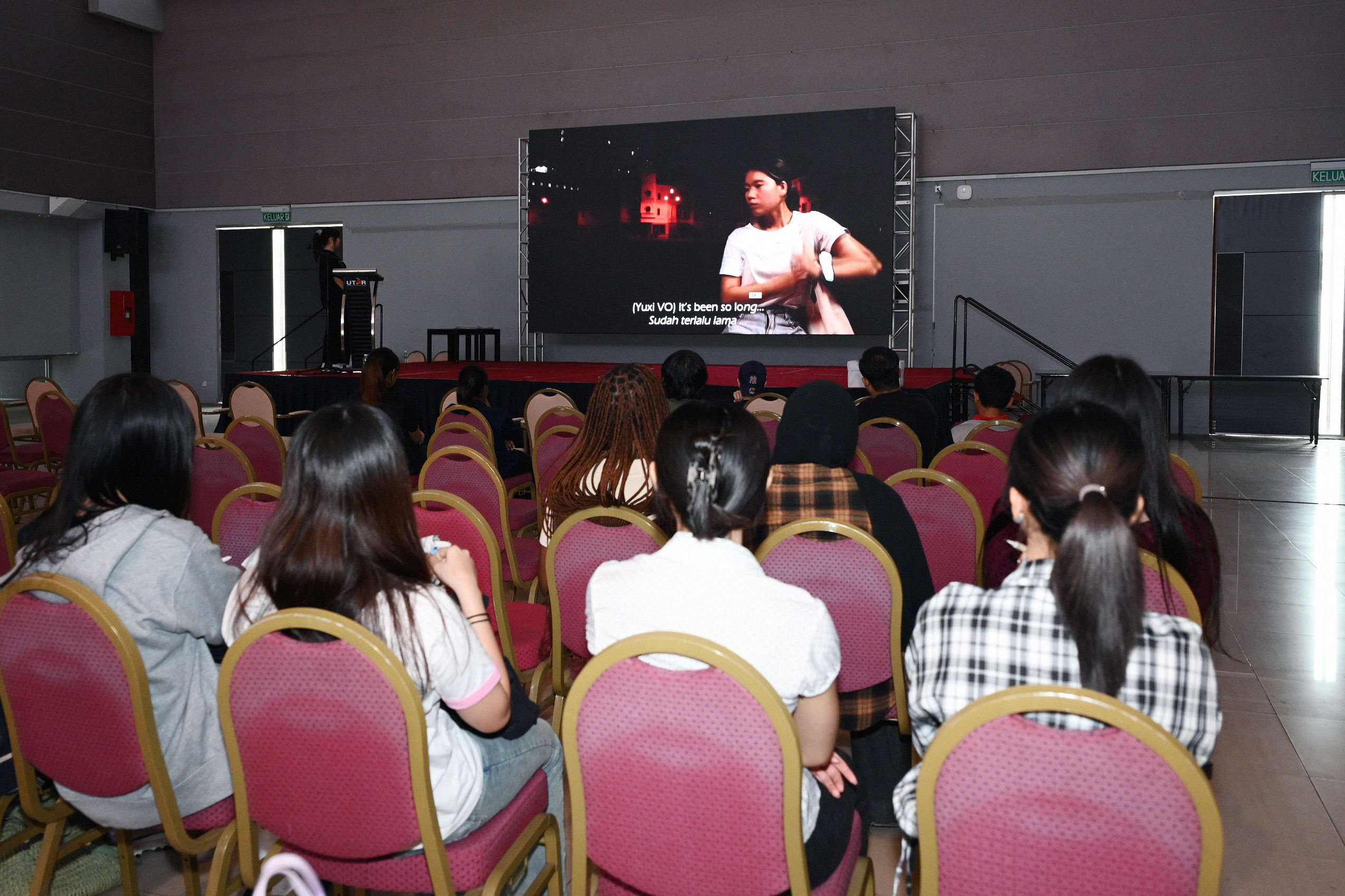
Exhibitions of top entries in the process
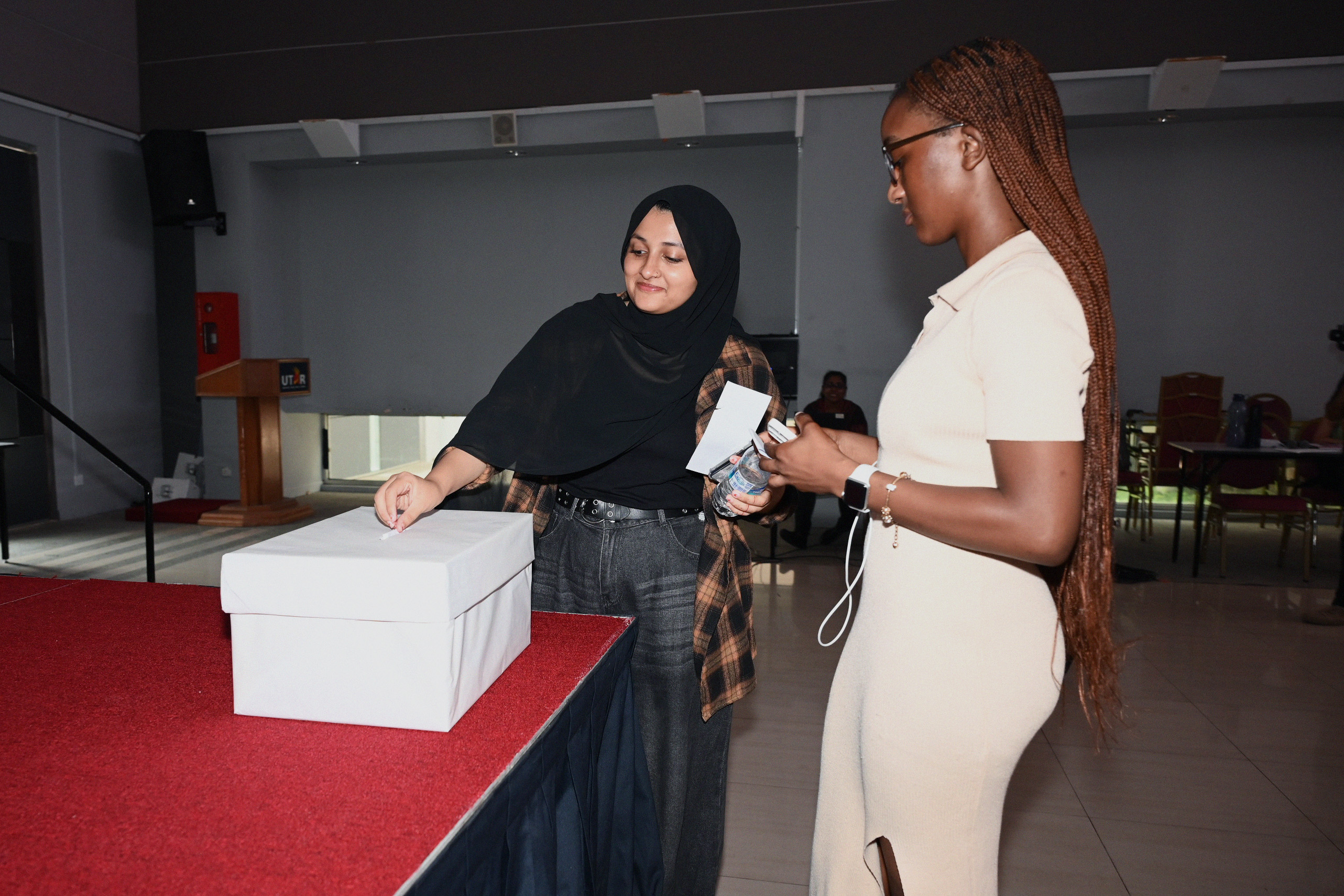
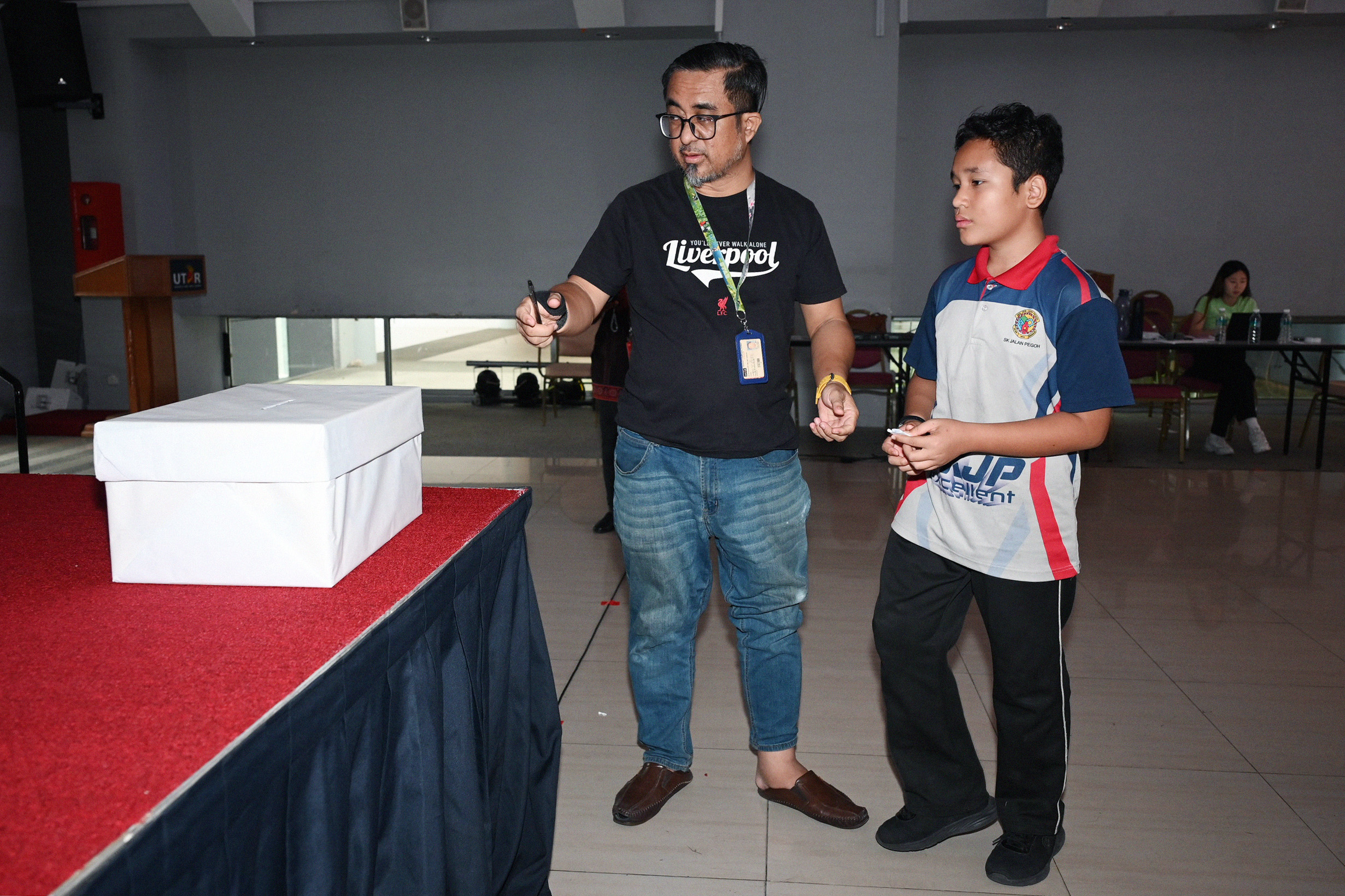
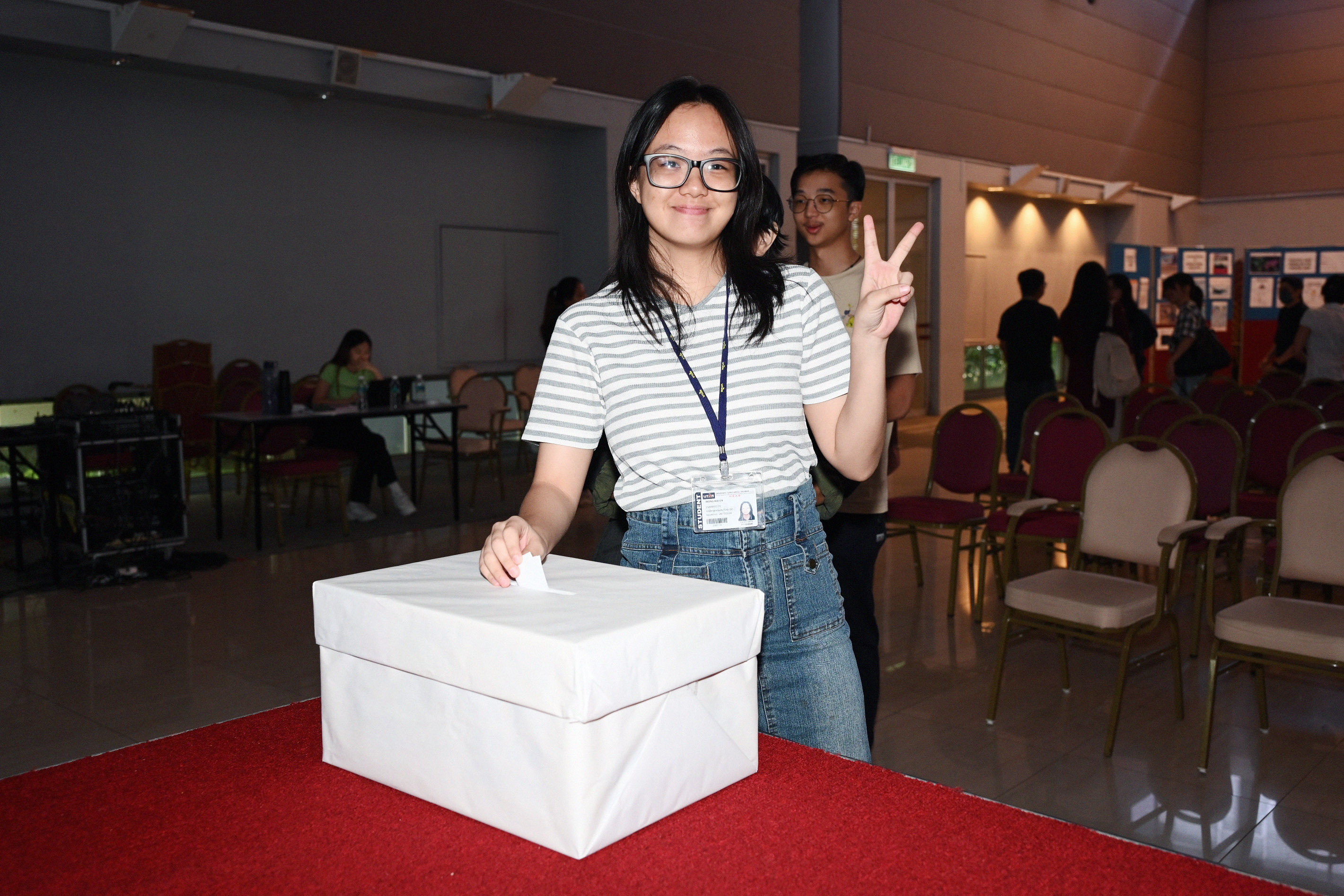
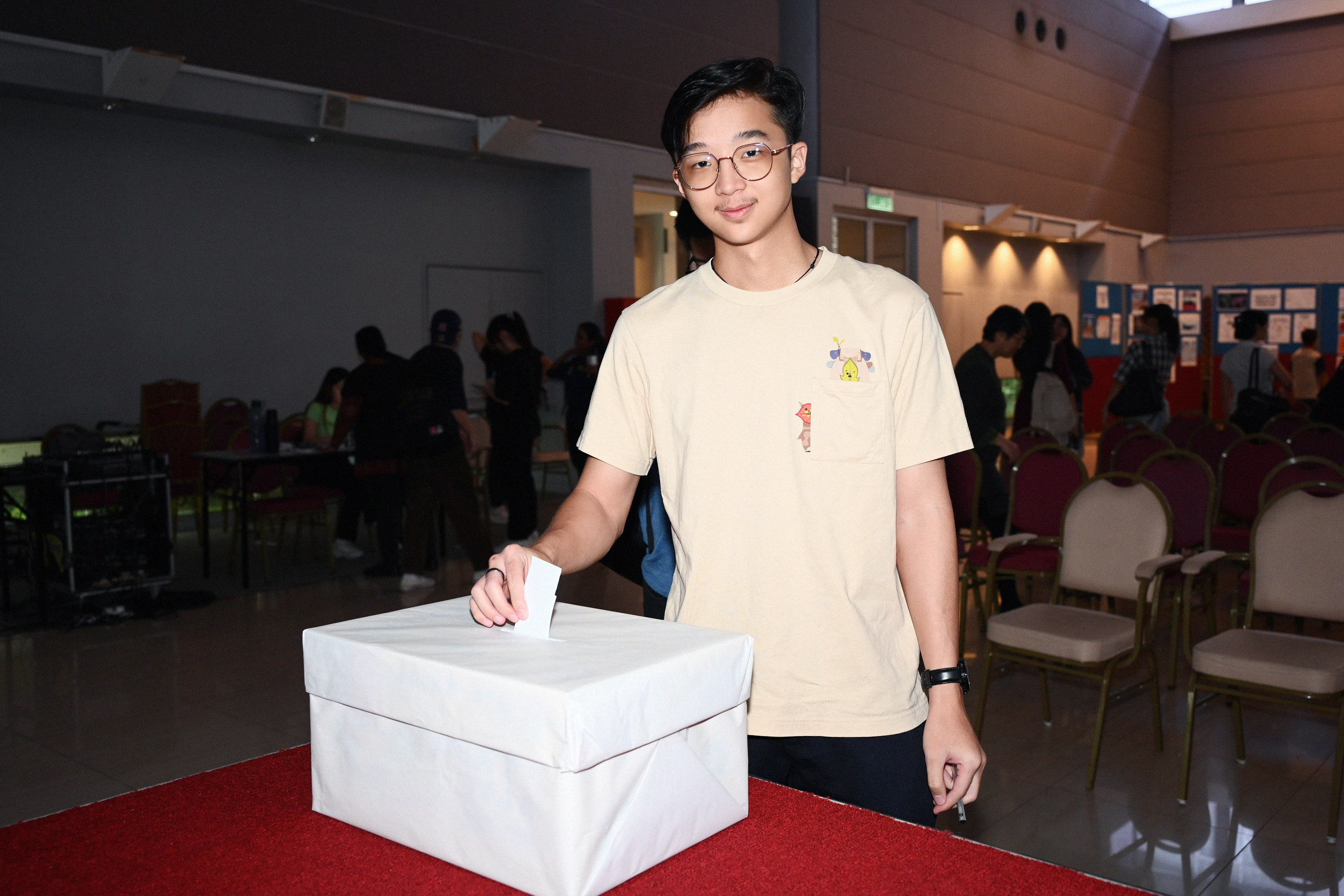
Participants casting their votes for their favourite entries
The Journalism Week 2025 was not all talks and competitions. At times, fun and knowledge must work together to bring out the best of everyone—with a series of laughter-filled telematches and a fruitful trip to Media Prima Berhad’s headquarter, the largest media and entertainment conglomerate in Malaysia.
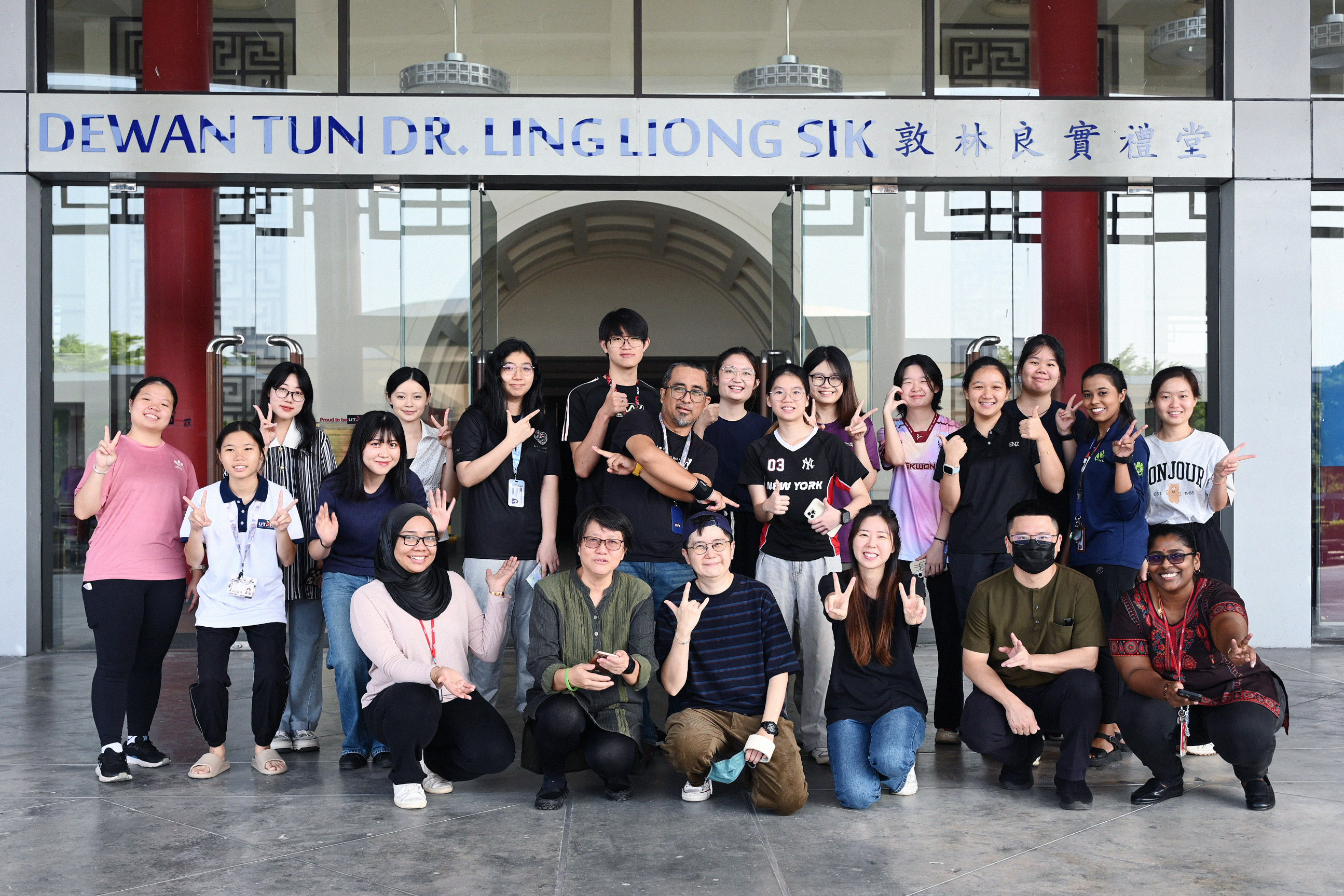
A journalist has to be on the move! Participants and academics before the telematches
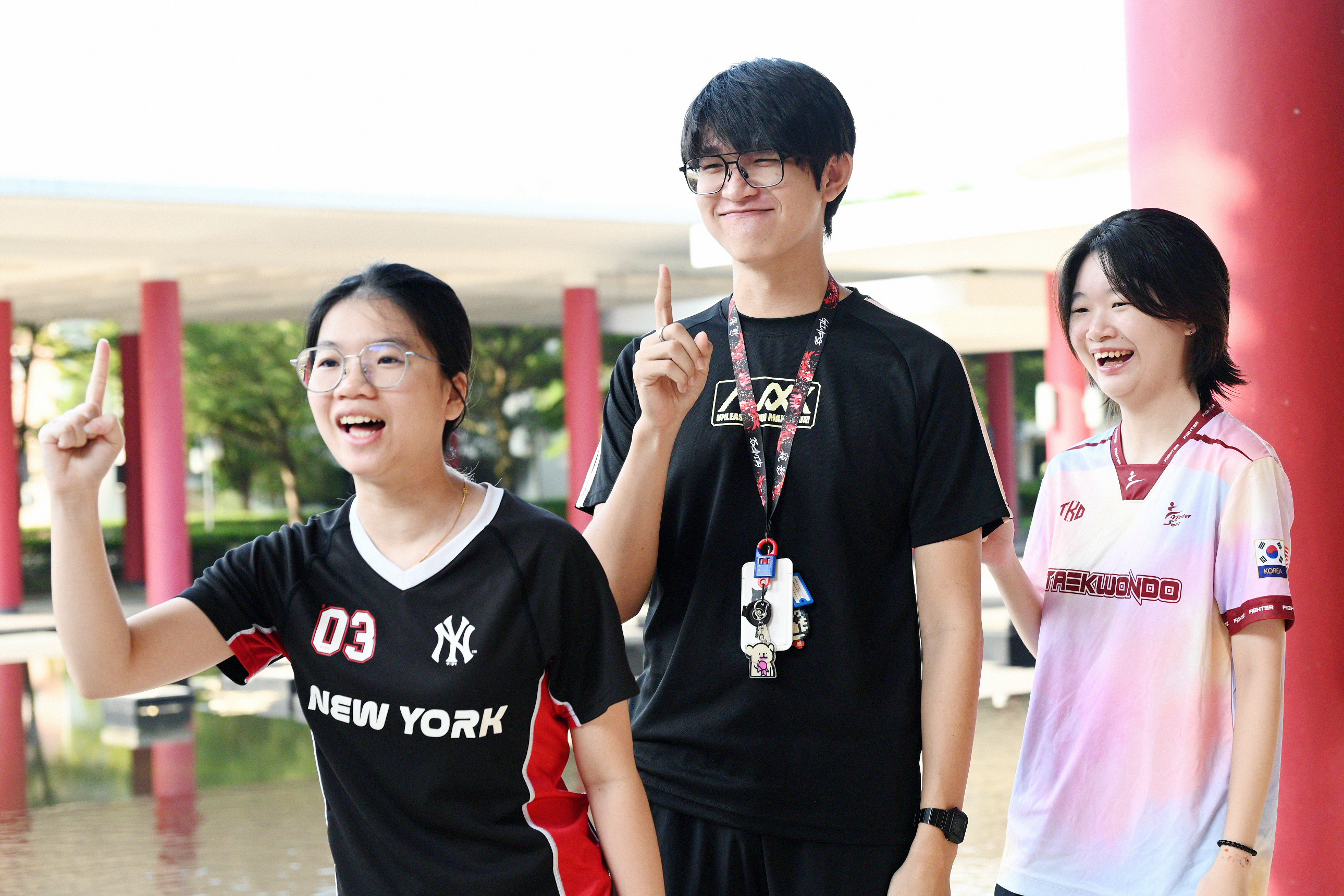
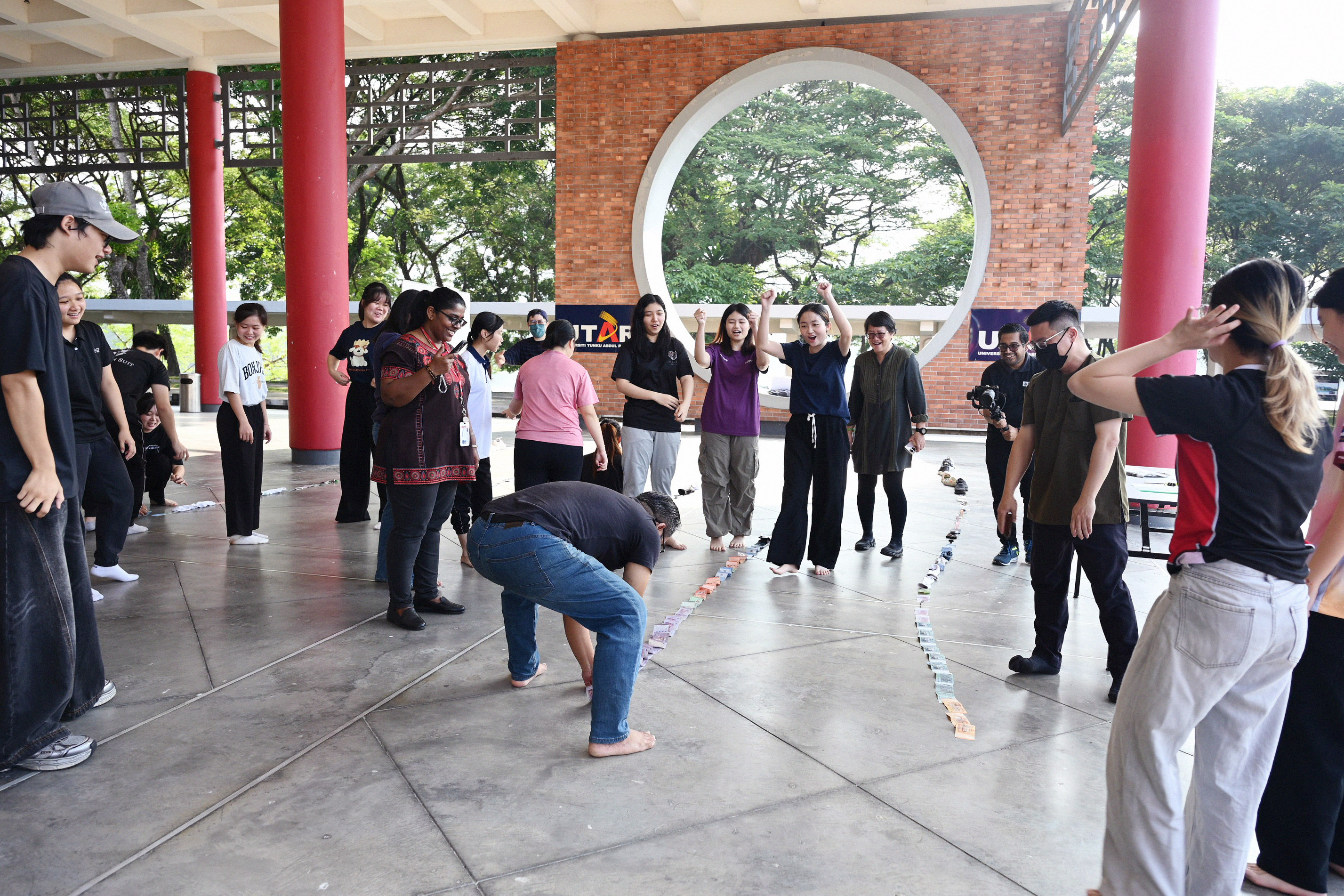
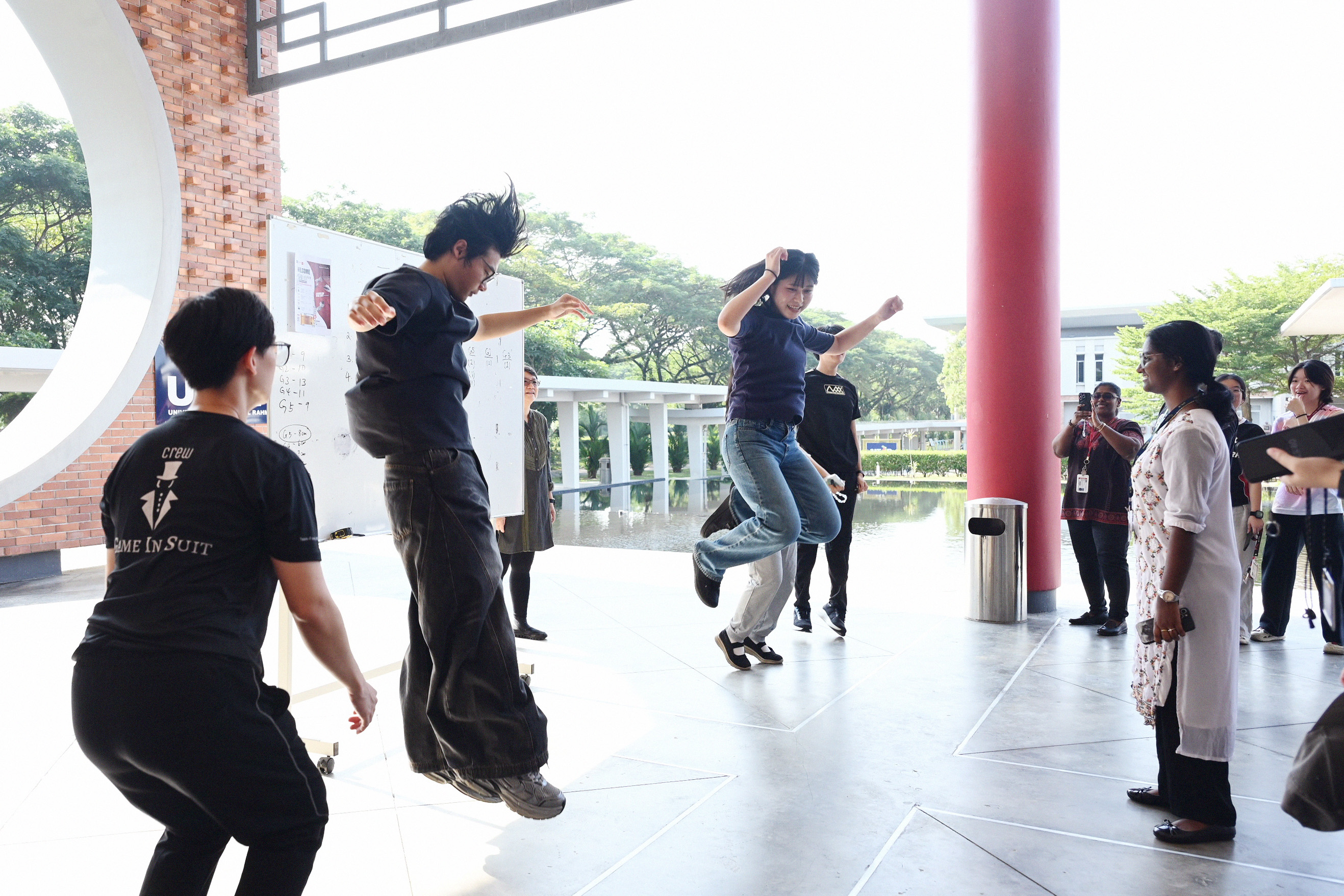
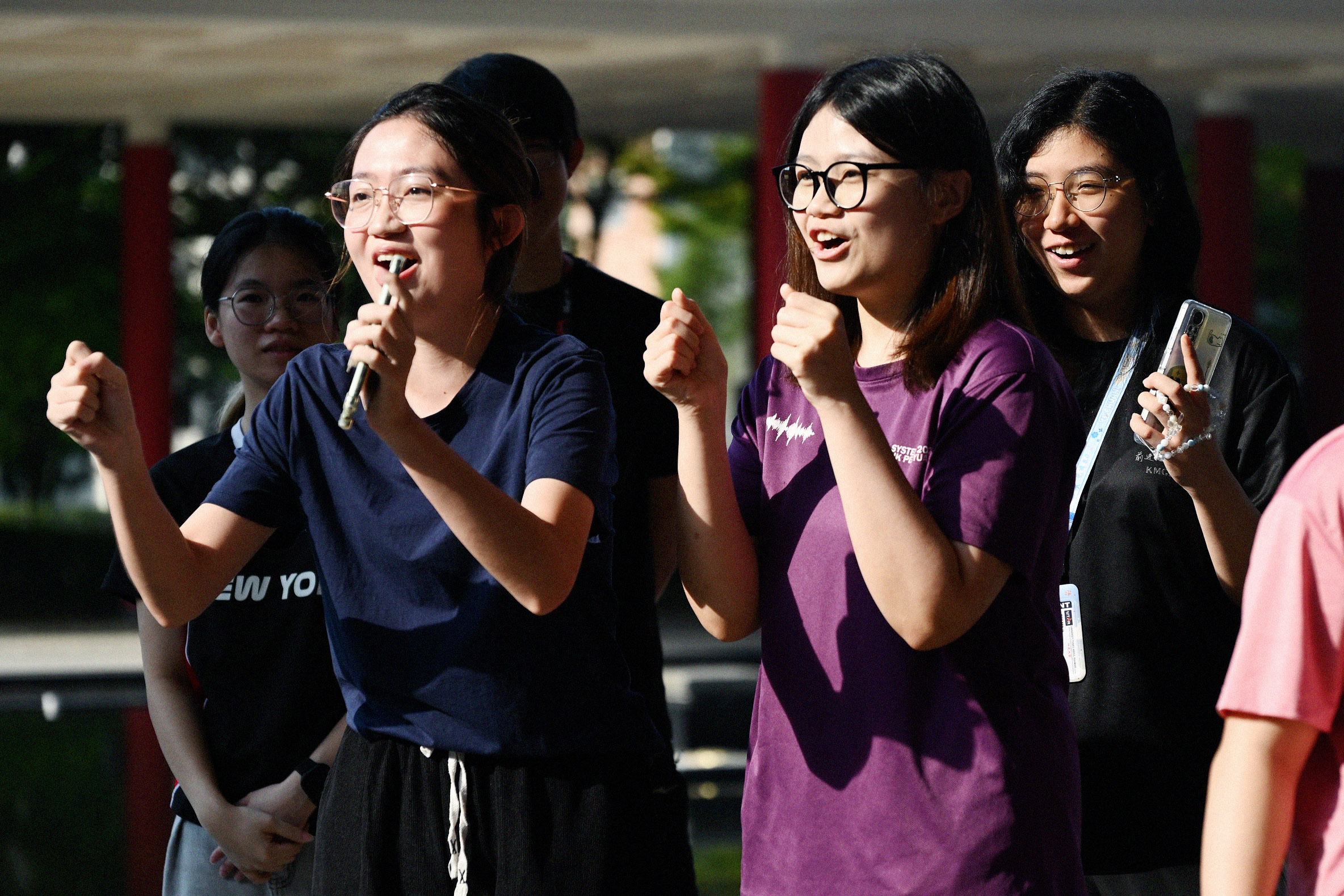
Not a single moment of silence at the telematches — it was filled with teamwork and gaiety
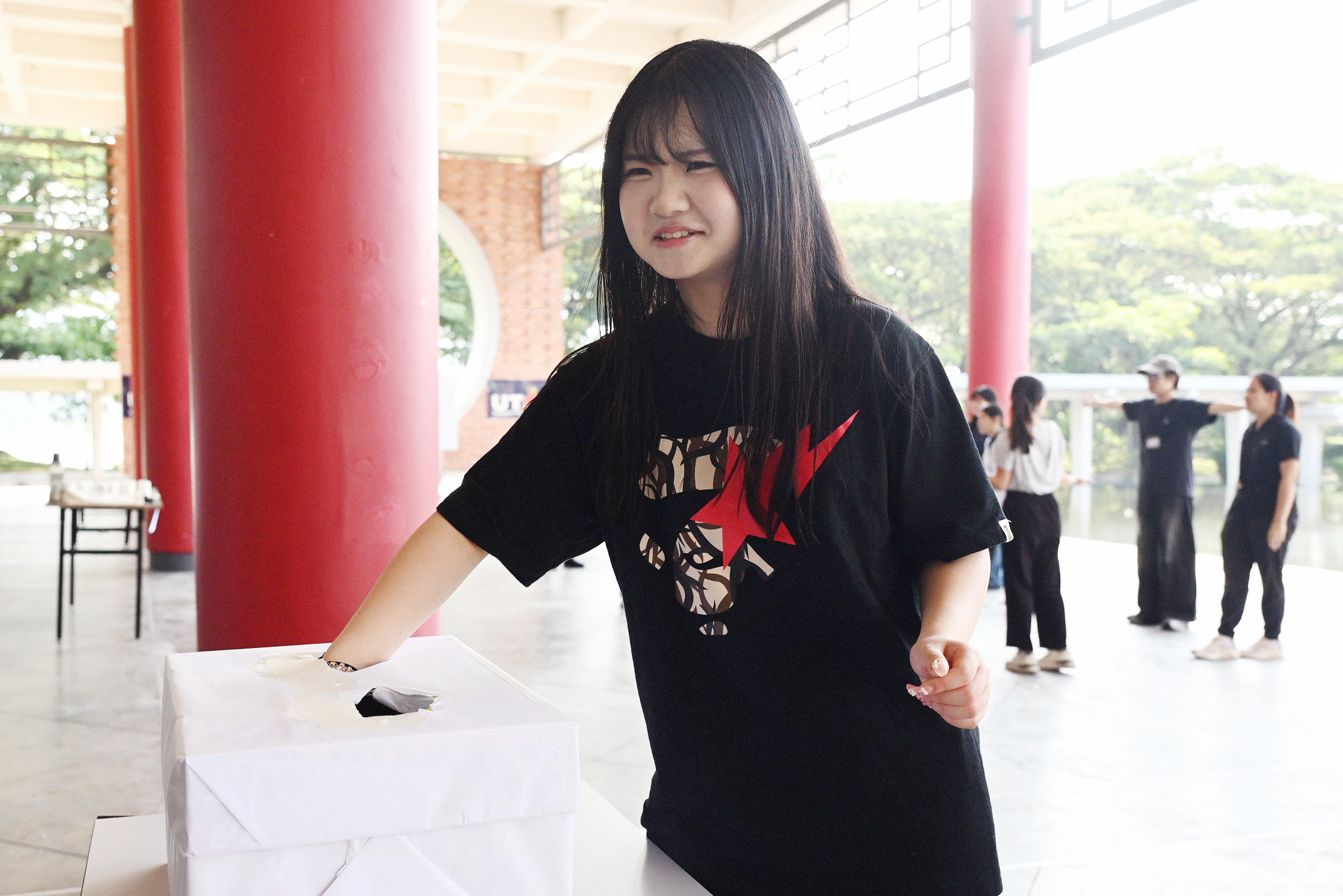
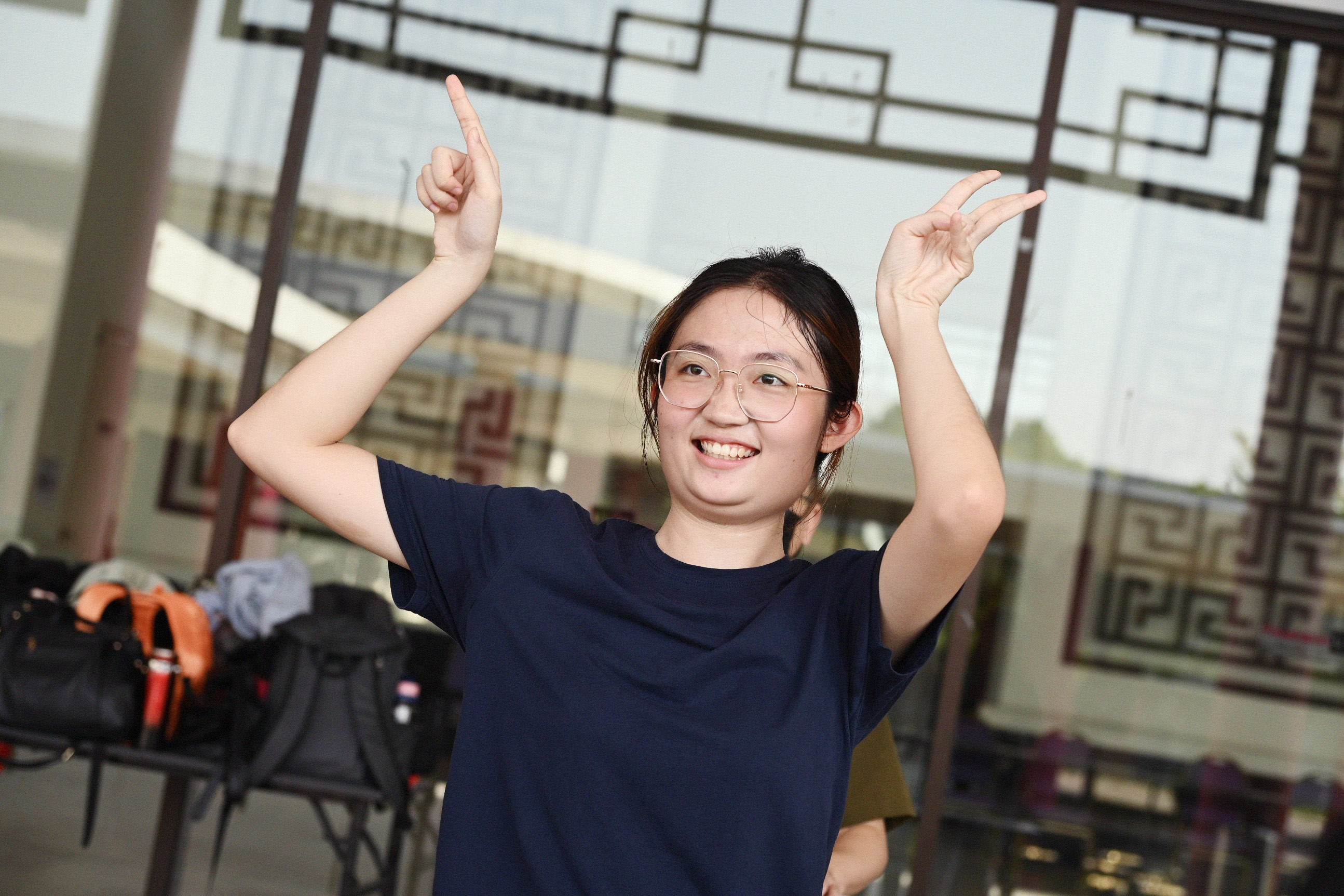
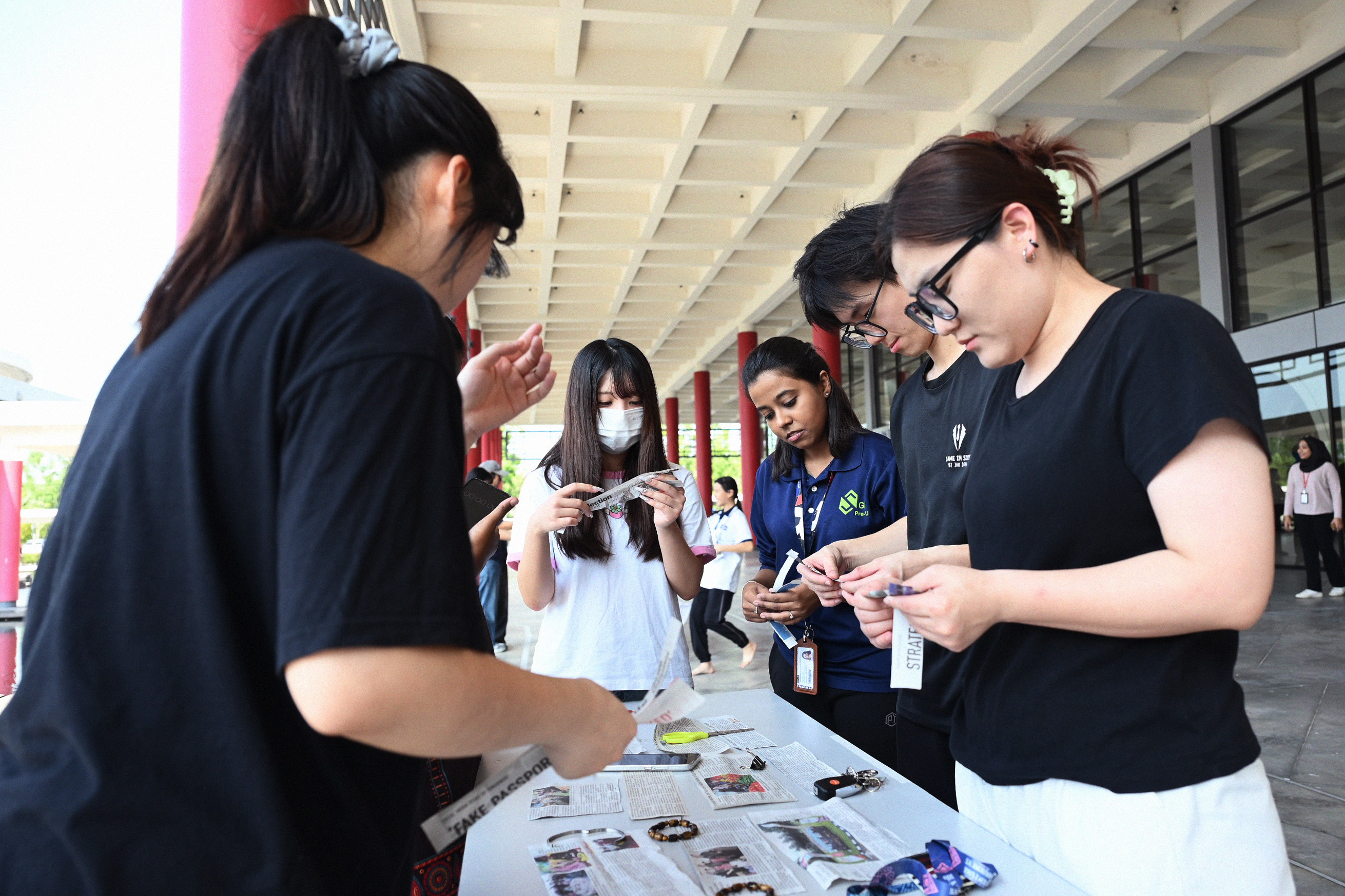
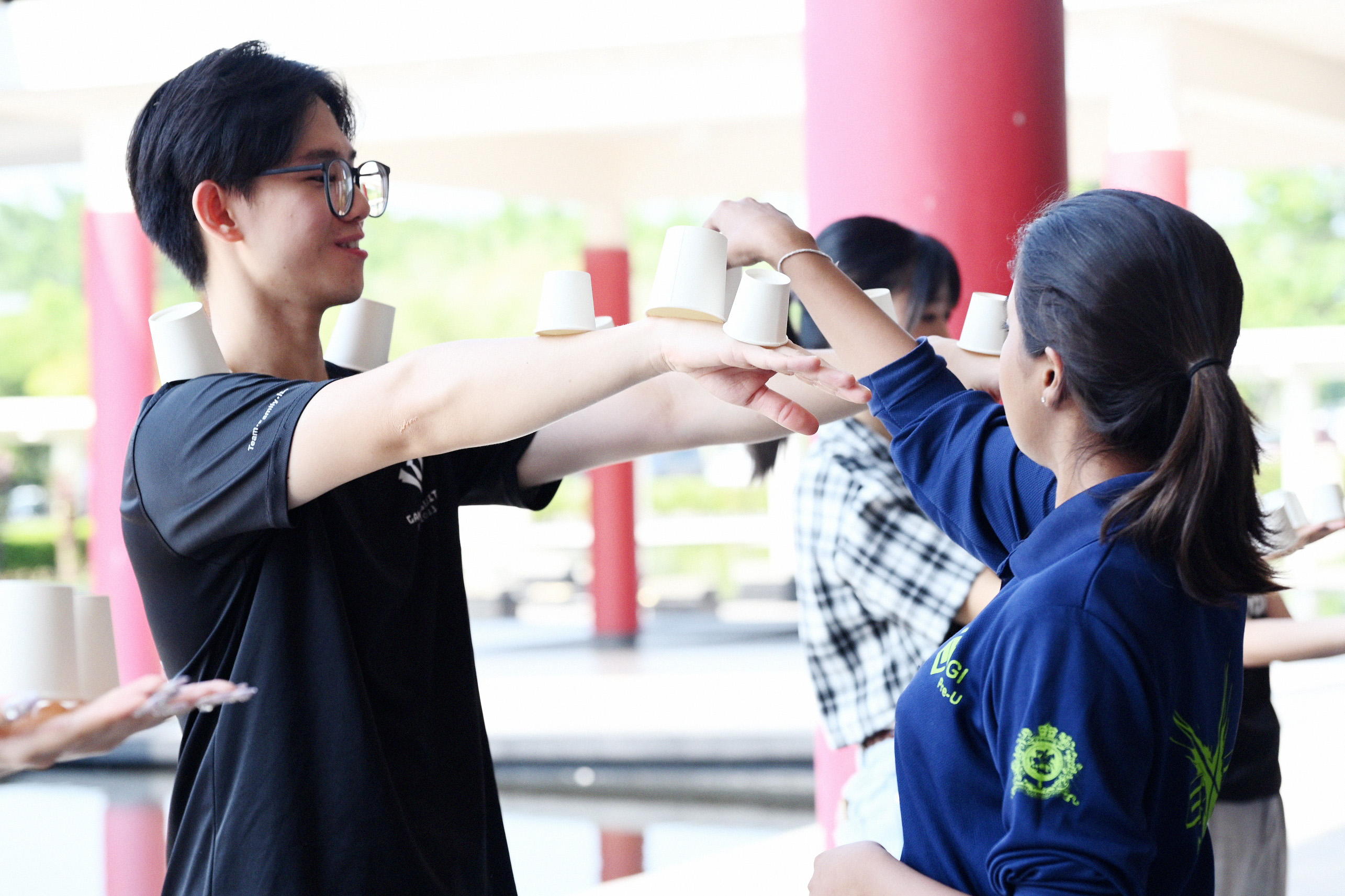
Remember Fear Factor? The Journalism Week 2025 gave it a journalistic twist — minus the scary stuff
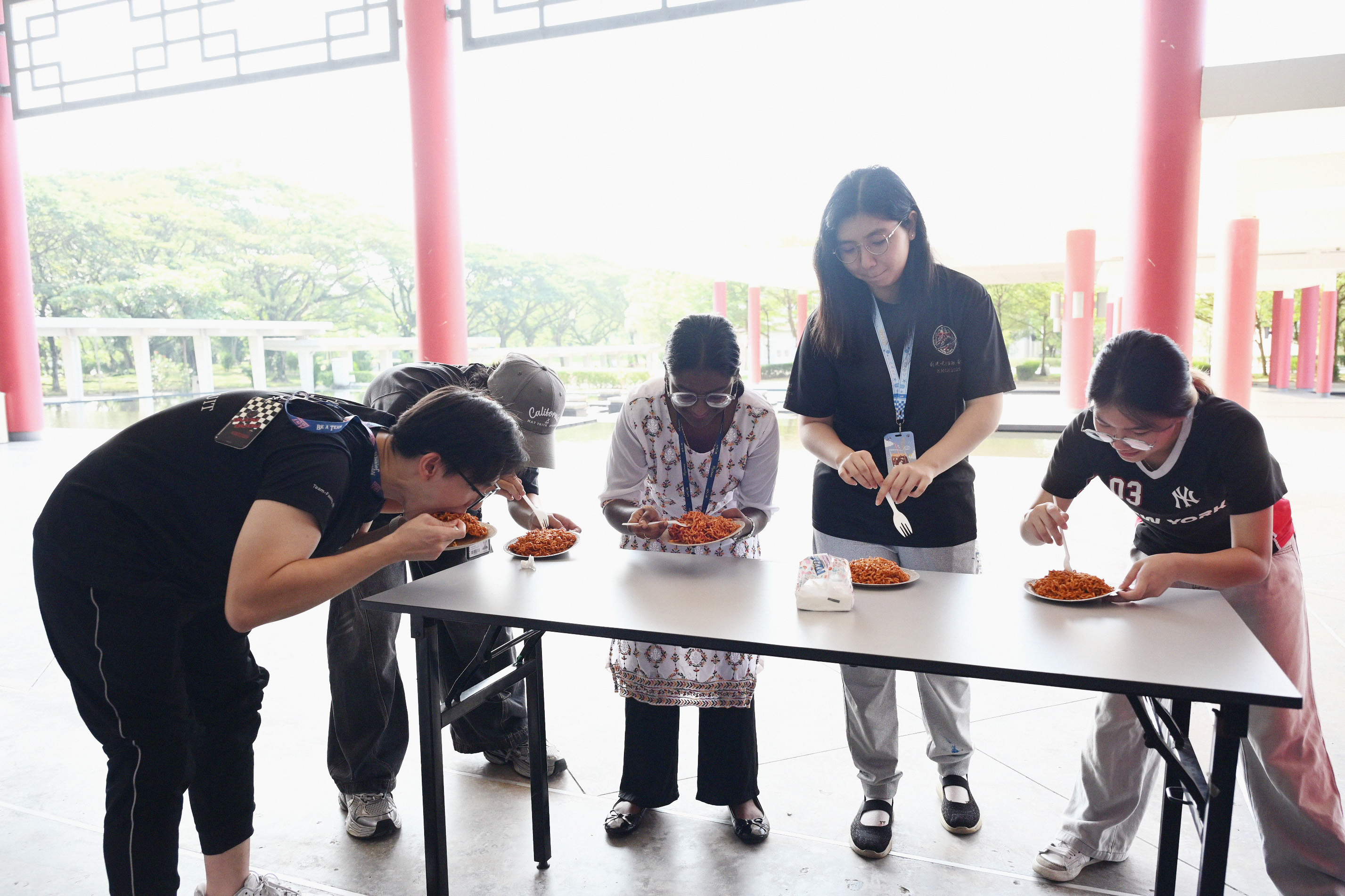
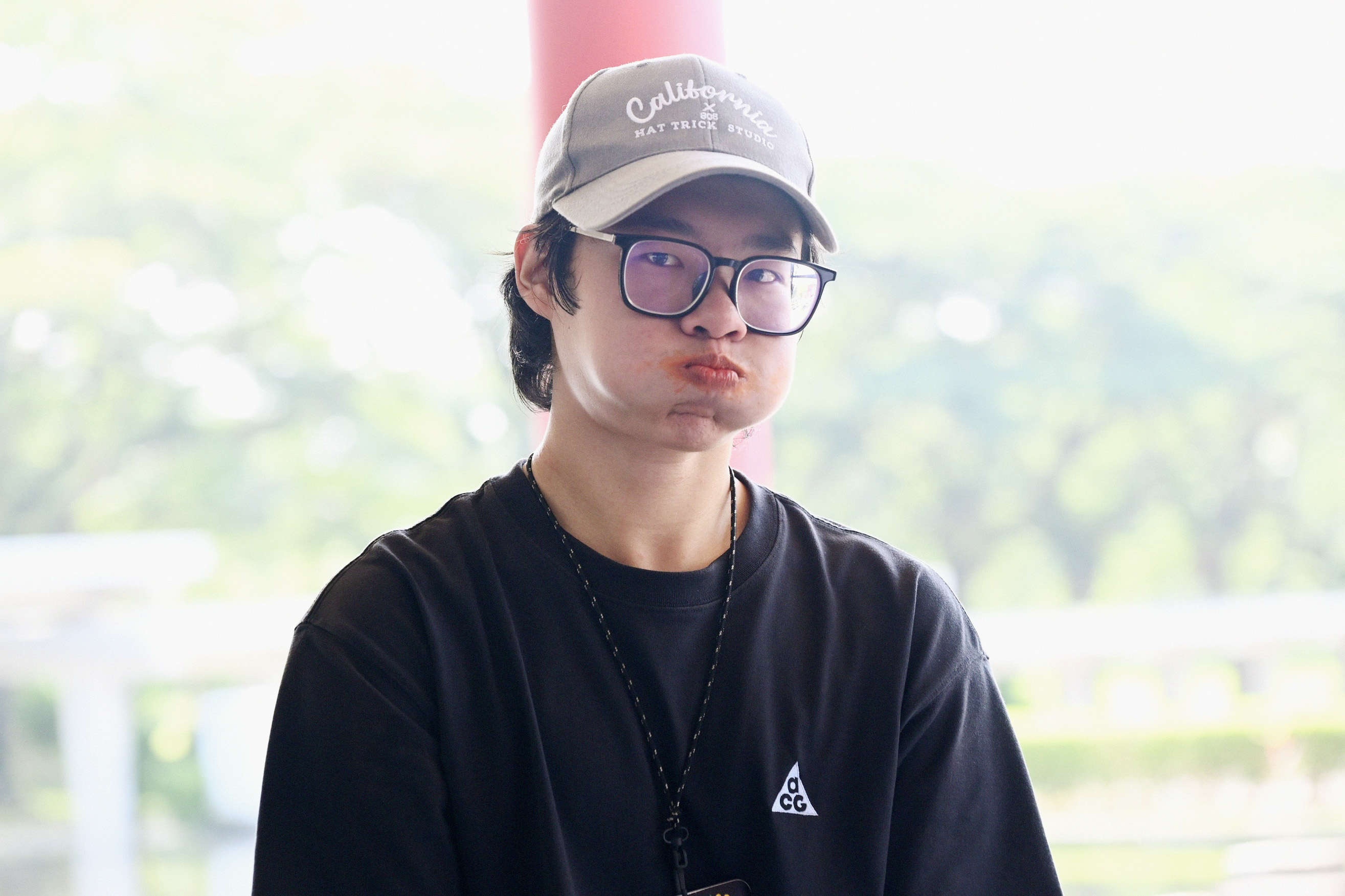

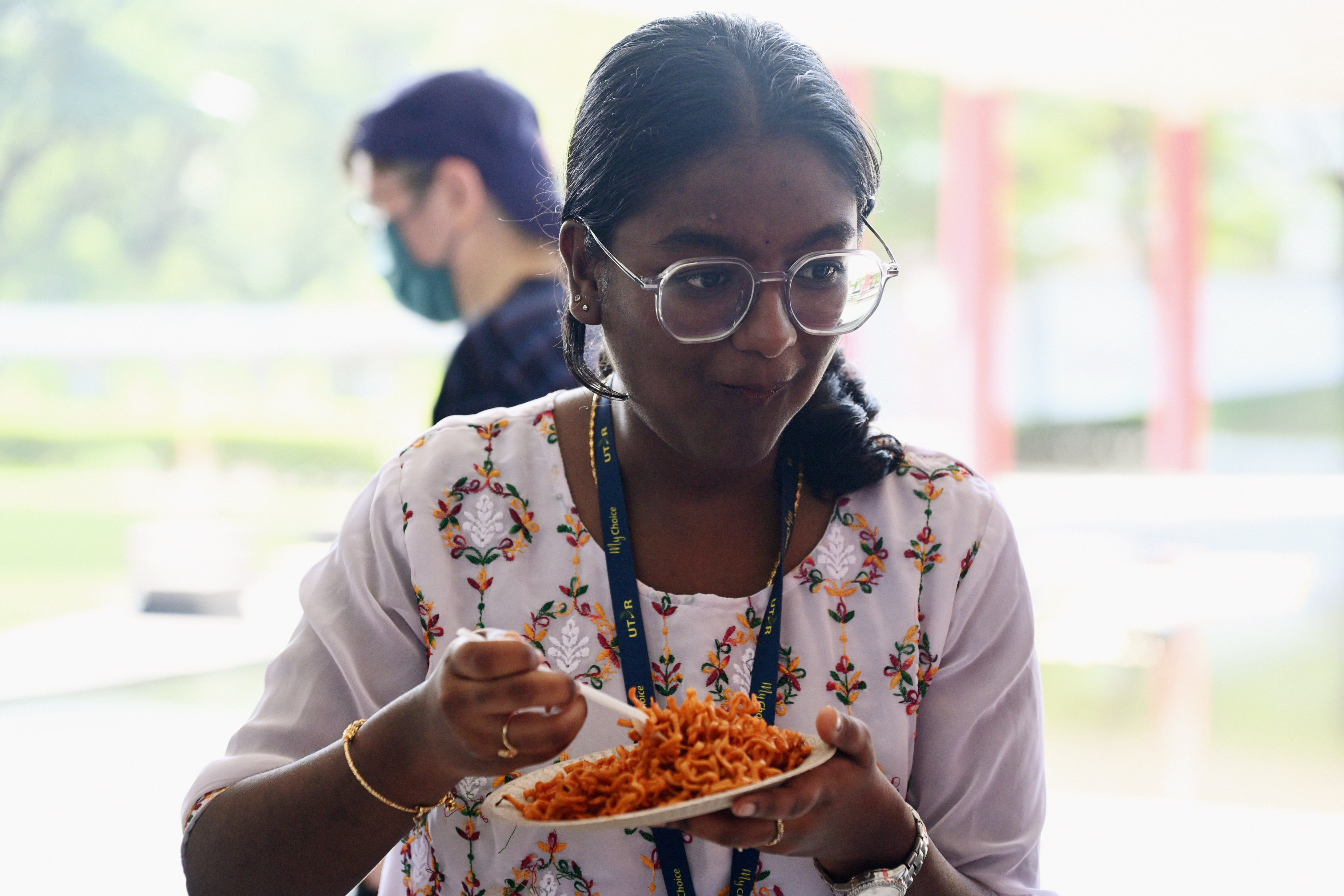
Full of confidence and ready to take on the spicy news? Participants faced the spicy Buldak in a speed eating contest
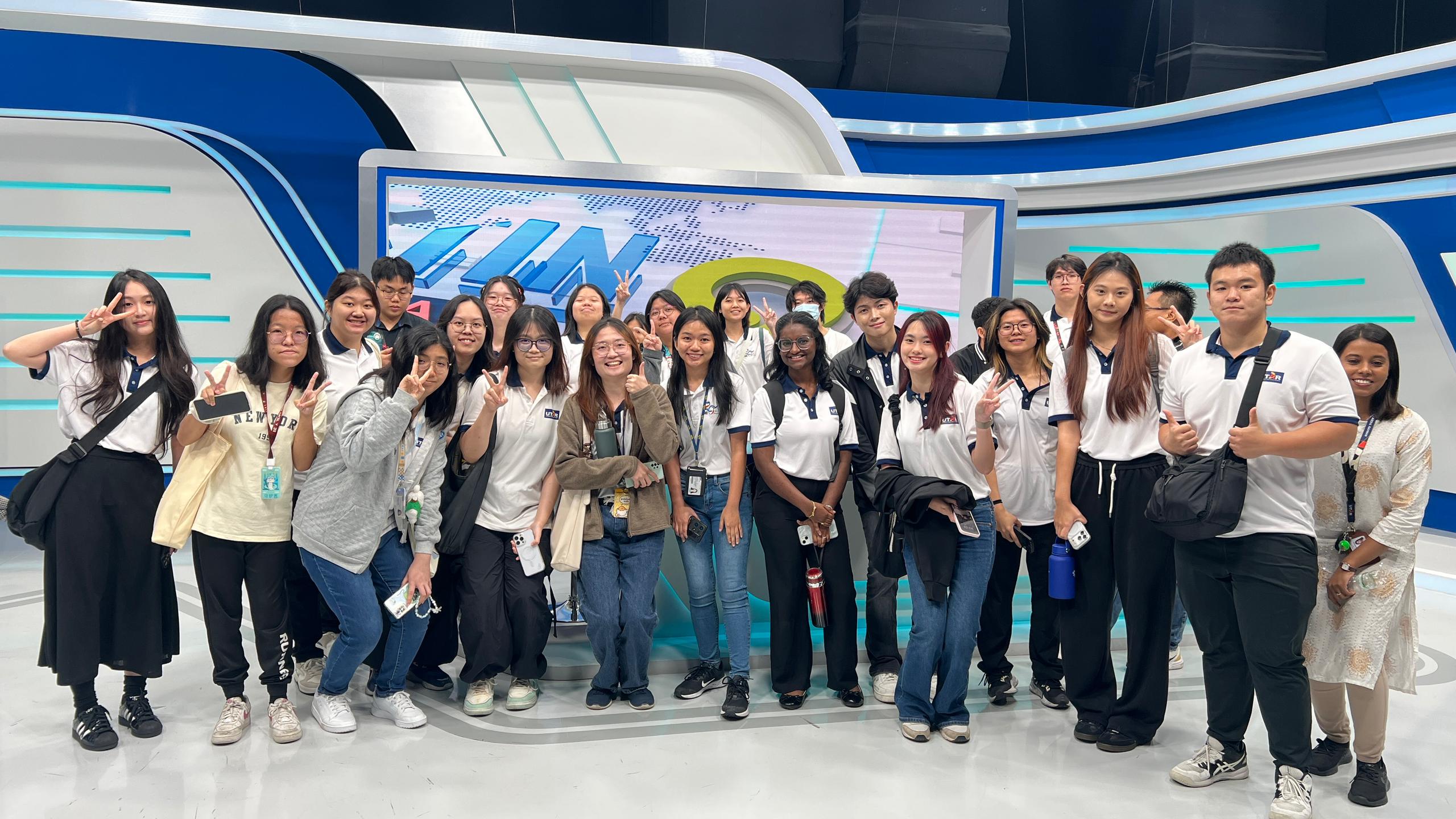
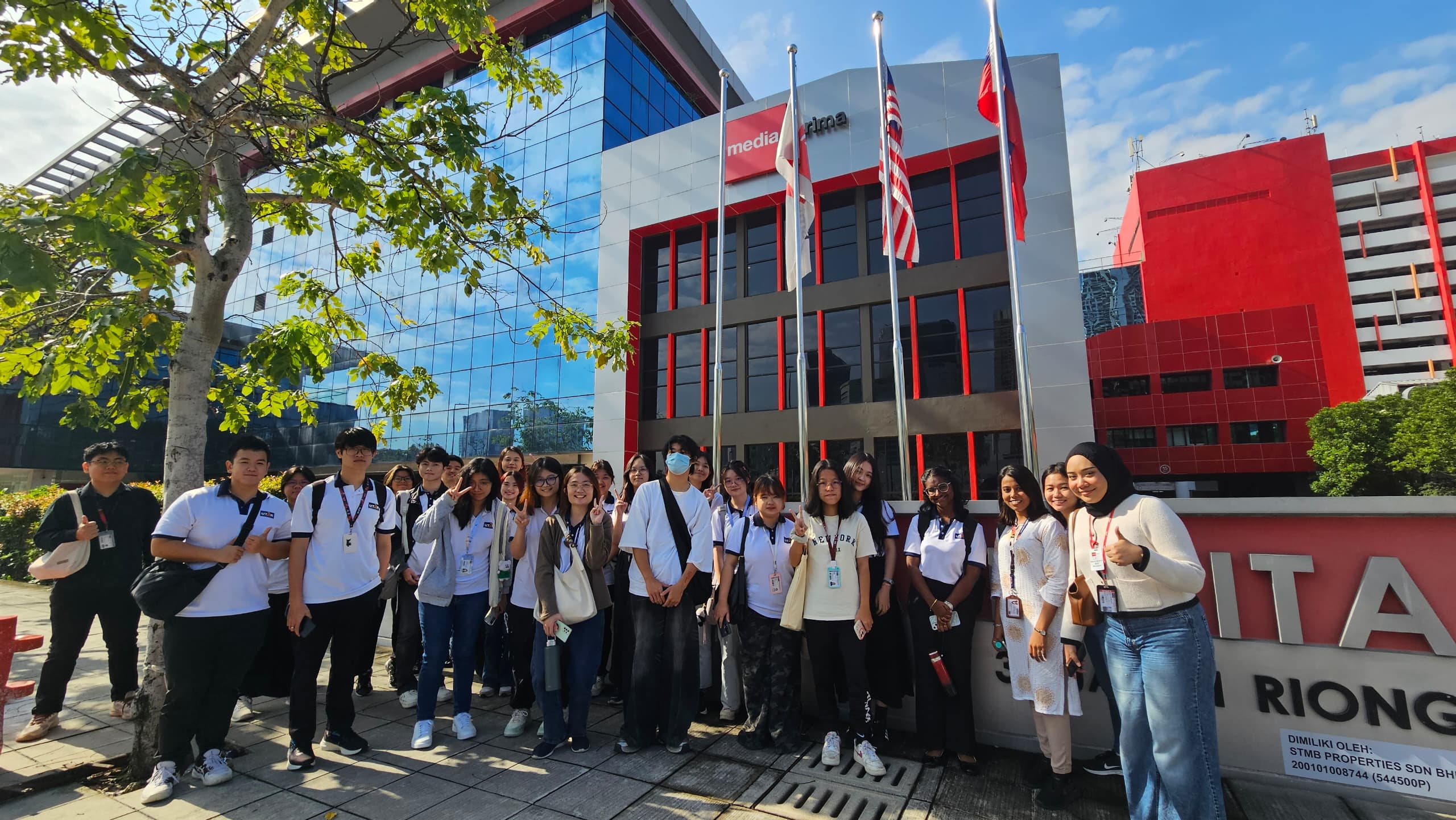
A trip to learn the ropes at Malaysia’s largest media and entertainment conglomerate, Media Prima Berhad
FAS Head of Department of Journalism Ms Michelle Wong said, “This is the first time our department is hosting such an event, and it represents a significant milestone in our journey to strengthen journalism education and engagement within our community. Journalism Week 2025 reflects our commitment to nurturing future-ready journalists who are adaptable, ethical, and innovative. As the media landscape continues to evolve, our students must be equipped with the skills and critical thinking needed to navigate new challenges.”
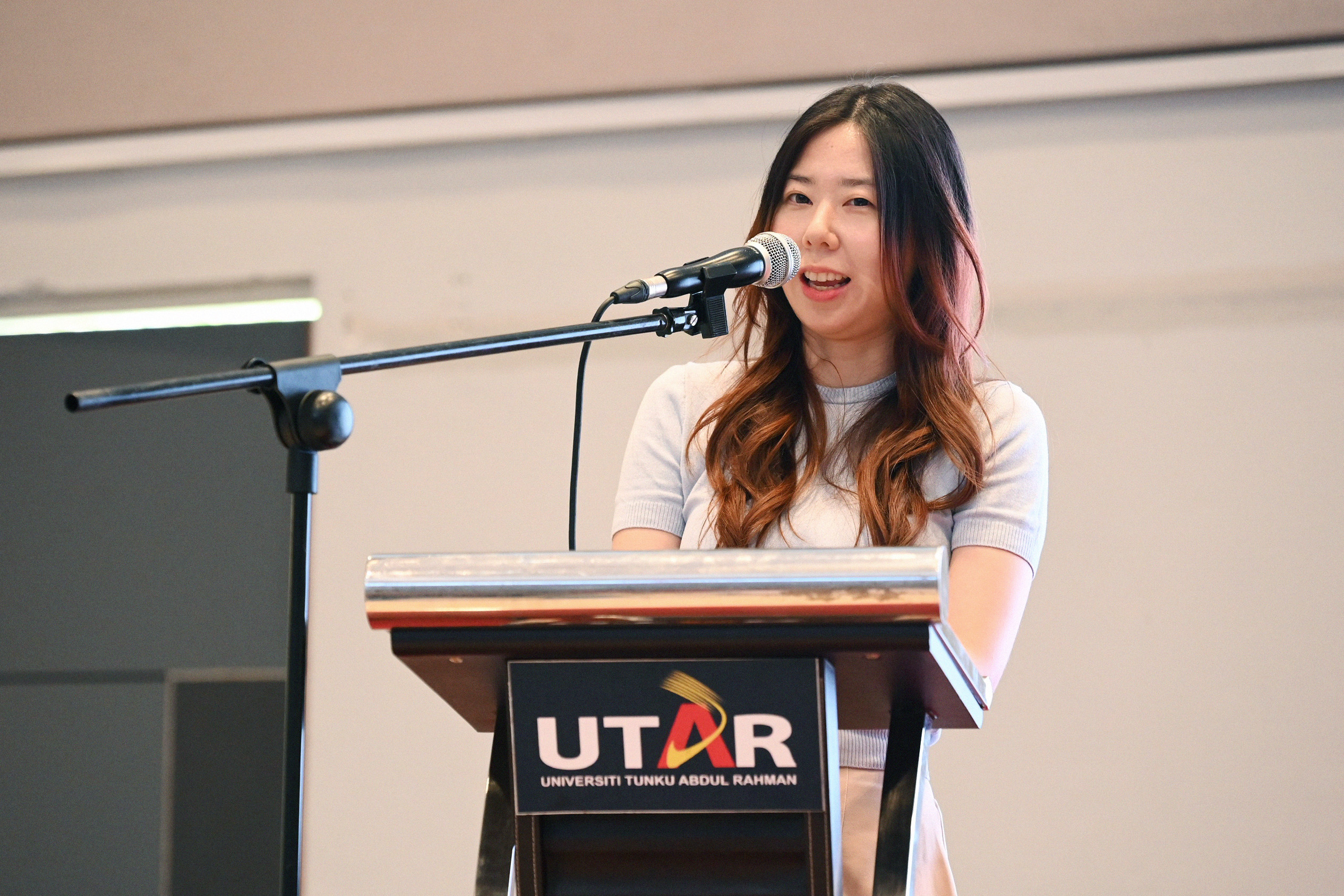
Ms Michelle Wong highlighting the importance of modern education in nurturing future-ready journalists
As the Journalism Week 2025 drew to a close, one message stood clear: technology may transform how stories are told, but it cannot replace the uniqueness of each storyteller. Just as the media experts advised, AI is not to be feared—it’s a tool that empowers upskilling not only for journalists, but professionals across diverse fields. Ultimately, it lies in individuals’ choices and responsibilities to determine how AI shapes the future of society. Equipped with these knowledge, skills, and ethical foundations, UTAR’s budding professionals are poised to step forward, guided by a steadfast commitment to candid storytelling.
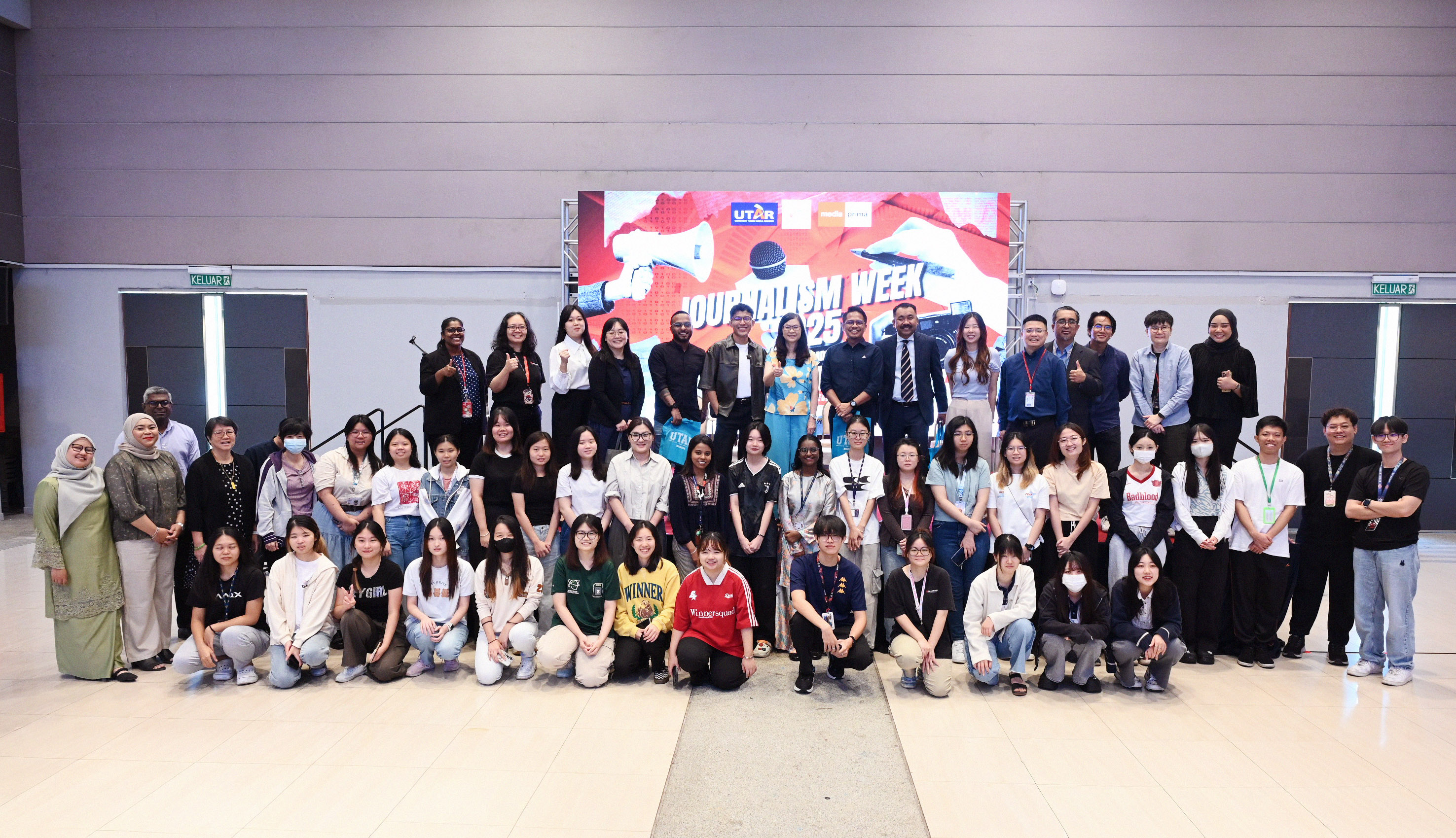
May the spirit of truth and storytelling continue to thrive in the next generation of media practitioners
© 2025 UNIVERSITI TUNKU ABDUL RAHMAN DU012(A).
Wholly owned by UTAR Education Foundation (200201010564(578227-M)) LEGAL STATEMENT TERM OF USAGE PRIVACY NOTICE