The Sustainable Intangible–Tangible Cultural Heritage Tourism Workshop was held at Persatuan Sejarah dan Kebudayaan Cina Kelantan (PSDKCK) in Kota Bharu, Kelantan on 12 April 2025. The event, organised by UTAR in collaboration with Ulster University and PSDKCK, aimed to explore sustainable ways of promoting and preserving cultural heritage through tourism.
The initiative brought together scholars, practitioners, students, and heritage keepers, with a special emphasis on the Chinese cultural presence in Kelantan. The workshop, funded by Ulster University’s International Science Partnerships Fund, was attended by 70 participants who engaged in a rich exchange of ideas, discussions, and presentations, reflecting the commitment to fostering community involvement and academic collaboration in developing inclusive and sustainable cultural heritage tourism frameworks.
The event began with opening remarks from the Dean of UTAR’s Teh Hong Piow Faculty of Business and Finance, Assoc Prof Dr Au Yong Hui Nee, and Chairman of PSDKCK Ms Alison Wee. Both speakers highlighted the importance of community participation in preserving cultural heritage and the role of academia in supporting this endeavour. They emphasised the need for a collaborative approach that integrates local knowledge with academic insights to build sustainable tourism models.
The workshop featured a series of compelling presentations. Assoc Prof Dr Tan Ai Boay from UTAR explored the cultural and historical importance of Datuk Gong worship across Malaysia, Singapore, Indonesia, and Thailand. Ms Nur Aliah binti Mansor, also from UTAR, presented on the food heritage of the Peranakan Cina Kelantan community, emphasising how culinary traditions can serve as an entry point to sustainable tourism.
Meanwhile, Ms Alison Wee, the Chairman of PSDKCK, discussed the significance of translating Chinese heritage literature, particularly Jejak Penempatan Awal Orang Cina di Kelantan, into Bahasa Malaysia to increase public access to local cultural narratives. Additionally, Ms Chang Shie Khim, an independent heritage educator, introduced the picture books Jamuan Khaoyam and The Border, demonstrating how visual storytelling can serve as a powerful educational tool in cultural understanding. Dr Au Yong presented insights into integrating Environmental, Social, and Governance (ESG) principles into tourism practices, stressing their role in fostering responsible development and community engagement.
One of the highlights of the workshop was the community dialogue session, where participants engaged in meaningful discussions on the challenges and opportunities in cultural heritage preservation. Topics included encouraging youth and local community members to actively participate in documenting, preserving, and promoting their tangible and intangible cultural heritage.
The workshop also featured a heritage lunch, allowing participants to experience Khaoyam, a traditional Peranakan Cina Kelantan dish. This culinary experience exemplified the region’s rich cultural and gastronomic heritage and its potential role in tourism storytelling. Traditional kuih (cakes) and souvenirs, including batik sarongs and matches from Mancis Cap Lada, a local match-making brand with a 90-year history, further enriched the experience and highlighted the importance of integrating local craftsmanship into cultural tourism.
The workshop produced significant outcomes. It underscored the role of Peranakan food traditions and picture books as essential tools for heritage education and tourism storytelling. These elements were recognised as effective means of fostering a deeper understanding of local identity and culture. The event also discussed strategies for expanding access to Chinese heritage texts, emphasising the importance of making such works available in Bahasa Malaysia and English to reach a wider Malaysian audience.
In conclusion, the Sustainable Intangible–Tangible Cultural Heritage Tourism Workshop was a successful example of how academic support and community involvement can contribute to building sustainable cultural heritage tourism models. Through this collaboration, UTAR continues to play a pivotal role in promoting responsible tourism practices and preserving Malaysia’s rich cultural heritage.
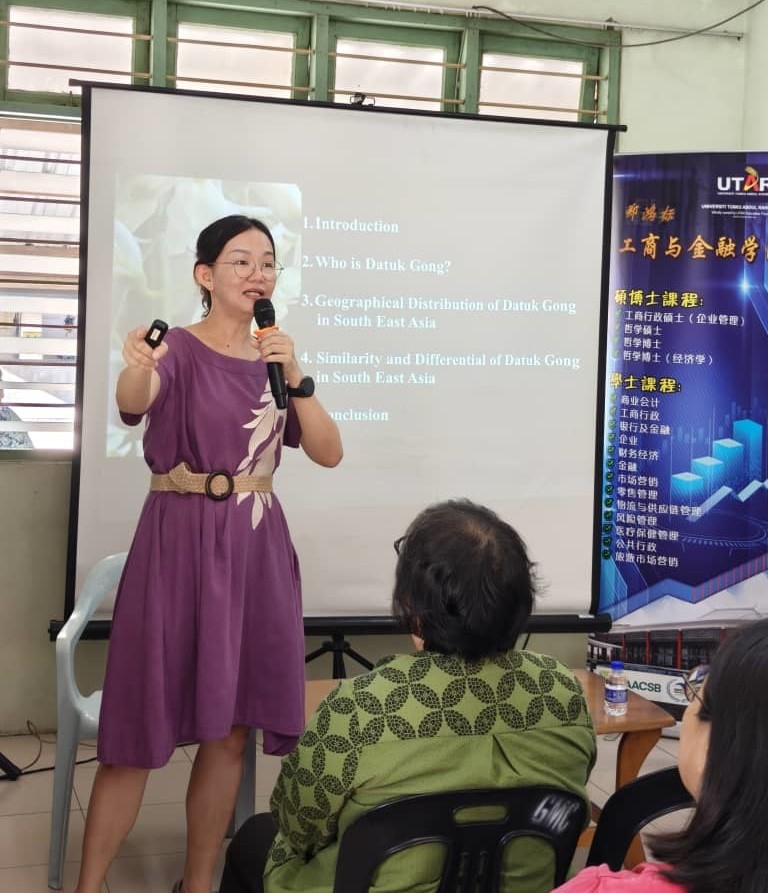
Dr Tan explaining Datuk Gong worship across ASEAN
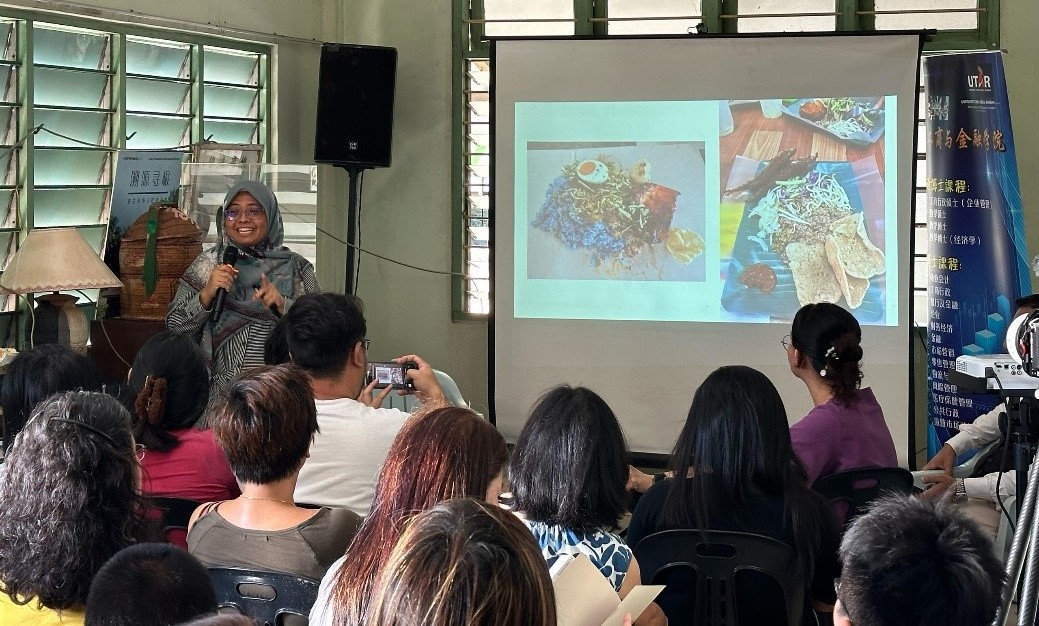
Ms Nur Aliah sharing insights on Peranakan Cina Kelantan’s food heritage, advocating for its role as a cultural bridge in sustainable tourism
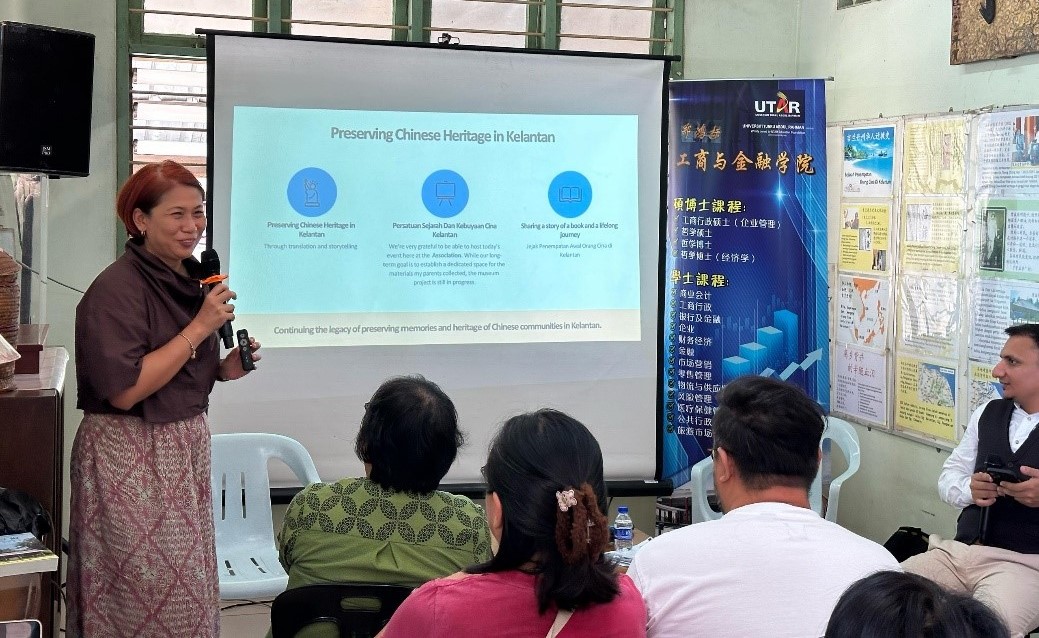
Ms Alison Wee discussing the importance of translating Jejak Penempatan Awal Orang Cina di Kelantan into Bahasa Malaysia to broaden public accessibility and deepen heritage understanding
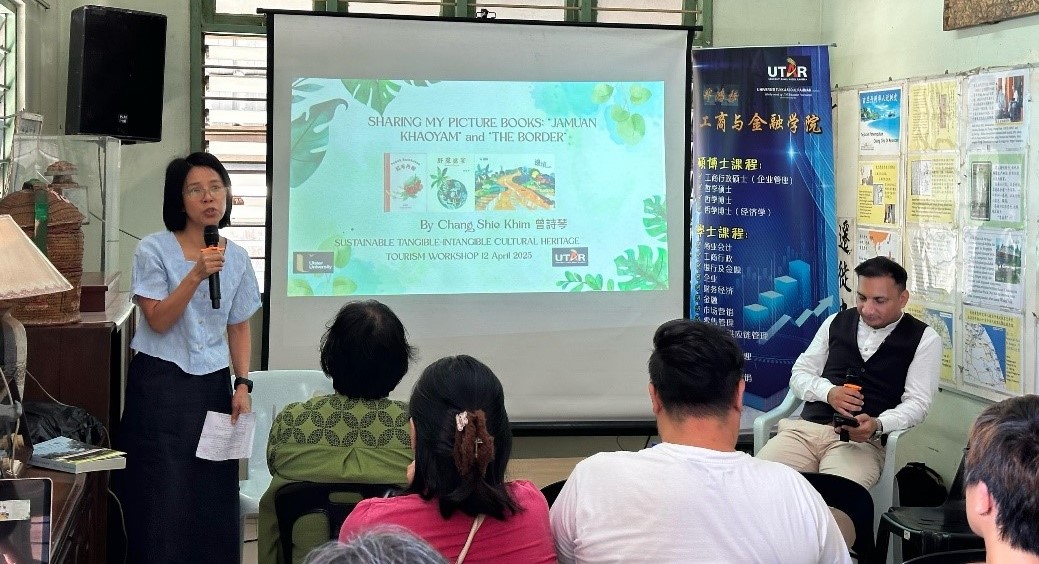
Ms Chang introducing picture books Jamuan Khaoyam and The Border, demonstrating the potential of visual storytelling in cultural education
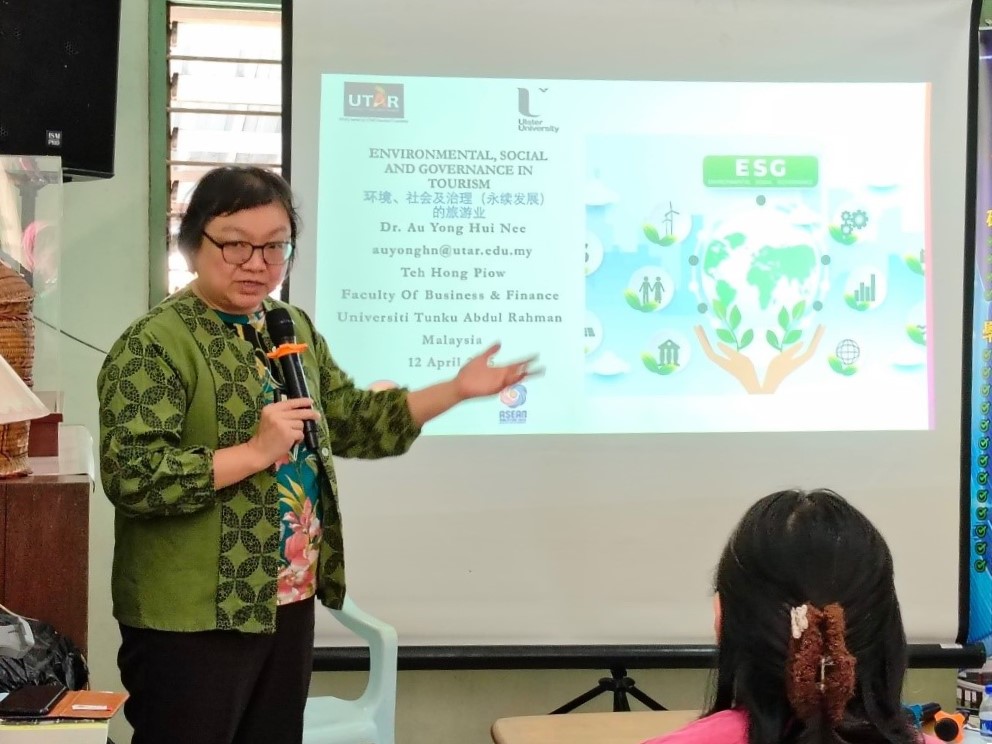
Dr Au Yong exploring how ESG principles can be integrated into tourism practices to support responsible development
© 2025 UNIVERSITI TUNKU ABDUL RAHMAN DU012(A).
Wholly owned by UTAR Education Foundation (200201010564(578227-M)) LEGAL STATEMENT TERM OF USAGE PRIVACY NOTICE