
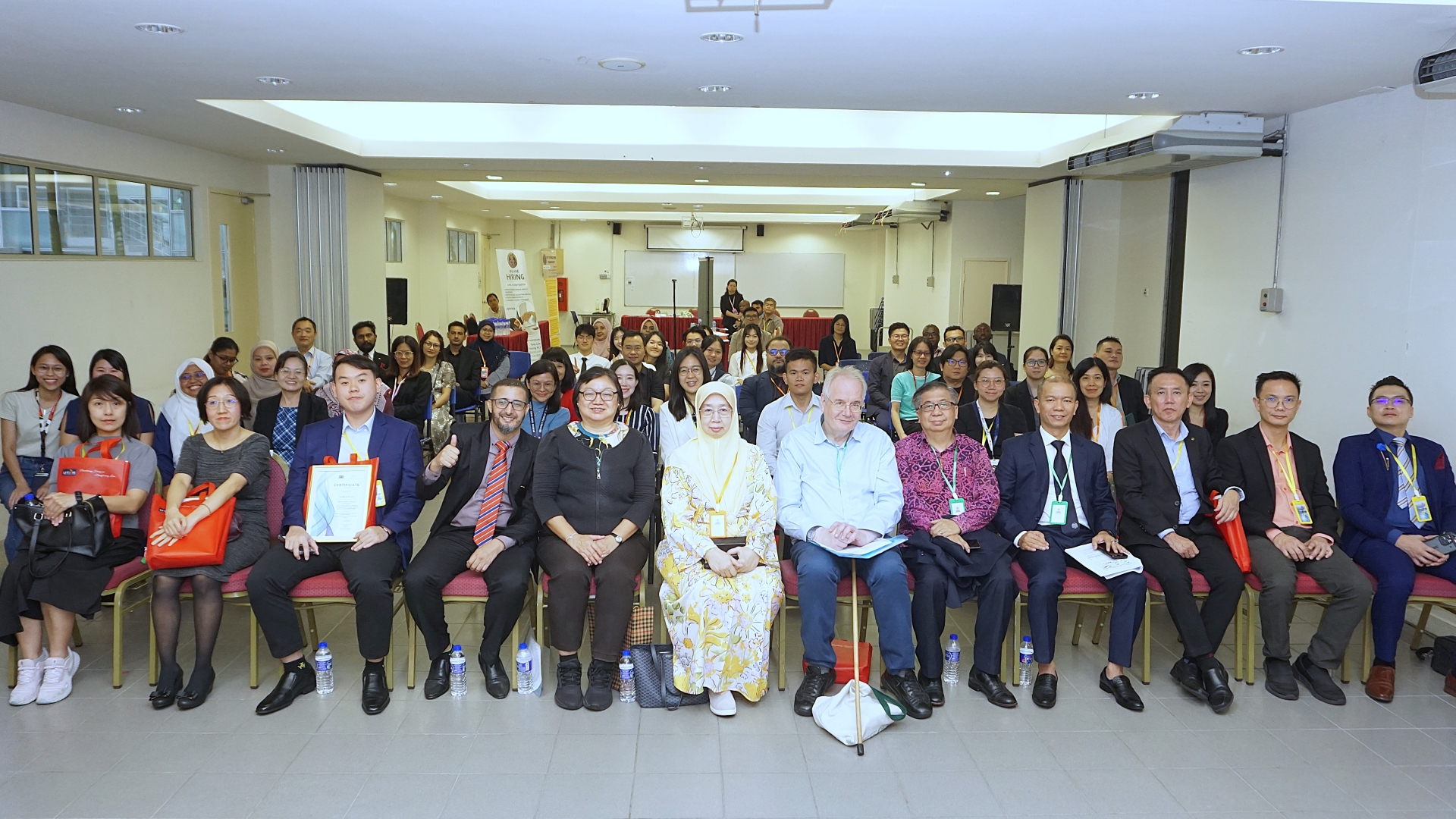
Another successful BAFE conference
The International Conference on Business, Accounting, Finance and Economics (BAFE) 2025 was more than another successful platform gathering researchers to contribute to new theoretical, methodological, and empirical knowledge. It also called for a mindset shift among participants – acknowledging that technology and innovation are powerful tools to build a smarter, fairer, and more sustainable world.
The 13th conference emphasised the impact of artificial intelligence (AI) in businesses, noting that when guided by ethical principles and integrated with green technologies, AI can accelerate progress in key areas, such as clean energy, quality production, healthcare, and sustainable industries. The discussion on the theme Embracing Business Innovation in the Era of Artificial Intelligence: Towards Achieving Sustainable Development Goals, took place on 22 October 2025 at UTAR Kampar Campus, and via Zoom.
It commenced with an opening ceremony graced by Vice President for R&D and Commercialisation Prof Dr Zuraidah binti Abd Manaf, representing UTAR President Ir Prof Dato’ Dr Ewe Hong Tat, and Teh Hong Piow Faculty of Business and Finance (THP FBF) Dean Assoc Prof Dr Au Yong Hui Nee.
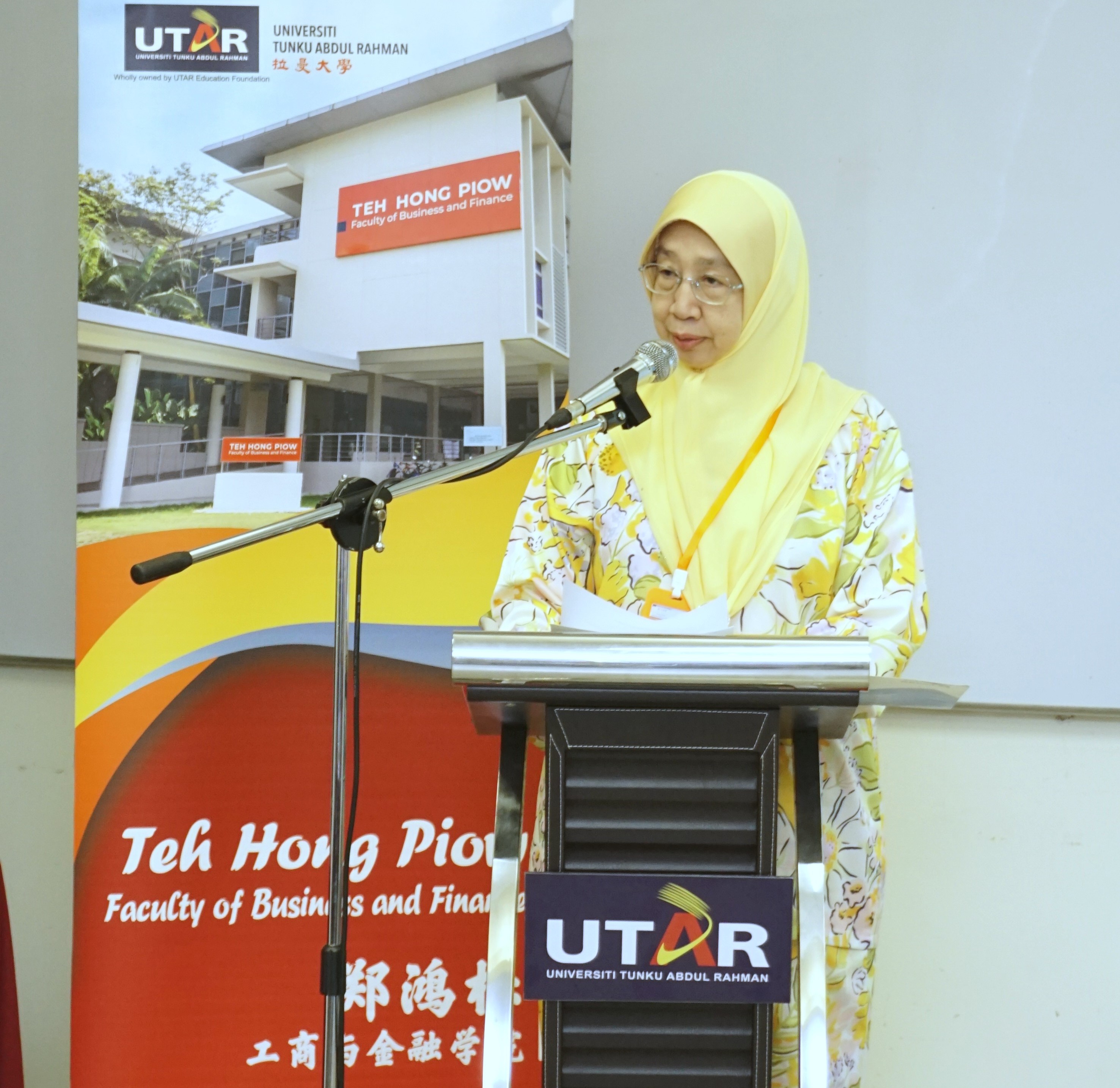
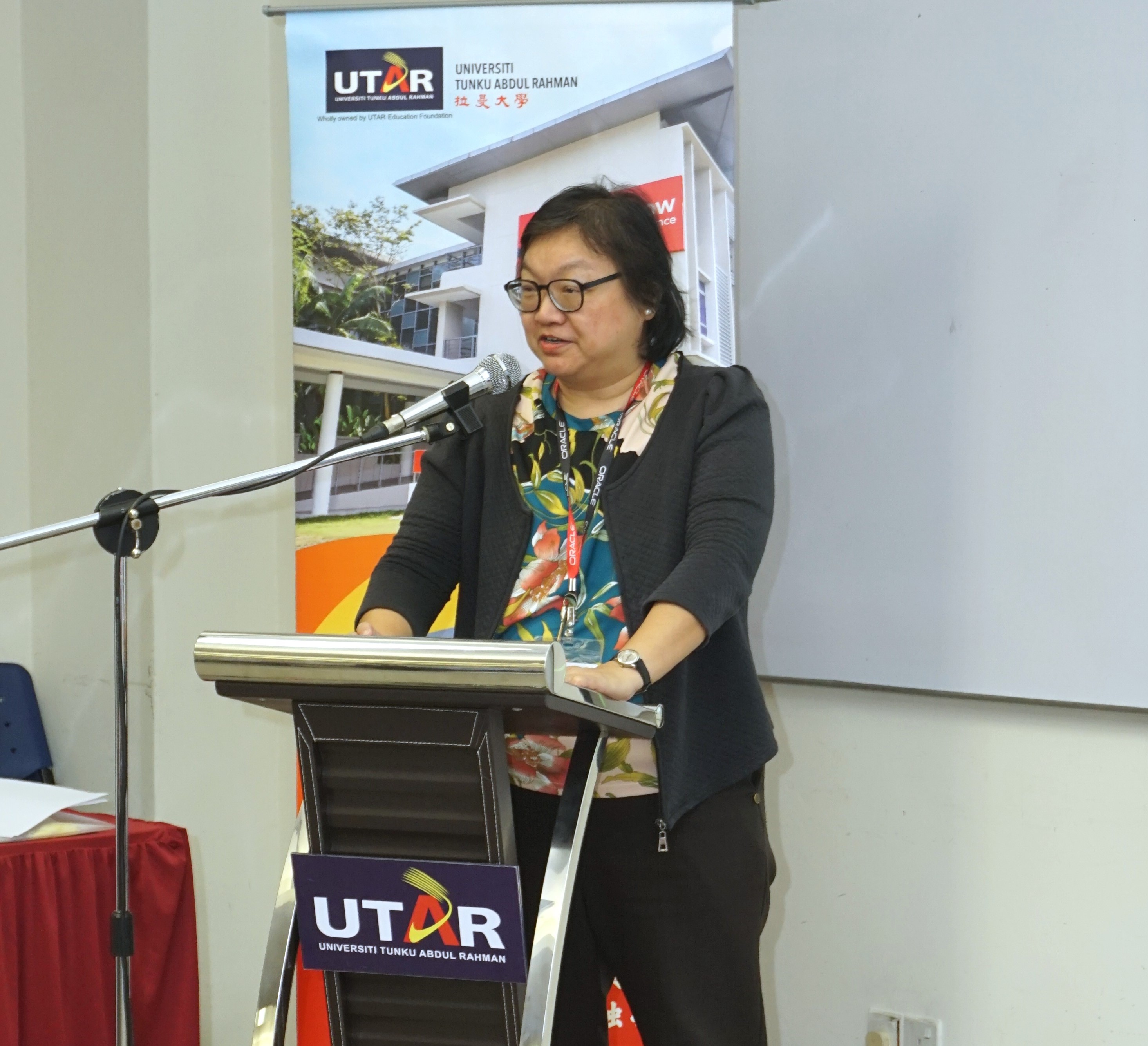
From left: Prof Zuraidah and Dr Au Yong delivering their speeches at the opening ceremony
Prof Zuraidah emphasised the need to embrace AI that is now driving purposeful innovation aligned with the United Nations’ Sustainable Development Goals (SDGs). She expressed her excitement for the conference to bring insights, including the integration of AI, green technologies, and ethical practices, to accelerate breakthroughs that make industries and businesses smarter, cleaner, and more inclusive, thus contributing to sustainable growth and the well-being of the planet.
Meanwhile, Dr Au Yong described the conference as an opportune platform where knowledge, innovation, and responsibility converge in this era of AI, highlighting the need to consider the environmental, social, and governance (ESG) elements when making investment decisions in the financial sector. She also thanked the organising committee and sponsors for the success of the conference, noting that it also reflects their collective effort to contribute towards business and societal transformation through research, collaboration, and sustainable technological advancement.
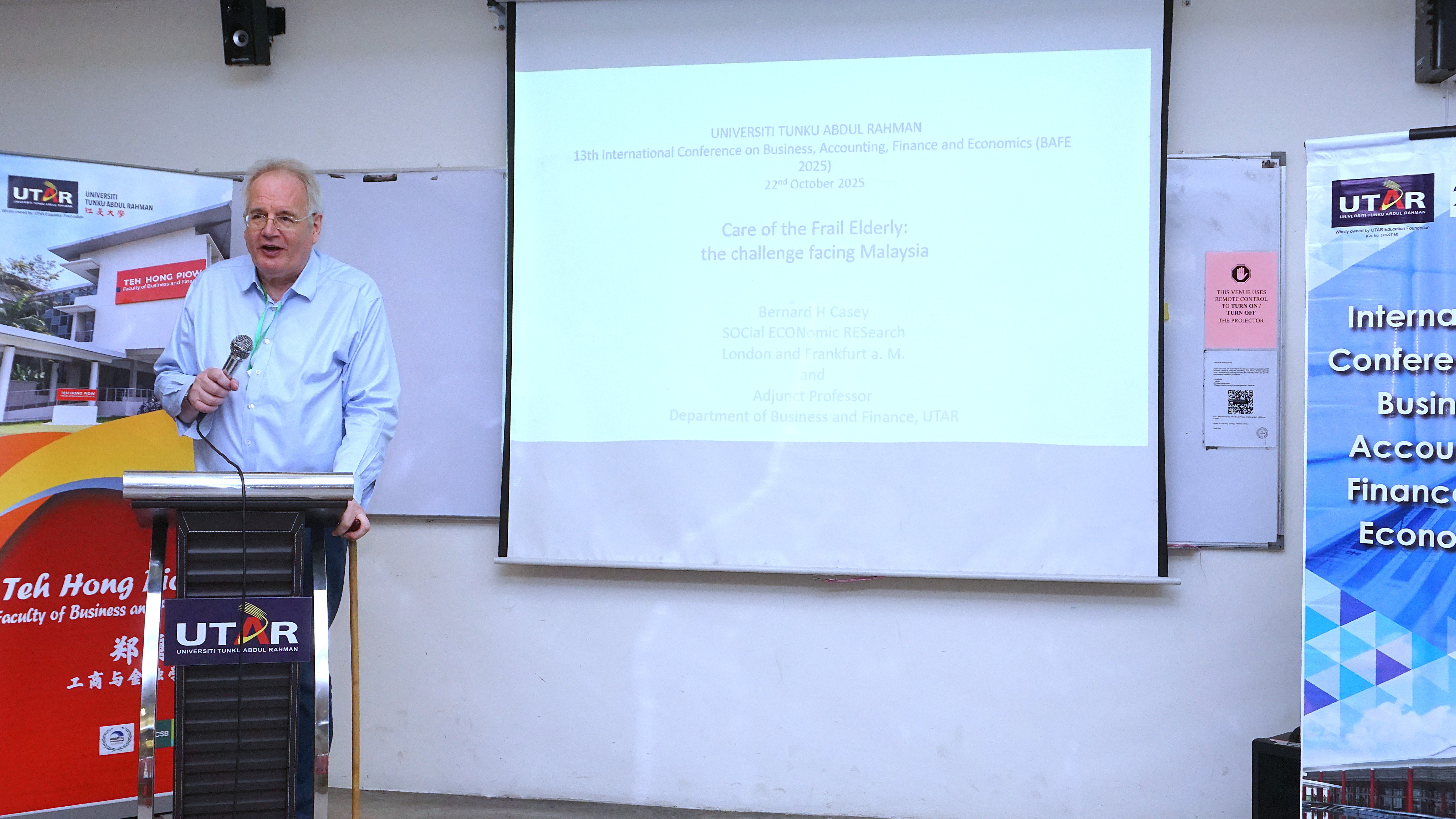
Prof Bernard explaining the impact of innovative businesses in driving sustainable development
The conference continued with the keynote sessions by three speakers. Prof Dr Bernard H Casey, Adjunct Professor of THP FBF from SOCial ECONomic RESearch, London and Frankfurt, spoke on Care for the Frail Elderly: The Challenge Facing Malaysia. His presentation offered an in-depth understanding on the impact of innovative businesses in driving sustainable development. He highlighted the urgent need for systemic innovation to address rising social care demands. He discussed leveraging AI, such as intelligent health monitoring systems, predictive analytics for resource planning, and automation in elderly care. These approaches align with SDG 3: Good Health and Well-Being, SDG 8: Decent Work and Economic Growth, and SDG 10: Reduced Inequalities, showcasing that the integration of human-centred policies and AI-driven innovation can ensure both economic resilience and social sustainability in an ageing society.
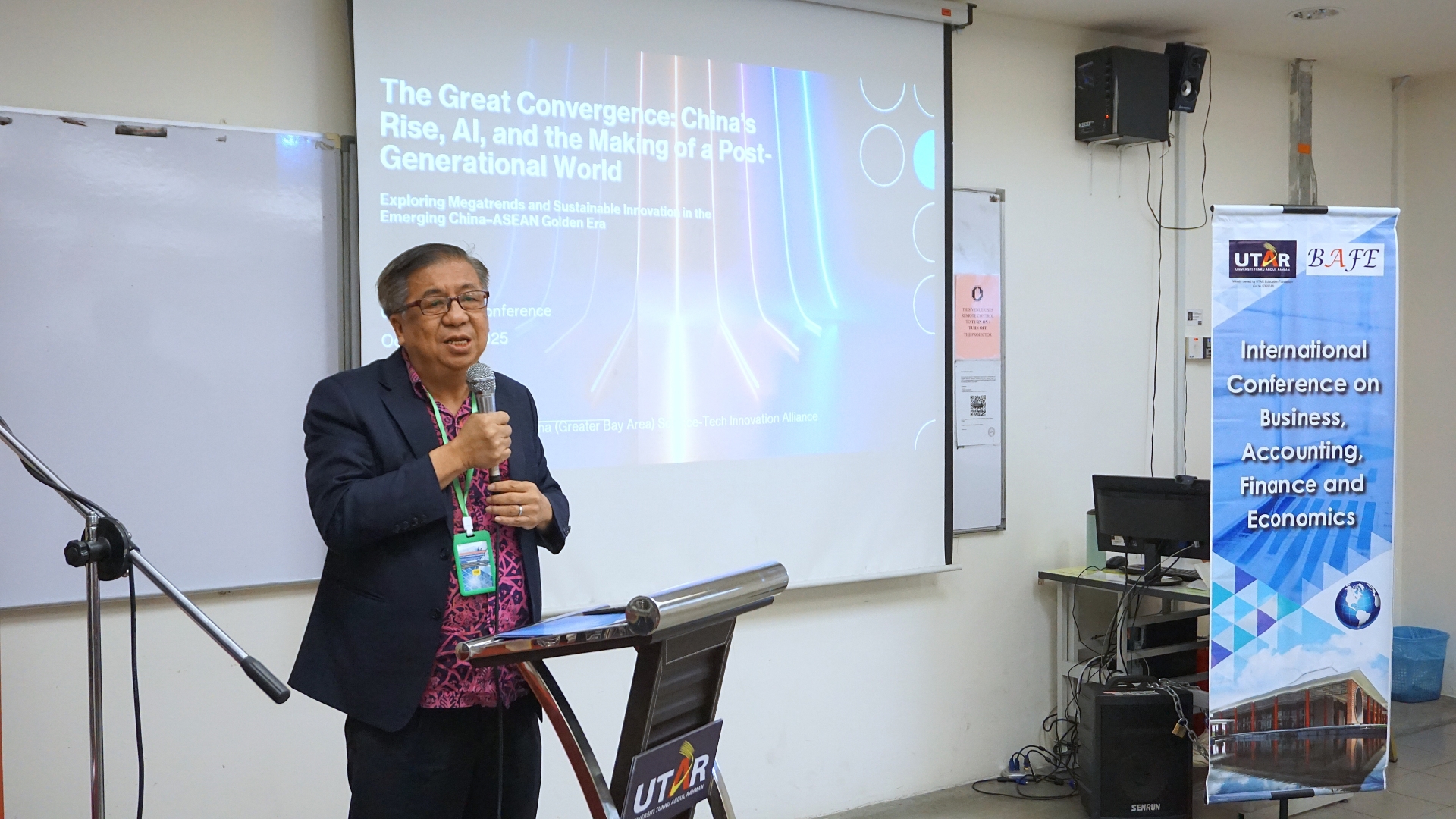
Mr Stephen Lai explaining the transition from industrial power to intelligence power
The second keynote speaker, Mr Stephen Lai, Chairman of Malaysia’s China (Greater Bay Area) Science Tech Innovation Alliance, spoke on The Great Convergence: China’s Rise, AI, and the Making of a Post-Generational World, which also explored Exploring Megatrends and Sustainable Innovation in the Emerging China–ASEAN Golden Era. His presentation enabled participants to envision a world where economic, technological, and demographic convergences reshape global progress. He explained that by transitioning from industrial power to intelligence power, China and ASEAN exemplify how digital infrastructure, renewable energy integration, and ethical AI can fuel inclusive and sustainable growth. He also highlighted the importance of human-centred leadership, education reform, and cross-border collaboration. His insights align with SDG 4: Quality Education, SDG 9: Industry, Innovation, and Infrastructure, SDG 10: Reduced Inequalities, and SDG 13: Climate Action.
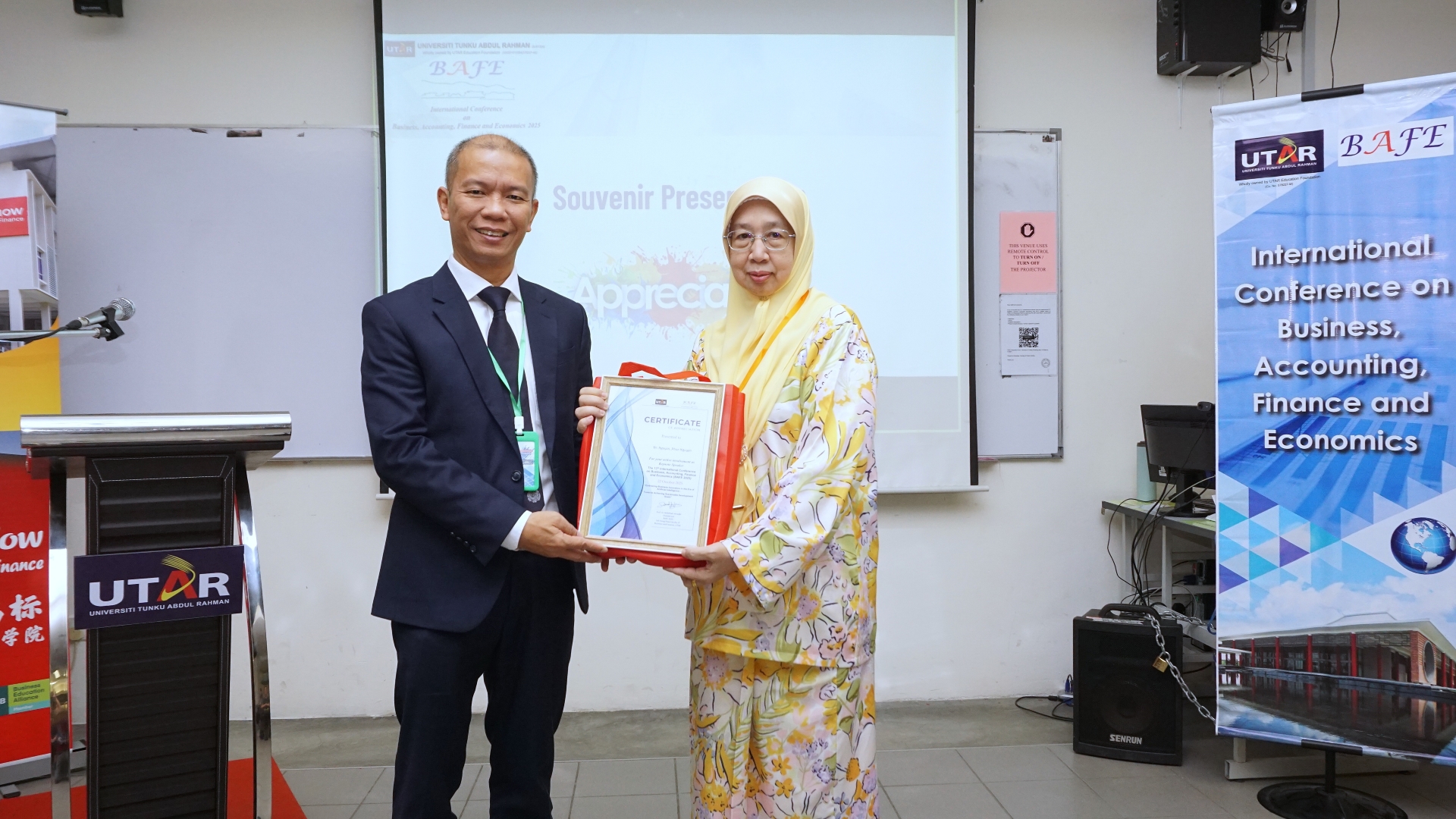
Prof Zuraidah (right) presenting a token of appreciation to Dr Nguyen
The final keynote speaker was Assoc Prof Dr Phuc Nguyen, Vice Director of the Center for International Education at the University of Economics, The University of Danang, Vietnam. He delivered a presentation titled Mapping the Nexus of Business Innovation and Sustainable Development: A Bibliometric Analysis of the Tourism Sector. His presentation explained that business innovation is a critical catalyst for fundamentally rethinking products, processes, and models to generate economic, social, and environmental value. Participants also learnt that the integration of AI, alongside other digital technologies such as IoT and blockchain, is essential to driving systemic change that builds environmental resilience. He noted that leveraging AI within business innovation frameworks is more than just an operational upgrade, it is a necessary transformative force to enhance adaptive capacity, minimise negative impacts, and align strategic innovation directly with key SDGs such as SDG 9: Industry, Innovation, and Infrastructure, SDG 11: Sustainable Cities and Communities, and SDG 13: Climate Action. All these efforts ultimately contribute to building a competitive, inclusive, and sustainable future for global tourism.
Two parallel sessions were also conducted, featuring multiple researchers and scholars sharing their insights related to the theme. Topics discussed included:
At the end of the conference, several presenters were awarded Best Paper Award and Best Presenter Award. The award recipients are as follows:
Best Paper Award recipients:
Shaking Up FDI |
Chuah Jolin Ting Yi Ernn |
The Role of FCPO Futures Across Normal and Disruptive Regimes |
Minah Japang Abdul Kamal Bin Char Ricky Chia Chee Jiun |
AI and Organizational Creativity in Saudi Arabia’s Healthcare Sector |
Majed Al-Dubai |
The Logistics Sector of Malaysia |
Pavitralexmi A/P Vasudavan Chua Soon Cheng Karunanithy A/L Degeras Afwan Hakim MD Mahdzir |
Best Presenter Award recipients:
Dexter T |
|
Health Monitoring Among White-Collar Workers in Malaysia |
|
Resilience Obtacles in Malaysia’s Non-Major Ports |
|
Theory of Planned Behaviour |
|
The Logistics Sector of Malaysia |
|
AI and Organizational Creativity in Saudi Arabia’s Healthcare Sector |
BAFE 2025 was jointly organised by Manuel S. Enverga University Foundation, the Philippines; American International University-Bangladesh, Dhaka, Bangladesh; Universitas Lambung Mangkurat, Indonesia; Quest International University, Malaysia; University of Batangas, the Philippines; Taiwan Strategy and Performance Management Association, Taiwan; and Media Ilmu Amaliah, Indonesia.
The conference was sponsored by WCT Worldwide Training PLT; Perak Chinese Chamber of Commerce and Industry; Eu Yan Sang (1959) Sdn Bhd; Wealth Zo Services; Team Unity Advisory Sdn Bhd; and Cheng & Co Taxation Sdn Bhd.
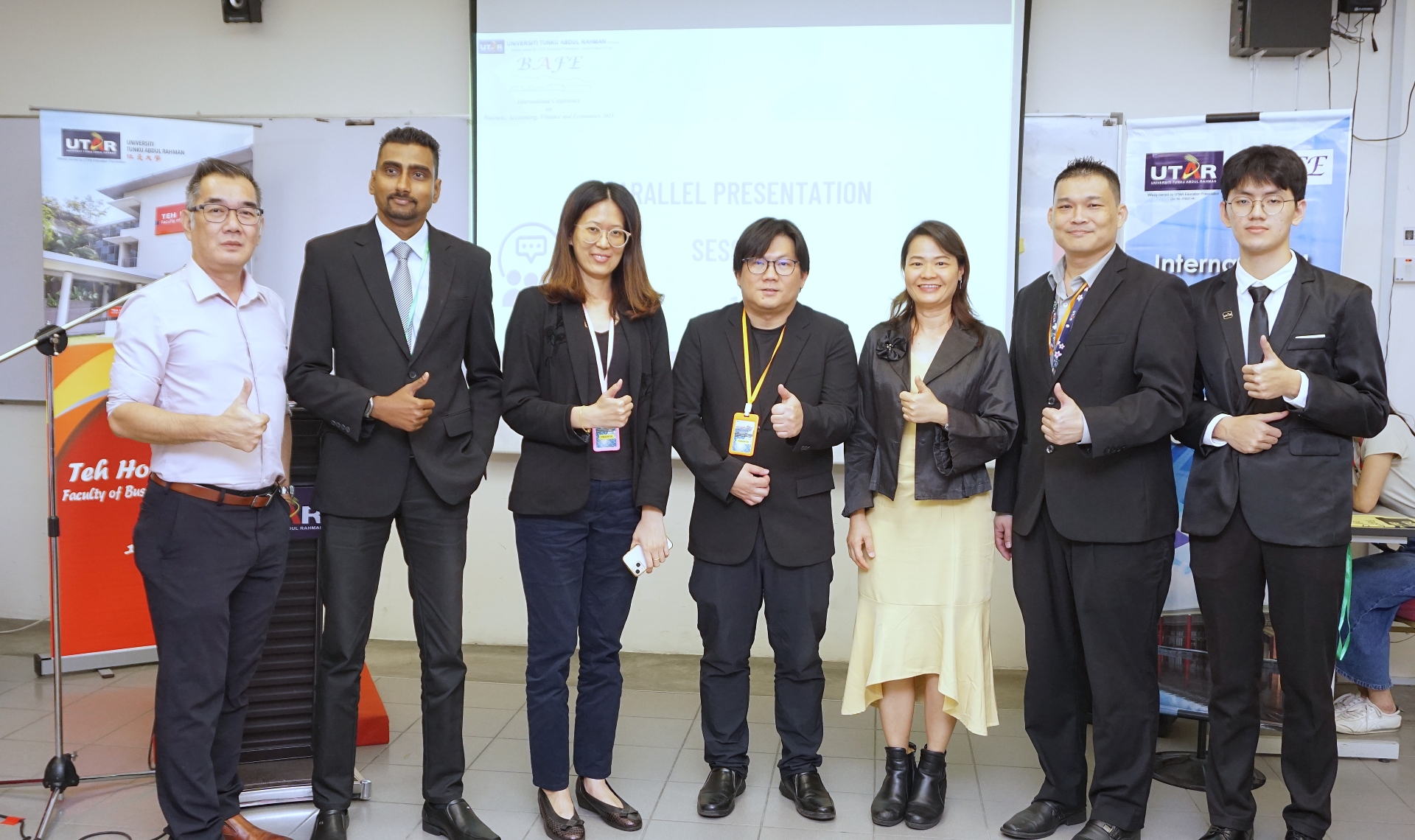
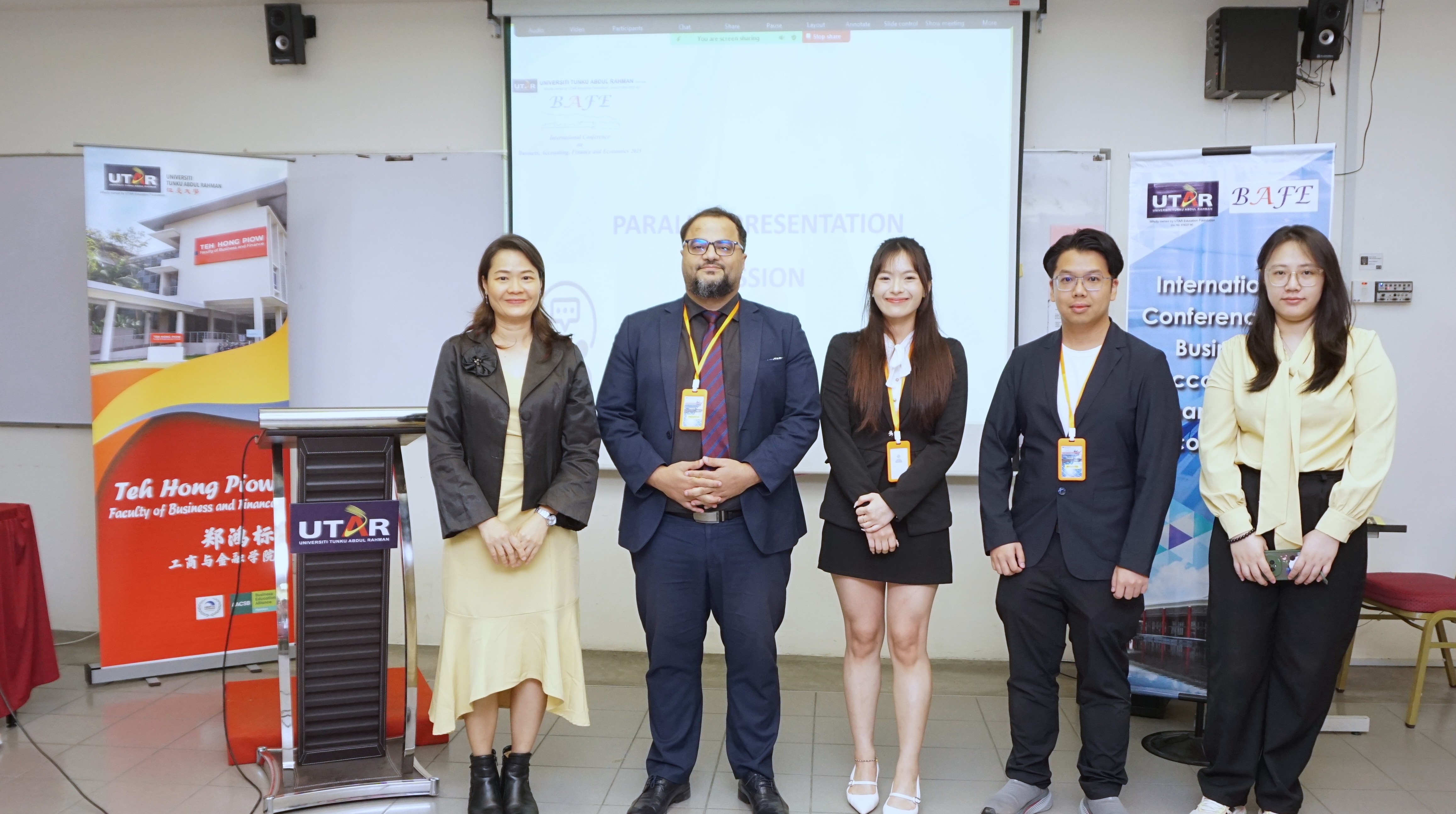
The presenters for the parallel sessions
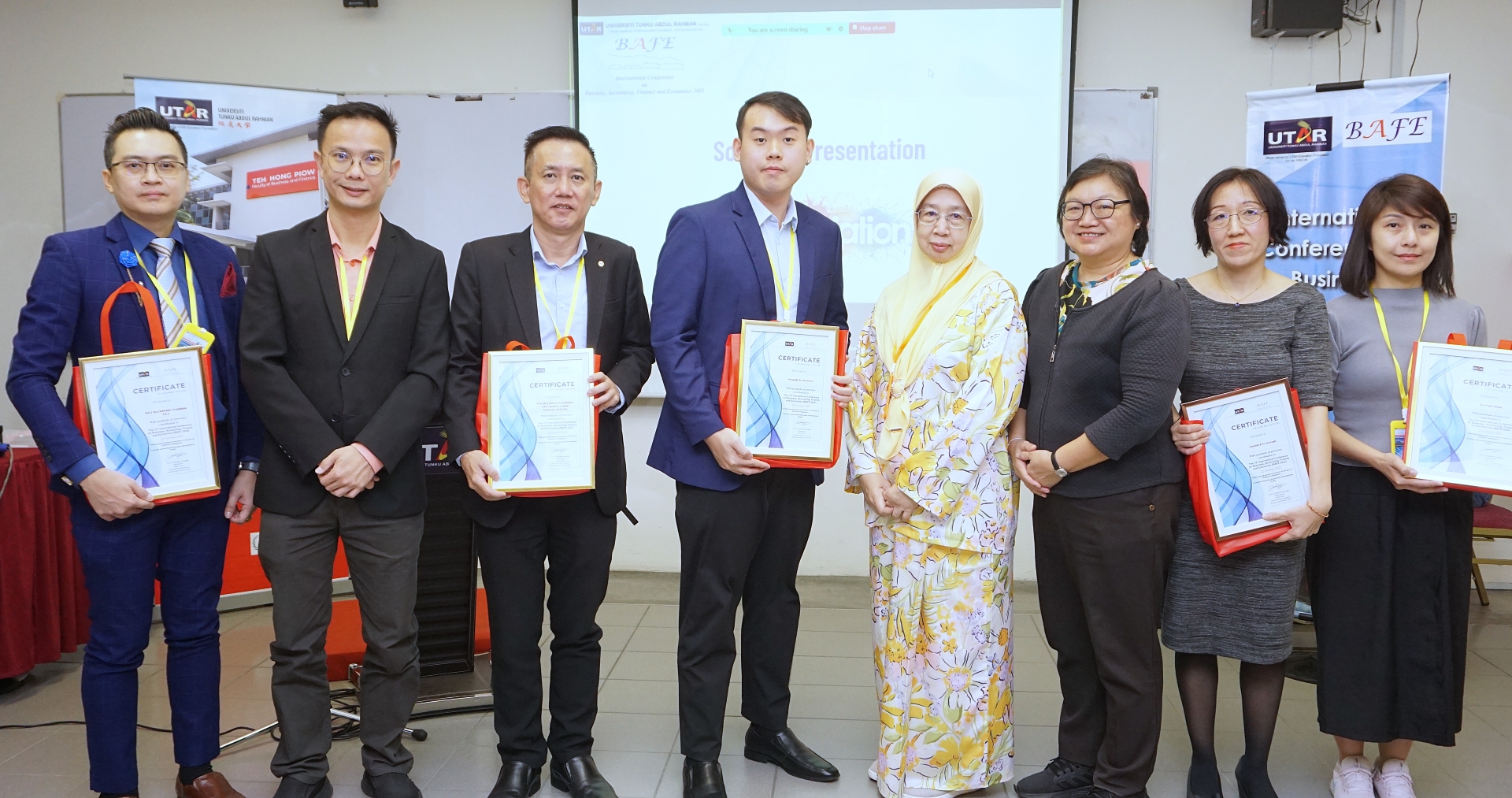
Prof Zuraidah (fourth from right) and Dr Au Yong (third from right) with the sponsors of the conference
© 2025 UNIVERSITI TUNKU ABDUL RAHMAN DU012(A).
Wholly owned by UTAR Education Foundation (200201010564(578227-M)) LEGAL STATEMENT TERM OF USAGE PRIVACY NOTICE